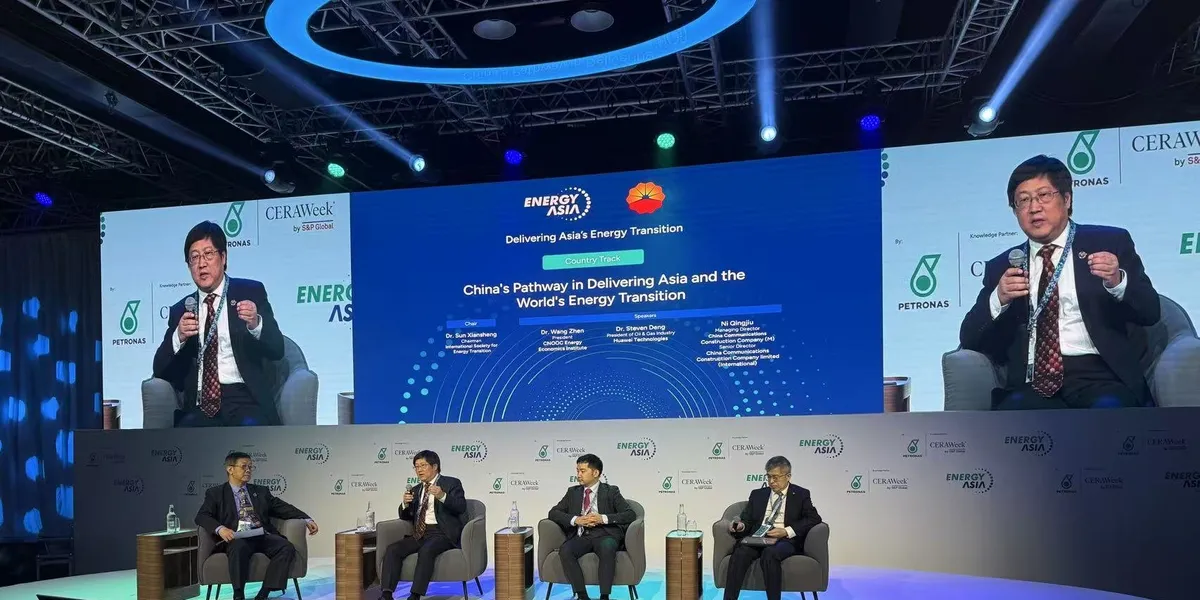
China is actively executing its energy transition plans through government policies, legal reforms, and market dynamics, signaling a shift from planning to implementation. Senior energy executives indicate this acceleration aims to establish China as a dominant force in both traditional and renewable energy sectors, marking a significant step towards dual energy dominance.
China's energy strategy is undergoing a significant structural shift, moving from a planning stage to a decisive execution phase aimed at achieving 'dual energy dominance.' This acceleration, confirmed by senior energy executives, is driven by a combination of government policy, legal reforms, and market dynamics. The strategic objective is not merely a transition to renewables but a concerted effort to lead in both traditional and green energy sectors simultaneously. The high market impact score of 0.7 and strongly positive sentiment indicate that market participants view this state-led initiative as a credible and impactful long-term policy. This development has profound implications for global energy markets, supply chains for renewable technologies, and international climate policy, positioning China to exert greater influence over both energy security and the pace of the global renewable transition.
AI-powered research, real-time alerts, and portfolio analytics for institutional investors.
Request DemoOverall Sentiment
strongly positive
Sentiment Score
0.70
