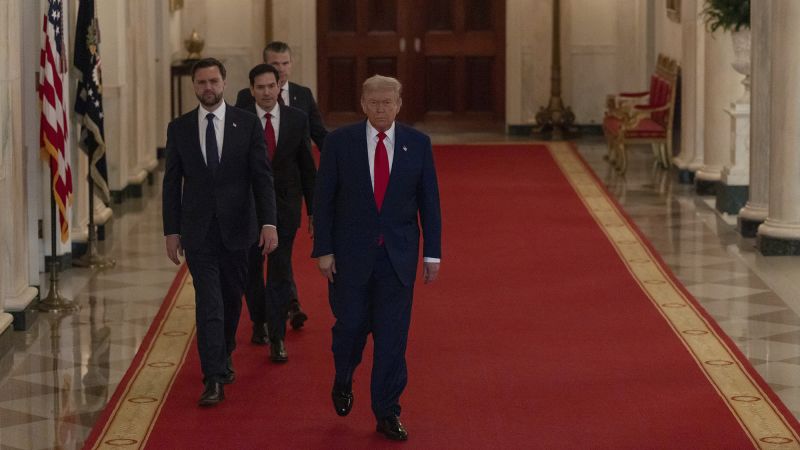
Overnight US strikes on Iran's nuclear program have reportedly inflicted significant damage on key sites and personnel, fundamentally altering Tehran's strategic position and negotiation leverage as much of its previous 'wish list' has been destroyed or used. While limiting Iran's immediate conventional retaliation options, the strikes raise concerns regarding the 'unknown unknown' of potential hidden nuclear elements and the likelihood of asymmetrical responses, potentially increasing regional instability. This development underscores the persistent challenge of Iran's nuclear ambitions, viewed against the backdrop of the US's historical engagement in the Middle East.
The recent US-led strikes have materially degraded Iran's known nuclear infrastructure and conventional military capabilities, fundamentally altering the geopolitical landscape and weakening Tehran's negotiating position. The destruction of key assets, including ballistic missile launchers and facilities at Fordow, means much of what Iran hoped to bargain with has been preemptively eliminated. However, the primary investment consideration stems from the significant uncertainty—the 'known unknown'—regarding the existence and location of undisclosed elements of Iran's nuclear program. While intelligence appears highly effective, as evidenced by precise strikes on key personnel, the risk of a dispersed and hidden program remains. This situation severely constrains Iran's immediate options for conventional retaliation, pivoting its likely response towards asymmetrical warfare, with potential disruptions in critical chokepoints like the Strait of Hormuz, and a strategy of long-term patience. The high market impact score (0.65) and moderately negative sentiment (-0.5) reflect that this event is not a resolution but the start of a new phase of protracted, unpredictable conflict, a dynamic amplified by the US's complex history of military engagement in the region.
AI-powered research, real-time alerts, and portfolio analytics for institutional investors.
Request DemoOverall Sentiment
moderately negative
Sentiment Score
-0.50
