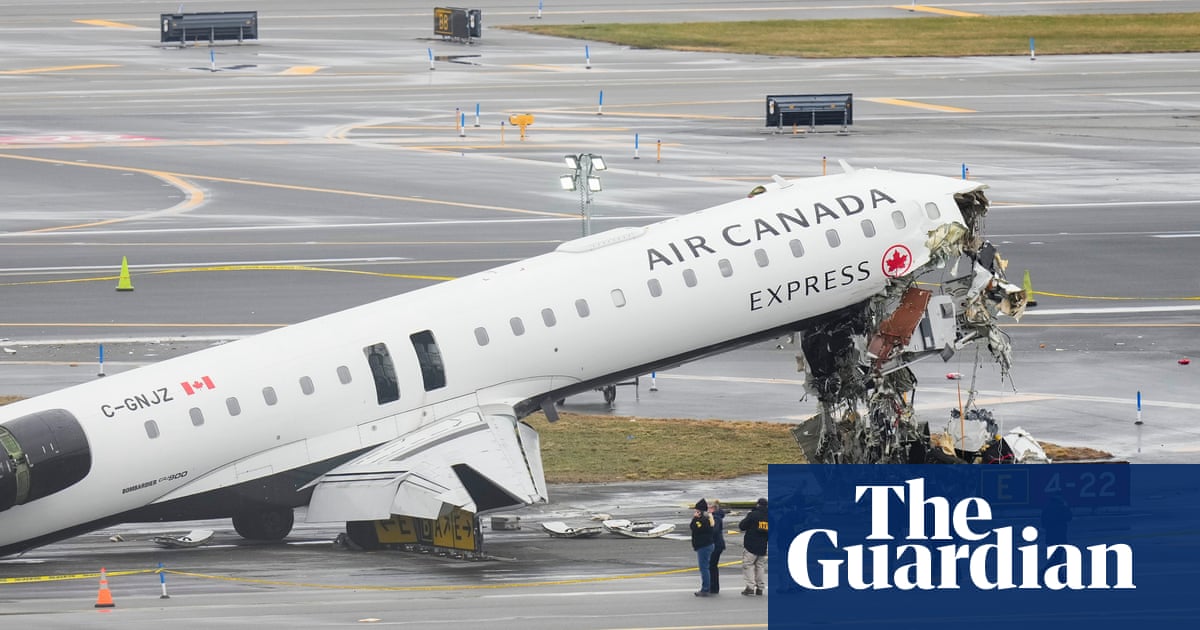
Two pilots were killed and 41 people hospitalized after an Air Canada Express flight collided with a fire truck at LaGuardia; investigators recovered intact cockpit and flight data recorders and warn the runway may be closed for days. Dozens of anonymous NASA ASRS reports filed months earlier flagged controller guidance failures, runway incursions and turned-off lighting; officials cite controller shortages, ageing equipment and TSA staffing issues tied to federal cuts and a partial shutdown. US Transportation Secretary said LaGuardia has 33 certified controllers (goal 37) while the NTSB leads the probe and further operational or regulatory actions remain possible.
The immediate market transmission will be regulatory and operational rather than demand-driven: expect a 3–18 month period of heightened NTSB/FAA scrutiny that will force conservative runway occupancy rules, extended hold/ground times, and likely temporary slot constraints at the most capacity-constrained airports. That will disproportionately compress short-haul frequency economics (regional/slot-dependent carriers) and raise unit costs—incremental block-hour inefficiency of even 2–4% flows straight to the bottom line for thin-margin regional operations.
Insurance and liability chains are a subtle but material second-order amplifier: insurers will reprice airport/airline hull and ground‑risk portfolios after catastrophic events, pushing premium rates and deductibles higher within 6–12 months and increasing working capital pressure on carriers and airports; expect reinsurance treaty terms to harden at next renewal. Capital spending to retrofit tower tech, surface detection, and taxiway/runway lighting will follow regulatory mandates, creating a multi-year procurement window for infrastructure and systems integrators.
Operational headwinds (controller staffing, TSA instability, aging equipment) create recurring short-term volatility in NYC capacity that can persist until federal funding and hiring reversals are secured—this is a months-to-years story contingent on political outcomes. The clearest market asymmetry: contractors/systems suppliers win if capex is accelerated; slot‑concentrated carriers lose in the near term from both demand shock and higher per-flight operating cost, creating targeted tradeable dispersion.
AI-powered research, real-time alerts, and portfolio analytics for institutional investors.
Request DemoOverall Sentiment
strongly negative
Sentiment Score
-0.72
