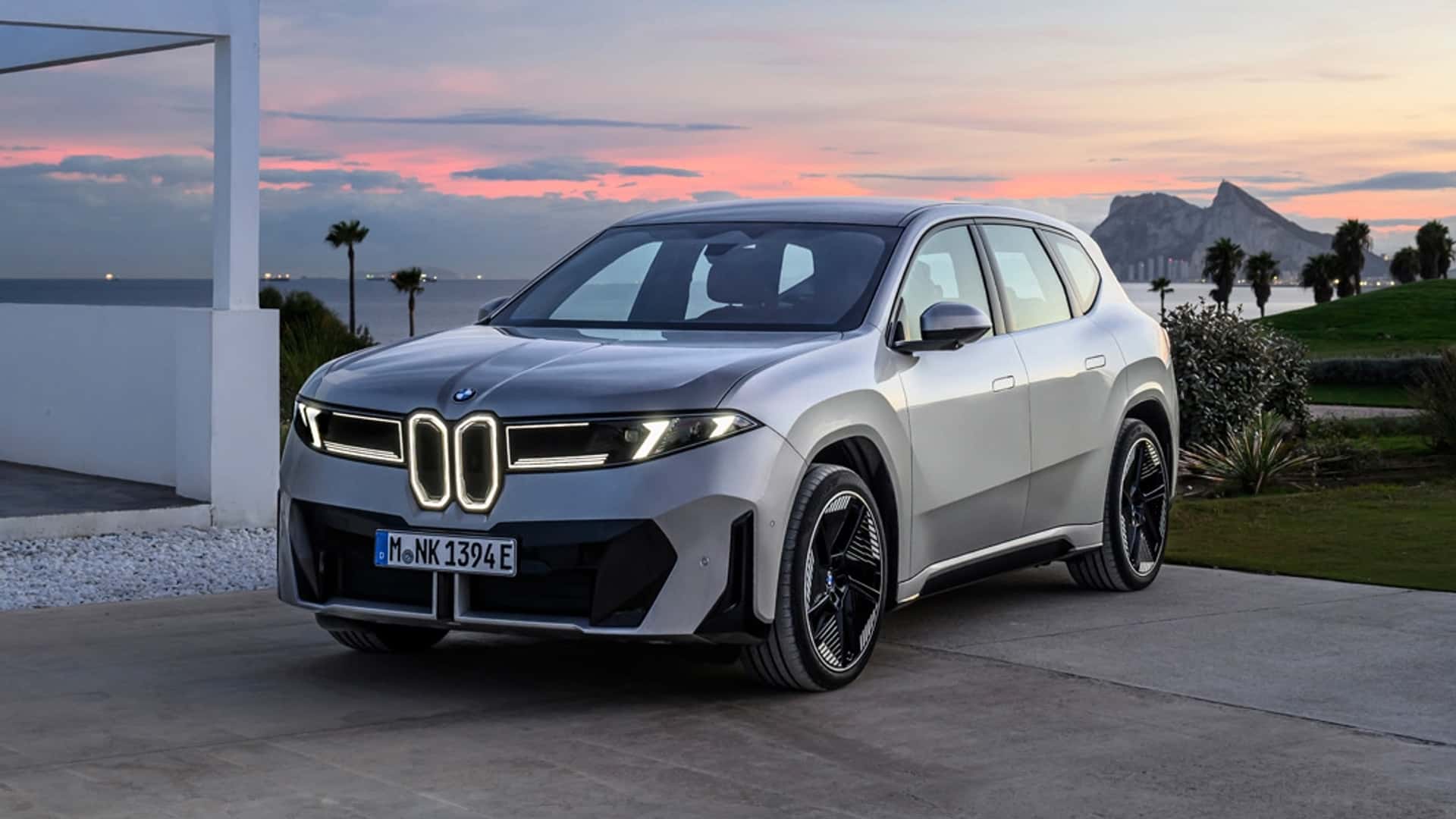
BMW introduced the rear-drive iX3 40 with an 82.6 kWh battery and a WLTP range of 395 miles, priced at €63,400 — €7,500 cheaper than the xDrive 50. The single-motor rear-wheel-drive produces 315 hp and 369 lb-ft, does 0-62 mph in 5.9s, tops out at 124 mph, and supports peak charging of 300 kW (10-80% in ~21 minutes; BMW says ~186 miles added in 10 minutes). The model sacrifices AWD, some charging speed (400 kW → 300 kW) and peak range versus the xDrive 50 but is positioned as a strong value/sweet-spot with expected EPA range comfortably over 300 miles; U.S. availability is unconfirmed.
BMW’s move to prioritize usable range over headline battery capacity crystallizes a transition from ‘bigger-pack = premium’ to ‘pack-efficiency = competitive advantage.’ That compresses OEM unit economics: for a given range target, pack-related COGS can fall roughly 10–20% if manufacturers harvest similar efficiency gains, enabling price cuts or margin improvement without material range compromise. Legacy OEMs with scale (lower fixed-cost base and multi-platform production) can capture this upside faster than pure-play incumbents who priced earlier on range leadership rather than standalone margin management.
Second-order supply effects are already visible: demand growth for incremental cell GWh is likely to decouple from vehicle unit growth over the next 12–24 months, shaving projected raw-material pull for nickel/cobalt/lithium by a few percent in the near run-rate case while creating a bifurcated aftermarket for ultra-fast charging hardware. Infrastructure winners will be those able to support 150–350 kW sites at scale, not exclusively 400+kW builds, shifting capex priorities for charging networks and CPOs within a 1–3 year horizon.
Key risks and catalysts are asymmetric. Upside for premium EVs remains if consumers prize AWD performance or ultra-fast charging, or if Tesla/Chinese players respond with lower-cost, higher-efficiency packs; either could re-establish a range premium and compress margins for mid-tier models. Monitor 2 catalysts in the next 6–12 months: OEM announcements of single-motor large-pack variants and quarterly cell GWh guidance from top suppliers — both will move valuation dispersion across OEMs rapidly.
AI-powered research, real-time alerts, and portfolio analytics for institutional investors.
Overall Sentiment
mildly positive
Sentiment Score
0.25
Ticker Sentiment
