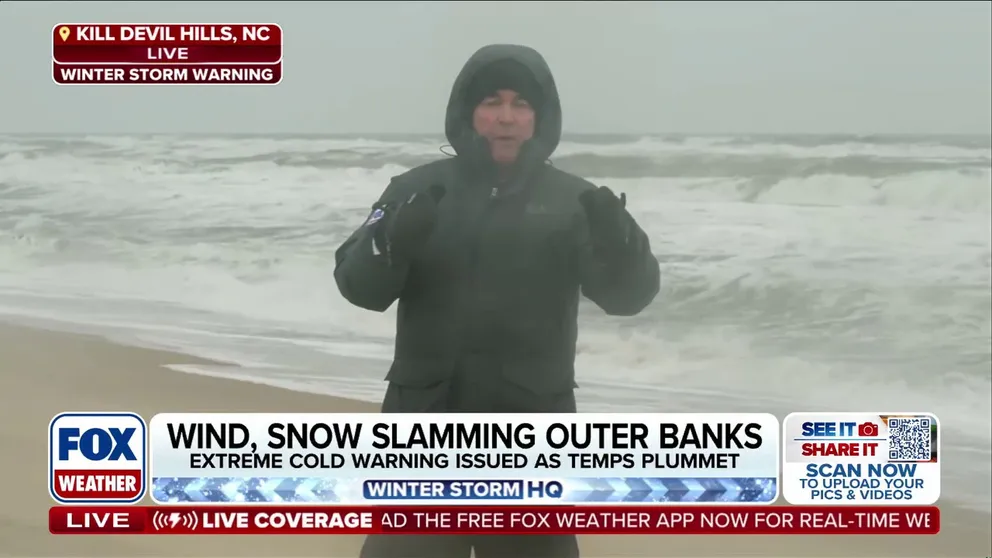
A rapidly intensifying nor'easter off the U.S. Southeast coast is producing 60–70 mph onshore gusts, high surf and significant beach erosion that threaten vulnerable Outer Banks homes in North Carolina. Since 2020, 27 privately owned NC beach houses have collapsed into the Atlantic — 16 of those in Rodanthe and Buxton during September–October 2025 — and live video captured at least one recent collapse, underscoring acute near-term property-loss risk, potential insurance exposures and heightened coastal real-estate vulnerability as the storm progresses.
Market structure: Rapid coastal erosion and repeated collapses concentrate losses on property owners, local contractors, P&C insurers writing coastal flood/wind, and short-term rental platforms with Outer Banks inventory. Winners include heavy building-materials suppliers and civil contractors that sell sand, rock, seawalls and reconstruction services (demand shock can raise volumes by 10–30% in affected counties over 6–18 months). Cat bond and reinsurance spreads should widen immediately; primary P&C spreads and equity volatility will spike near-term.
Risk assessment: Tail risks include federal/state moratoria on rebuilding, large-scale FEMA buyouts expanding beyond current footprints, or coordinated mortgage-call clauses forcing regional bank mark-to-market losses (1–5% regional credit hit). Immediate (days) impact: claims filings and local business interruption; short-term (weeks–months): insurer reserve revisions and rate filings; long-term (quarters–years): migration patterns, zoning changes and a structural reduction of coastal housing supply. Hidden dependencies: regional tax base erosion (affects muni credit) and platform revenue leakage from lost vacation stock.
Trade implications: Tactical shorts on coastal-exposed P&C insurers and regional lenders can profit from near-term volatility; medium-term longs in VMC/MLM and large civil contractors (Jacobs J) to capture reconstruction/mobilization revenue for 3–12 months. Use options to cap downside: 3-month put spreads on Allstate (ALL) / Travelers (TRV) and 6–12 month call positions on reinsurers (RNR) to play rate repricing. Rotate portfolio weight away from coastal-resort REITs and boutique banks into materials/utilities and municipal contractors.
Contrarian angles: The market may over-react to insurer loss headlines and underprice sustained demand for coastal defense — historical parallel: post-Sandy construction/materials outperformance for 12–24 months. Conversely, if federal buyouts become large, supply destruction could lift inland home prices and benefit national homebuilders while permanently impairing local mortgage pools. Watch FEMA buyout scale and state insurance rate filings — these catalysts will determine whether price moves are transient or structural.
AI-powered research, real-time alerts, and portfolio analytics for institutional investors.
Request DemoOverall Sentiment
moderately negative
Sentiment Score
-0.45
