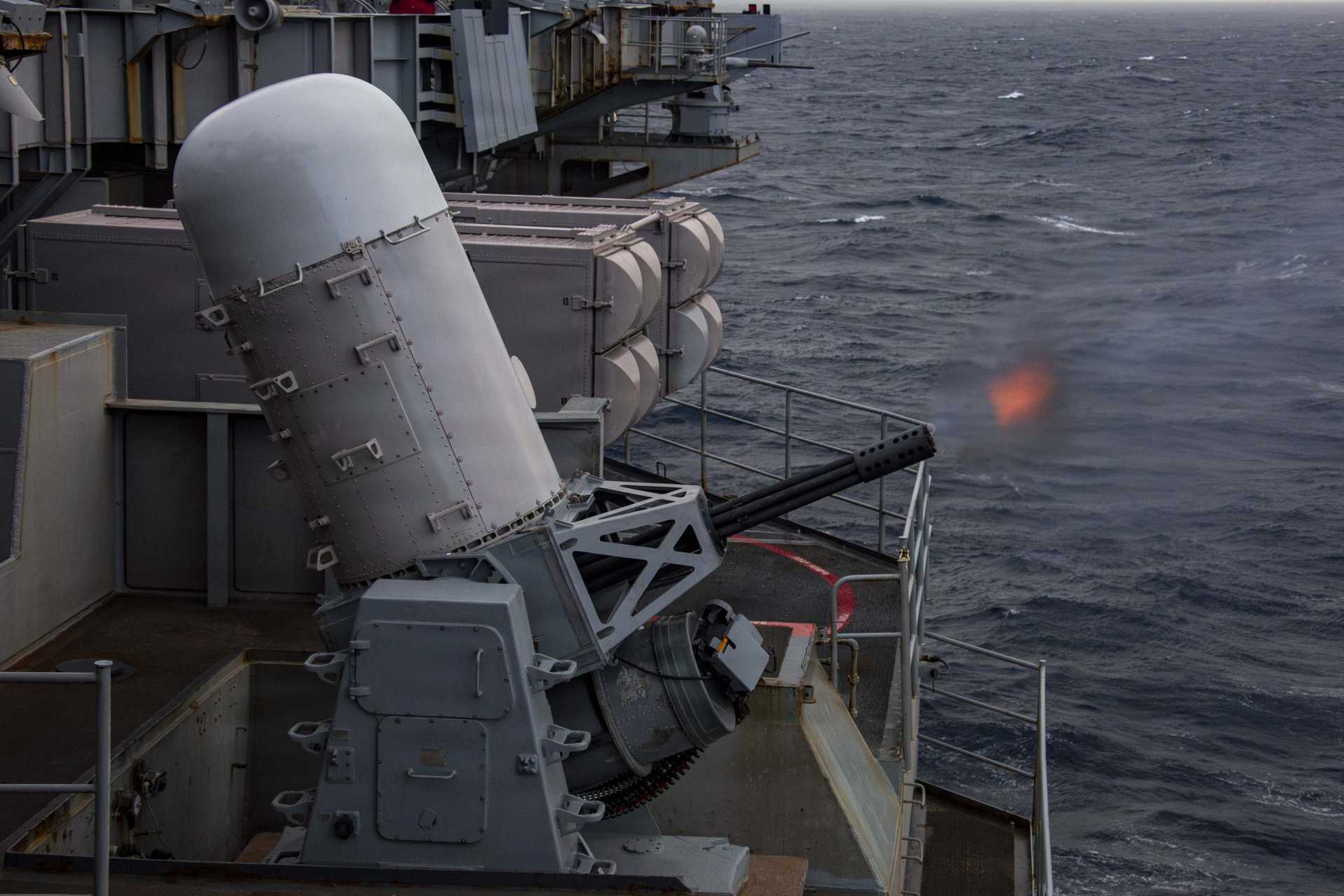
On 8 January 2026 the Nimitz-class aircraft carrier USS Abraham Lincoln (CVN-72) conducted a live-fire Phalanx CIWS exercise while deployed in the South China Sea, validating close-range defensive performance and crew proficiency under operational conditions. The report details the ship’s inner-layered defenses — four Phalanx CIWS mounts (20 mm M61A1, ~4,500 rpm, ~1.5–2 km range), two Mk 57 Mod 3 Sea Sparrow launchers (RIM-7, ~15–20 km range) and two RIM-116 RAM launchers (~9–10 km range) — and notes coordination with Aegis-equipped escorts and carrier air assets. The drill underscores growing emphasis on countering UAVs, loitering munitions and explosive USVs in littoral environments, reinforcing U.S. deterrence in the Indo-Pacific with limited direct market implications beyond potential sector sentiment for defense contractors.
Market Structure: The live-fire CIWS/RAM/Sea Sparrow demonstration lifts the investment case for U.S. defense primes (shipbuilders, missile/sensor suppliers, and systems integrators) by signaling continued Navy spending on layered shipboard defenses. Expect incremental procurement demand of sensors, munitions, and USV counter-systems over the next 12–36 months; winners are RTX, LHX, HII, NOC and GD with existing Navy programs and production capacity. Losses are cyclical commercial marine and leisure operators exposed to South China Sea tensions (cruise lines, regional logistics) if operations or insurance costs rise.
Risk Assessment: Tail risks include a kinetic escalation in the Indo‑Pacific that triggers sanctions, supply-chain shocks, or a temporary spike in shipping insurance (Bermuda re-insurance repricing) — a low-probability but market-moving event that would drive flight-to-quality into US Treasuries and USD. Near-term (days–weeks) expect modest defense equity outruns; medium-term (3–12 months) depends on FY27 budget approvals and specific Navy contract awards; long-term (1–3 years) is structural: sustained demand for counter‑swarm tech but constrained by defense production bottlenecks and congressional appropriations.
Trade Implications: Tactical long bias to large-cap defense and naval integrators (RTX, NOC, HII, GD, LHX) and the ITA ETF; size initial exposures modestly (2–4% portfolio each) and add on confirmed contract awards. Put on cruise/consumer discretionary names (CCL, RCL) as geopolitical hedges; consider buying commodity (nickel/steel) selective exposure if naval shipbuilding ramps meaningfully. Use options to express upside with limited capital while hedging macro tail risk.
Contrarian Angles: Consensus prizes headline defense demand but underestimates supply friction: engine, semiconductor, and specialty steel shortages could delay deliveries, creating short-term multiple compression for primes despite order books. The market may underprice winners with deep integration footprints (LHX, HII) versus pure-play missile makers; conversely, an overreaction to one high‑visibility drill could fade if Congress withdraws supplemental funding within 3–6 months.
AI-powered research, real-time alerts, and portfolio analytics for institutional investors.
Request DemoOverall Sentiment
mildly positive
Sentiment Score
0.25
