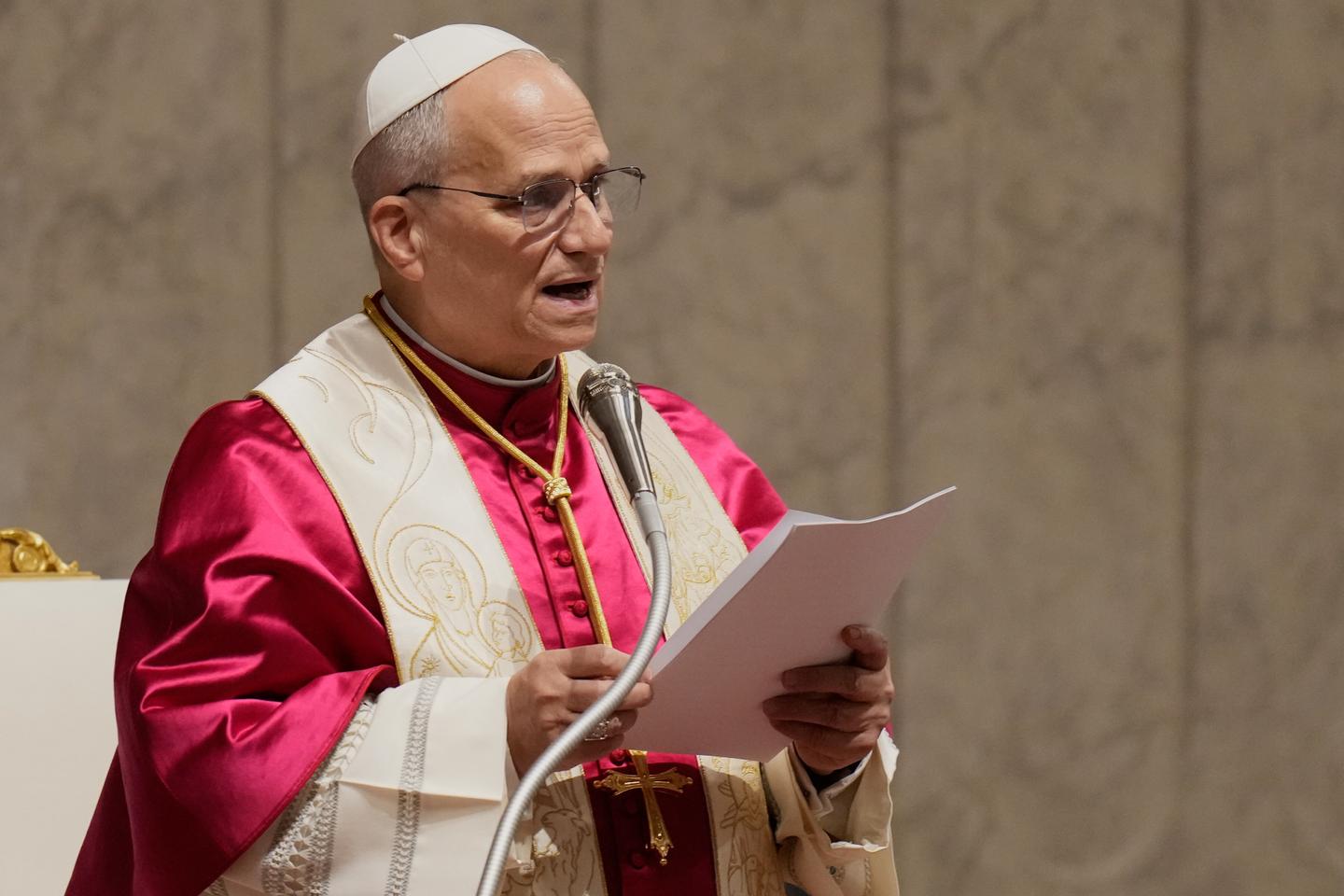
Pope Leo XIV used a last-minute peace prayer at Saint Peter's Basilica to sharply criticize the Trump administration’s wars in Iran and Lebanon, urging Catholics to pressure elected officials and reject rearmament. The remarks are politically pointed and negative for U.S. foreign-policy sentiment, but the article contains no direct market data or company-specific implications. Brian Burch, the U.S. representative to the Holy See, was absent from the event.
This is not a direct market catalyst, but it is a useful signal that the political legitimacy of escalation is starting to fray even inside traditionally supportive institutions. When the moral center of a large domestic constituency leans against military adventurism, the second-order effect is usually not immediate budget cuts; it is slower erosion of coalition durability, especially around supplemental funding, munitions replenishment, and foreign aid packages. That matters most for defense primes with elevated expectations on multi-year backlogs, because policy friction can delay award timing rather than cancel demand outright.
The market implication is asymmetrical: headline risk rises for defense and security supply chains, while traditional safe-haven beneficiaries may see only brief, tactical flows. If this narrative broadens into voter pressure ahead of election cycles, expect more scrutiny on strike authorities, war powers, and overseas basing costs, which can compress the probability of rapid escalation premium embedded in certain defense names. The more exposed segment is the politically sensitive, lower-quality end of the defense stack where order visibility depends on discretionary foreign policy decisions rather than baseline replacement demand.
Contrarianly, the consensus may be underestimating how little this changes actual procurement math over the next 6-12 months. Even if rhetoric cools, inventories remain depleted and the munitions pipeline is still constrained, so the physical demand path for missiles, air defense, and ISR is likely more durable than the political noise suggests. The better trade is not to short the whole defense complex, but to fade the most election-sensitive multiple expansion and own the names with domestic demand, backlog visibility, and faster cash conversion.
AI-powered research, real-time alerts, and portfolio analytics for institutional investors.
Request TrialOverall Sentiment
mildly negative
Sentiment Score
-0.25
The cleaner setup is around event risk: further rhetoric, congressional hearings, or a surprise funding constraint could hit sentiment quickly over days to weeks, but any durable change would require a real policy pivot over quarters. Watch for whether this becomes a broader church-state narrative affecting Catholic-heavy swing constituencies; if so, it can marginally increase downside risk for candidates tied to interventionist policy and indirectly support anti-escalation assets.
