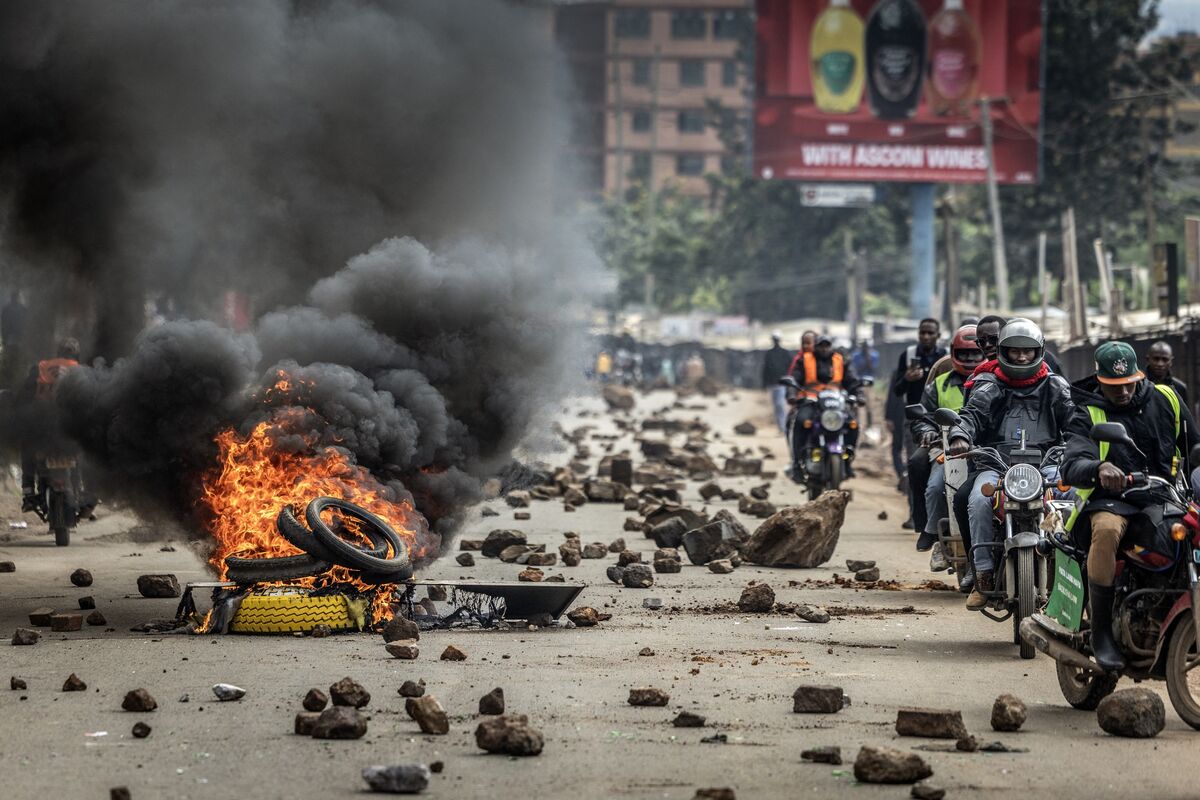
Fuel price protests have erupted in Kenya as taxi operators demand all fuel taxes be scrapped, highlighting pressure from surging pump prices. The dispute puts the Kenyan government in a fiscal bind, with the issue centered on tax relief versus revenue needs. The situation is negative for near-term domestic stability and could add to inflationary pressure, though the broader market impact is likely limited.
The immediate market read is not “Kenya risk” in the abstract; it is a margin squeeze on every business that depends on road fuel as a quasi-taxed input. The first-order hit is on transport operators, but the second-order effect is broader: food distribution, informal retail replenishment, and passenger mobility all become more expensive, which can feed a self-reinforcing inflation loop over the next 4-12 weeks. That matters because once transport inflation bleeds into staples, the central bank faces a bad choice between defending growth and defending the currency.
Politically, this is a classic pre-election fiscal stress test. Fuel taxes are one of the few elastic revenue levers available to a cash-constrained government, so any rollback would be a signal that fiscal consolidation is weakening under street pressure. The risk is not just lower revenue; it is a credibility shock that can widen sovereign spreads and pressure the shilling if investors conclude the state is monetizing social stability with deferred adjustment. The near-term catalyst set is binary: protest escalation, partial tax relief, or a forceful enforcement response that calms markets without solving the underlying affordability problem.
The contrarian view is that the market may be overpricing the duration of disruption. If policymakers opt for targeted relief—temporary excise suspension, transport-sector subsidies, or staggered tax implementation—the immediate inflation impulse could fade quickly, while the political signal remains manageable. The bigger medium-term risk is that repeated ad hoc concessions entrench a pattern where every fuel shock becomes a fiscal event, which is more damaging to duration assets and local risk premia than the protests themselves. For investors, the real question is whether this becomes a one-off street flare-up or the start of a broader regime shift toward weaker revenue discipline and higher domestic risk pricing.
AI-powered research, real-time alerts, and portfolio analytics for institutional investors.
Request DemoOverall Sentiment
moderately negative
Sentiment Score
-0.35
