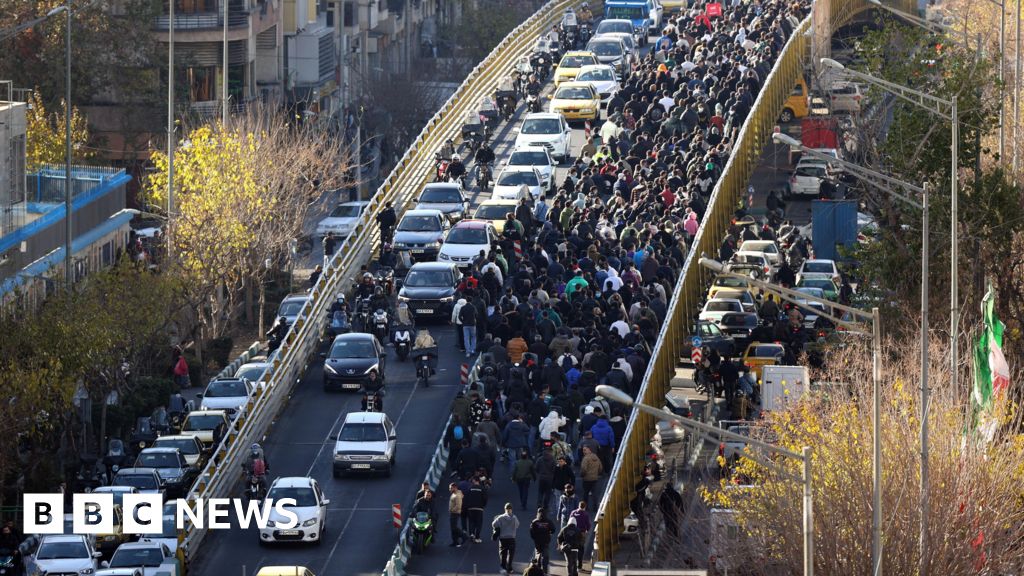
Widespread protests and strikes over inflation and a record-low Iranian rial have spread from Tehran to multiple cities, prompting police action and heightened social unrest. The government accepted the resignation of central bank governor Mohammadreza Farzin and named former finance minister Abdolnasser Hemmati, while President Masoud Pezeshkian ordered talks with protest representatives — developments that increase the likelihood of policy shifts, capital controls or intervention in FX markets. Coupled with anti-regime chants, student involvement and heightened US/Israeli rhetoric on Iran, the situation raises sovereign, FX and regional market risk and is likely to push investors toward a risk-off stance.
Market structure: Rapid rial devaluation and domestic unrest create clear winners (safe-haven assets, regional defence contractors, dollar and US Treasuries) and losers (Iran-linked credit, local banks, consumer discretionary and frontier EM FX). Pricing power shifts toward energy and metal exporters if sanctions/instability push risk premia into oil shipping or supply routes; importers and domestic creditors face margin pressure and deposit flight. Cross-asset signals: expect near-term EM equity negative shocks, FX volatility spikes, higher oil risk-premium, bid for gold and lower real yields as capital flees to core bonds.
Risk assessment: Tail risks include military escalation (low-probability, high-impact) which could spike Brent +20–40% and cause 100–200 bps regional sovereign spread widening; banking runs and SWIFT disconnection remain non-linear risks for Iranian counterparties and any exposed correspondent banks. Immediate (days) — volatility/haircuts; short-term (weeks–months) — capital controls, rate hikes or FX reform; long-term (quarters–years) — structural capital flight and fiscal stress. Hidden dependencies: remittances, oil export chokepoints (Strait of Hormuz), and sanctions that could rapidly reprice insurance and shipping costs.
Trade implications: Short EM beta and buy hedges immediately: 1–3 month put protection on broad EM (EEM) and a small long in GLD and TLT to capture risk-off; tactical long energy calls (XLE) as a convex play if oil spikes >10% within 90 days. Pair trades: long GLD (safety) / short EEM (risk) or long TLT / short EMB to express flight-to-quality; consider 3-month option structures to limit capital at risk. Sector rotation: reduce EM cyclical and consumer exposure, increase allocation to defense (LMT,NOC), energy, and core sovereign duration.
Contrarian angles: Markets often overshoot in first 10–20 trading days — if protests remain localized or Tehran implements credible FX stabilizers (currency band, dual market unification), EM risk premium could snap back 15–25%. Consensus may underprice non-linear policy responses (capital controls, rapid central bank action) that temporarily stabilize assets; conversely, if oil/insurance costs rise modestly <10%, defense/energy longs may be crowded and mean-revert. Historical parallels (2019–2020 EM shocks) show key catalyst for sustained sell-off is multi-week escalation or sanctions – absence of that implies tactical hedges rather than permanent large reallocations.
AI-powered research, real-time alerts, and portfolio analytics for institutional investors.
Request DemoOverall Sentiment
strongly negative
Sentiment Score
-0.65
