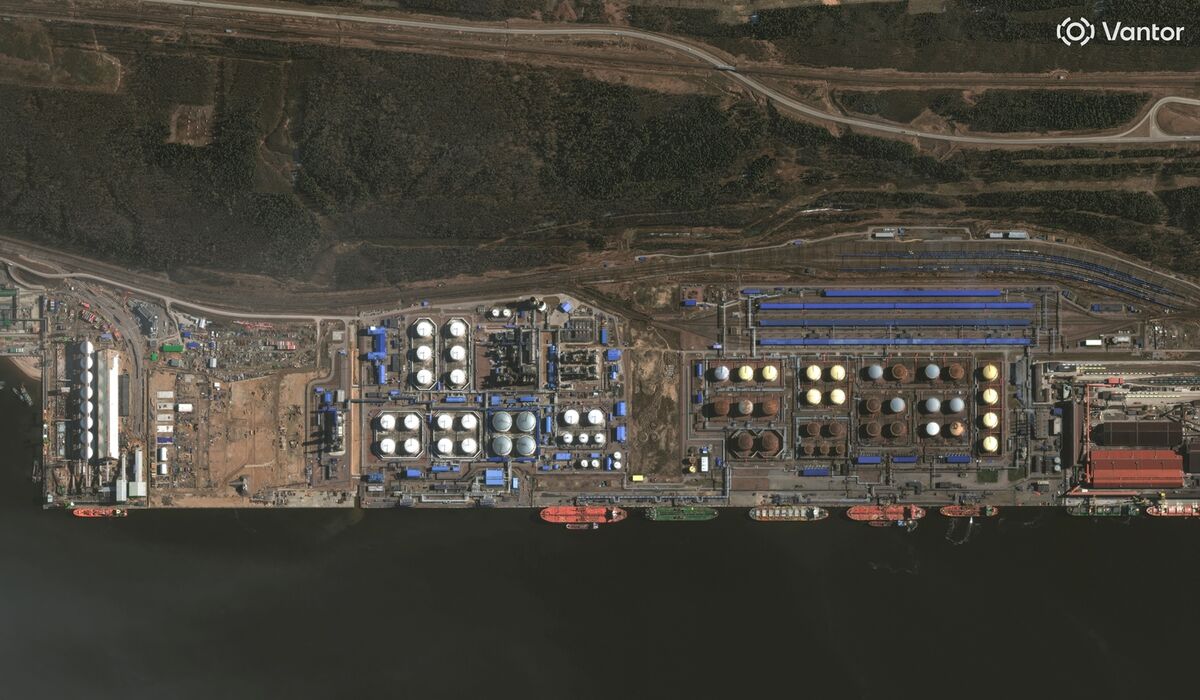
Ukraine reported a strike on Russia’s Ust-Luga oil terminal, hitting three reservoir tanks owned by Transneft-Baltika; the scale of damage is still being clarified. The attack comes as Ust-Luga had just resumed crude loadings after days of disruptions, risking renewed delays to Baltic petroleum exports and upward pressure on regional oil flows and prices.
A discrete hit on a Baltic export node has outsized market effects because NW European refined-product balances are thin and rely on a handful of loadout terminals; removing even modest daily export capacity forces immediate re-routing, raises short-term freight demand for short-haul product tankers, and steepens nearby ULSD/gasoil cracks within days. Expect most P&L to accrue to owners of available spot storage, trading houses able to source alternative barrels, and tanker owners who can pick up incremental short voyages; conversely, refiners running marginal units that depend on tight-grade seaborne supply are the pressured cohort.
Price transmission will be front-loaded (days–weeks) via freight and immediate product crack moves, then medium-term (1–3 months) via refinery feedstock reshuffling and trans-Atlantic arbitrage flows. If closure/repair timelines stretch beyond 30–60 days the market shifts from logistical premium to structural rerouting: European buyers will re-contract from farther sources, increasing voyage days and cash freight by multiples and widening product spreads.
Tail-risk: escalation of attacks or countermeasures that expand to pipelines or multiple terminals would push premium from regional to pan-European, compressing availability and inviting political/insurance intervention (higher war risk premia, special surveys). The contrarian angle: markets often overshoot in the first 72 hours on headline strikes; if immediate insurance/freight spikes force temporary ballast (owners refusing risky voyages), the snap tightening can create an opportunity for front-month longs that mean-revert once alternative loadings ramp within 2–6 weeks.
AI-powered research, real-time alerts, and portfolio analytics for institutional investors.
Overall Sentiment
moderately negative
Sentiment Score
-0.60
