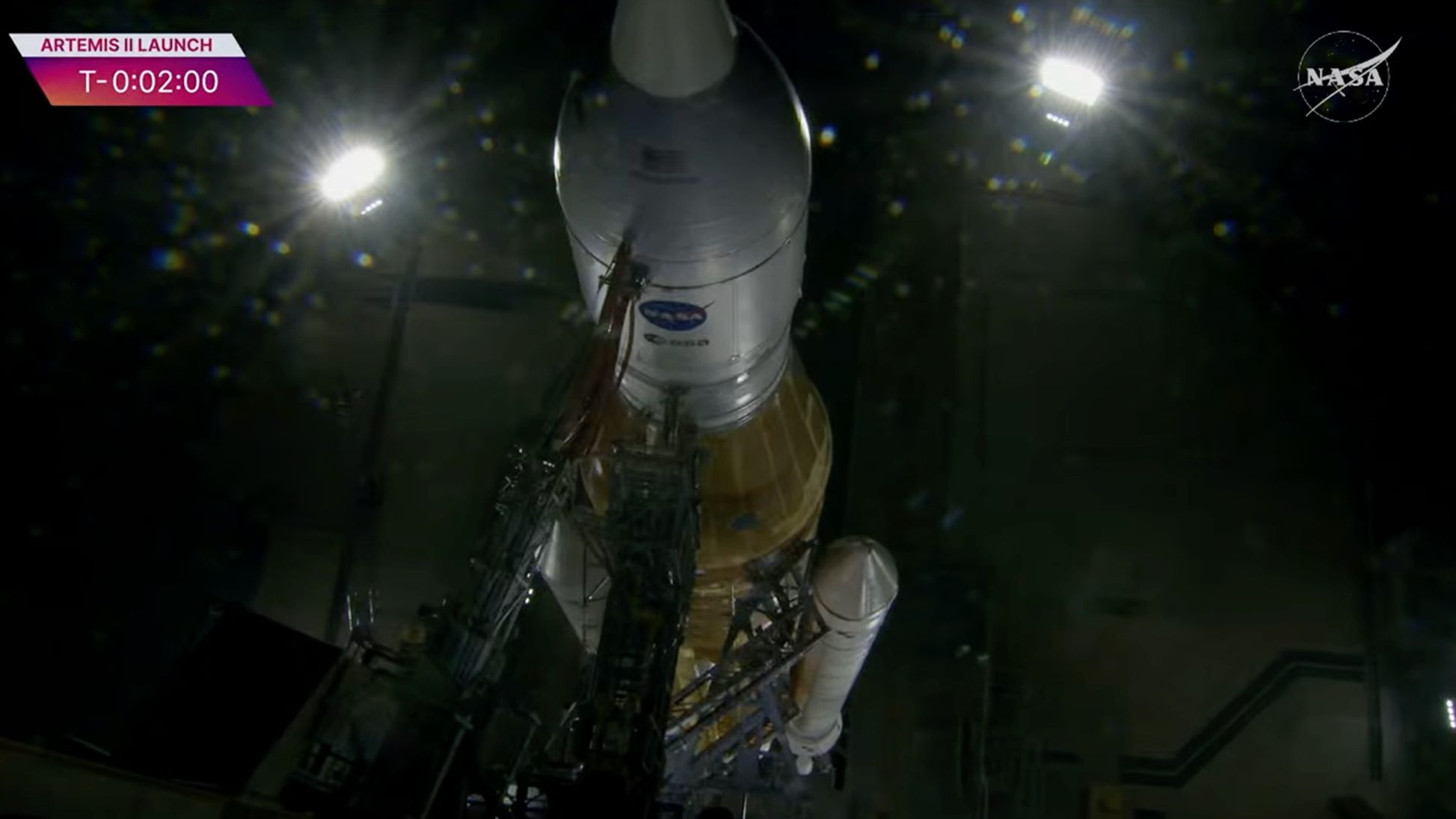
NASA completed the Artemis 2 wet dress rehearsal at Kennedy Space Center, successfully fueling both stages of the SLS with about 730,000 gallons (2.76 million liters) of supercold liquid hydrogen and liquid oxygen without exceeding ground hydrogen-leak safety limits; teams also closed the Orion crew hatch, secured the abort system, and ran two terminal counts to T‑33 and T‑29. A brief booster avionics voltage anomaly paused the second terminal count, but seals replaced after an earlier Feb. 2 LH2 leak held during a Feb. 12 partial fill, leaving the mission tentatively on track for the March 6–9 (and March 11) launch window — a key operational milestone for NASA and its aerospace contractors as the first crewed lunar flight since Apollo.
Market-structure: A successful WDR that resolves LH2 leak risk de-risks NASA primes (Lockheed Martin LMT, Northrop Grumman NOC, Boeing BA, Raytheon RTX, Jacobs J) and their supply chains for the March/April launch windows. Expect a modest re-rating (single-digit %) in contractor equities if NASA confirms go-for-launch; pure-play commercial space names (Virgin Galactic SPCE, small-cap suppliers) gain less because demonstrated government program continuity favors large primes with long-term contracts.
Risk assessment: Tail risks include a repeat LH2 leak or a safety incident that could push Artemis 2 into multi-month delay, driving 10-30% downside in small-cap suppliers and contractor reputational hits; political/budget cuts are lower probability but high impact over 12–24 months. Near-term (days) volatility centers on the NASA press conference and March launch window; medium-term (3–12 months) risks are contract flows and supply-chain bottlenecks; long-term (1–5 years) is program funding and competition from commercial lunar architectures.
Trade implications: Favor a targeted overweight in large aerospace primes (LMT, NOC, RTX, J) with 6–12 month horizons and defined stops; use options to express directional with limited capital. Avoid or trim pure-play commercial-space equities (SPCE) and thematic ETFs (ARKX) where success of government programs reduces urgency for privatized lunar alternatives.
Contrarian angles: The market may underprice the probability of repeated technical setbacks — a single LH2 recurrence could erase near-term gains and widen spreads in contractor credit. Conversely, success may be largely priced in; look for mispricings in mid-cap suppliers (ground systems, avionics) where earnings revisions could be +15–25% if launches proceed on schedule.
AI-powered research, real-time alerts, and portfolio analytics for institutional investors.
Request DemoOverall Sentiment
mildly positive
Sentiment Score
0.30
