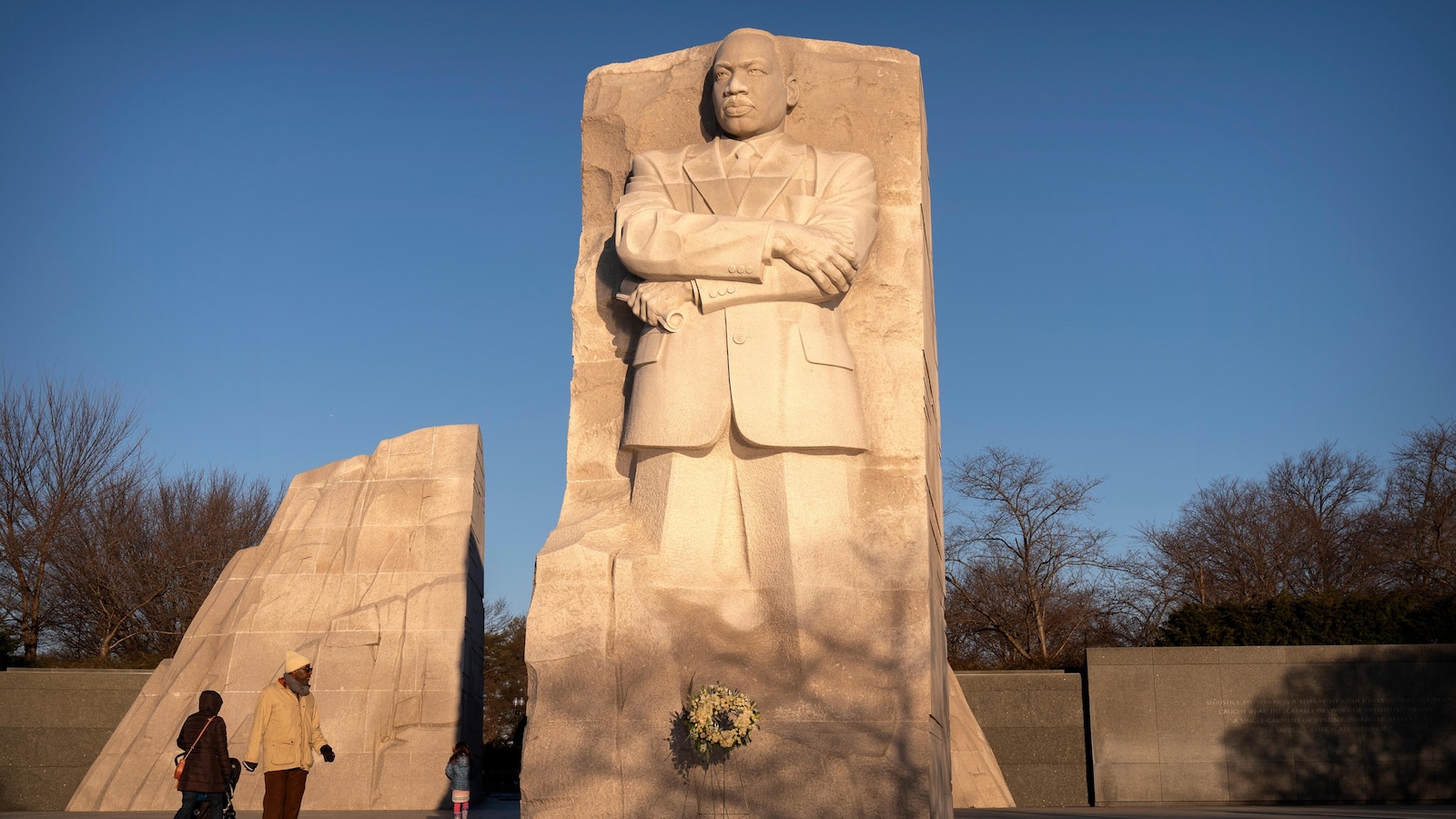
Federal and state government offices, courts, most schools, U.S. stock markets and banks are closed Monday for Martin Luther King Jr. Day, while most private businesses remain open and markets are scheduled to reopen Tuesday. The National Park Service has removed free admission on MLK Day (and Juneteenth), shifting free-entry days to Flag Day and the President's birthday, but California Governor Gavin Newsom ordered more than 200 state parks to offer free admission Monday — a policy divergence with modest implications for park revenues and localized visitor flows.
Market structure: Holiday closures compress on‑shore liquidity (US equities closed Monday) and shift flow into thinner overnight/futures venues; historical intraday volume on S&P futures and cash proxies can fall ~20–30% on US federal holidays, widening bid/ask spreads and making market‑making profitable. Winners: CME/GLOBEX liquidity providers, short‑term T‑bill holders, state park operators (if free admission reversed) and defensive large caps; losers: high‑beta small caps and retail traders running short‑gamma into low‑liquidity sessions. Travel/leisure effects are granular — California’s state parks offering free admission is a localized revenue transfer (state to private concessions) with <1% revenue impact for national leisure chains but a measurable weekend bump for regional lodging/retail.
Risk assessment: Key tail risks are (1) a payment/settlement outage from banks on a federal holiday causing 1–3 day funding squeezes and 5–20bp swings in repo/CP spreads, and (2) political escalation around Park Service changes triggering boycotts or state-federal litigation that could hit concessionaire revenues in specific states. Time horizon: immediate (days) — elevated gap volatility into Tuesday reopen; short (weeks) — volatility mean reversion and option premium normalization; long (quarters) — negligible macro impact but persistent political/regulatory uncertainty for federally dependent leisure contractors. Hidden dependency: many funds and corporates use Fedwire/ACH on Mondays — holiday shifts can concentrate settlements on Tuesday, amplifying flows.
Trade implications: Avoid initiating new short‑dated short‑gamma positions over the holiday window; prefer buying one‑ to two‑week protective puts on SPY/QQQ sized to 1–3% portfolio risk to cover Tuesday gap risk. Increase ultra short T‑bill exposure (BIL/SHV) by 3–5% of portfolio for settlement liquidity and carry capture for 7–14 days. Rotate 2–4% from IWM/high‑beta names into XLP/XLU for the holiday week to reduce tail exposure; close or re‑assess positions after Tuesday’s settle once normal volumes return.
Contrarian angles: Consensus underestimates the multi‑day closure effect — the weekend + holiday compound raises Tuesday open variance by ~30–50% vs a normal Tuesday, so cheap short‑dated protection can be mispriced. The market may overpay for long VIX instruments (VXX/UVXY) if traders reflexively buy protection; a cheaper calendar spread (buy near‑term puts, sell 2–3 week puts) can harvest mean reversion in implied vol. Unintended consequence: over‑hedging reduces carry and may cost 10–30bps; manage sizing and close once liquidity normalizes.
AI-powered research, real-time alerts, and portfolio analytics for institutional investors.
Request DemoOverall Sentiment
neutral
Sentiment Score
0.00
