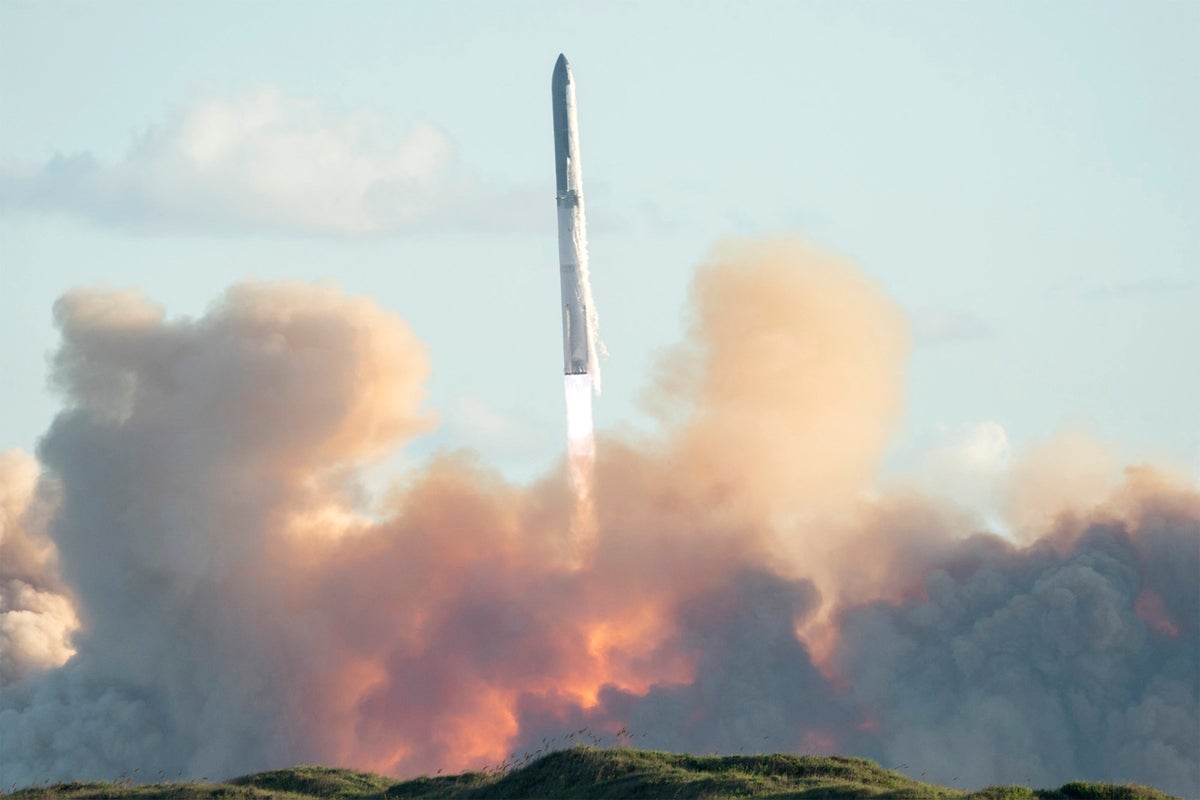
Elon Musk announced SpaceX will prioritize building a ‘‘self-growing city’’ on the Moon within the next decade, pausing near-term focus on Mars and saying Mars work will resume in five to seven years. The shift is driven by repeated Starship development failures, delays to NASA’s Artemis III (now no earlier than 2028), and strategic moves including a merger with xAI and plans for orbital data centers and lunar manufacturing. For investors, the update signals continued technical and schedule risk for Starship-dependent programs and potential reallocation of SpaceX capital and priorities, with implications for NASA contractors and adjacent ventures but limited near-term public market impact given SpaceX’s private status.
Market structure: A pivot to a lunar city amplifies demand for lunar landers, robotics, high-bandwidth orbital infrastructure and legacy defense primes that win NASA contracts (Lockheed LMT, Northrop NOC, L3Harris LHX, Maxar MAXR). Heavy‑lift dominance by Starship — if proven — compresses per‑kg launch pricing by an order of magnitude relative to current heavy rockets, squeezing small-launch margins (Rocket Lab RKLB, small-cap launchers) and consolidating pricing power toward SpaceX (private). Cross‑asset: expect modest tightening in defense credit spreads (bps move), modest commodity demand pressure for aerospace alloys (aluminum/titanium +3–7% multi‑year) and headline-driven FX/volatility moves in USD and equities on test outcomes.
Risk assessment: Tail risks include catastrophic Starship failures, Congressional funding shifts (NASA budget swings >±5%), and increased antitrust/regulatory scrutiny of a de facto launch monopoly; each could move valuations 20–50% in affected names. Time horizons: immediate (0–30 days) = headline and IV spikes; short (3–12 months) = contract awards and Starship flight cadence; long (3–10 years) = lunar infrastructure buildout and supply‑chain scaling. Hidden dependency: SpaceX capital allocation to xAI/orbital data centers could delay lunar hardware spend despite stated priority. Key catalysts: successful orbital Starship demo, FY2026–FY2028 NASA appropriations, and commercial lunar contract awards.
Trade implications: Direct plays favor MAXR and defense primes for stable cashflow from lunar/Artemis work; short selective small launchers (RKLB, small caps) where Starship reduces TAM. Use 6–12 month option structures to express views: buy MAXR LEAPS or call spreads, buy RKLB put spreads. Pair trade: long LMT (or NOC) / short RKLB to capture secular government spend vs. commercial launch compression. Enter size on pullbacks of 5–10% or immediately on failed/passed major Starship test within next 90 days; reassess at each catalyst.
Contrarian angles: Consensus underprices political/regulatory backlash and export/ITAR constraints that could limit rapid lunar industrialization — this raises value of diversified primes over single‑provider bets. Market may already overpenalize public small‑launcher names; if Starship underperforms, those names can rebound sharply (reversal risk). Historical parallel: post‑Falcon 9 consolidation (2013–2018) benefited vendors with government lock‑in; expect similar bifurcation. Unintended consequence: SpaceX dominance could trigger forced diversification of government contracts, benefiting incumbents (LMT/NOC) more than private launch peers.
AI-powered research, real-time alerts, and portfolio analytics for institutional investors.
Request DemoOverall Sentiment
mixed
Sentiment Score
-0.05
Ticker Sentiment
