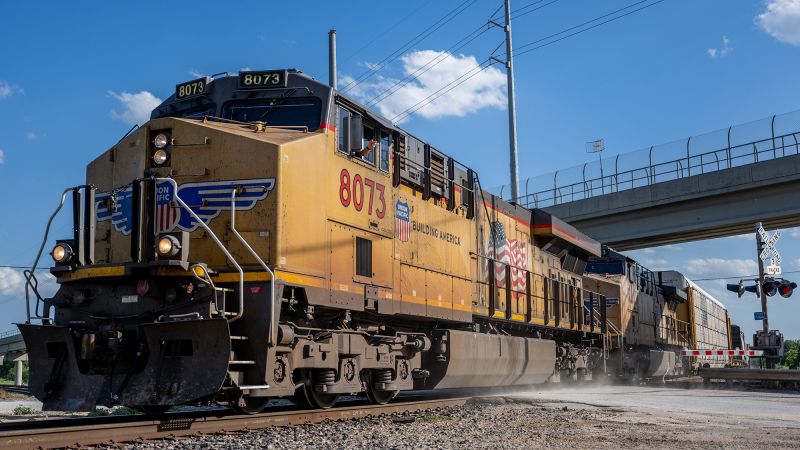
Union Pacific and Norfolk Southern announced a $72 billion stock and cash merger, aiming to create America's first transcontinental freight railroad and marking the largest deal in the consolidated rail sector. This proposed combination, linking the western and eastern US, will serve as a significant test for regulatory approval, particularly with antitrust authorities and the Surface Transportation Board, despite a recent precedent for end-to-end mergers. While the companies tout seamless cross-country logistics, the deal raises concerns among rail customers and logistics experts about potential service disruptions, supply chain issues, and higher rates, given historical post-merger performance in the industry, and could prompt further consolidation among remaining competitors.
Union Pacific and Norfolk Southern have announced a transformative $72 billion stock and cash merger intended to create the first single-line transcontinental freight railroad in the United States. This end-to-end combination of UNP's western network and NS's eastern footprint aims to provide seamless coast-to-coast service, a long-sought goal in the industry. However, the proposal faces significant hurdles, primarily from regulatory bodies including the Surface Transportation Board (STB). While the STB's 2023 approval of the Canadian Pacific-Kansas City Southern merger provides a positive precedent for non-overlapping networks, this deal's sheer scale will be a major test. The transaction is met with considerable skepticism from rail customers and logistics experts, who cite a history of service degradation and rate increases following previous industry mergers. An expert from Penn State Harrisburg noted that service has suffered after every past rail merger, and questioned the real-world efficiency gains given that few containers travel uninterrupted from coast to coast. Furthermore, the deal is expected to exert intense competitive pressure on rivals BNSF and CSX Corp., potentially catalyzing a defensive merger between them and consolidating the market into two primary east-west carriers.
AI-powered research, real-time alerts, and portfolio analytics for institutional investors.
Overall Sentiment
mixed
Sentiment Score
-0.10
Ticker Sentiment
