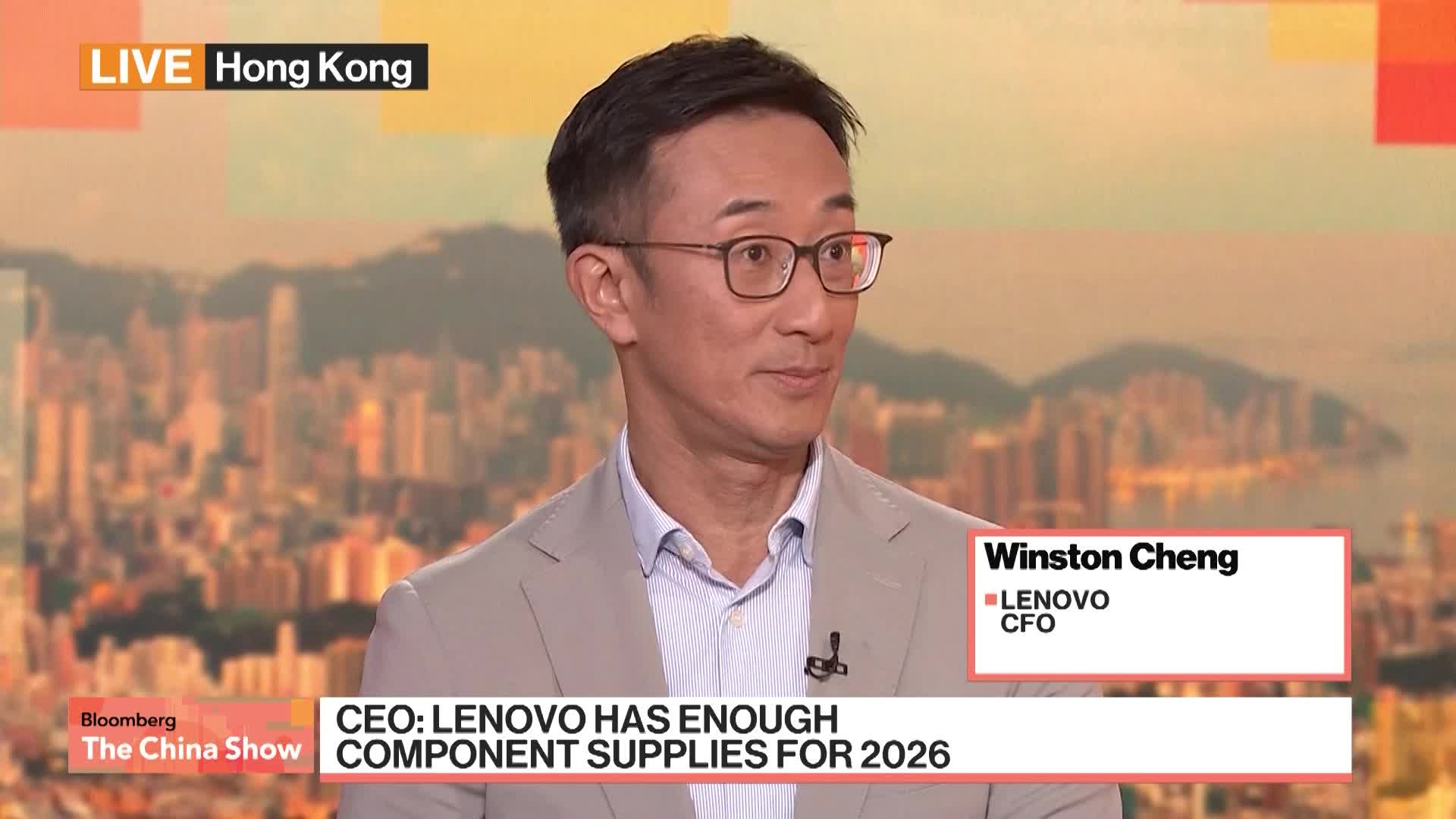
Lenovo's CFO discussed second-quarter results and highlighted the impact of an AI-driven boom on demand for higher-performance systems and infrastructure. Investors should watch the Q2 revenue mix, margin trajectory and any forward guidance tied to AI-related enterprise spending, as these factors will shape near-term earnings and the hardware cycle.
Winners concentrated in GPU/accelerator designers (NVDA, AMD) and high-margin server OEMs (AVGO, MRVL, CSCO) as enterprises re-arm for AI; legacy low-margin PC sellers (HPQ, DELL) face pricing pressure unless they capture higher-spec skus. Market share shifts should favor fab-constrained chipmakers with superior architecture — expect 5–15% gross-margin divergence across suppliers over 12 months as design wins concentrate demand. Supply/demand tightness for high-end HBM, GPUs and datacenter servers will push component lead times out 3–9 months, supporting upstream capital goods and copper prices; increased capex cadence can widen credit spreads for small-tier suppliers while steepening curves if sustained.
Key tail risks: export controls or broad China sanctions could wipe out >20% of addressable market for certain suppliers within weeks; a macro slowdown could compress enterprise AI spend by 30–50% over 2–4 quarters. Near-term (days-weeks) volatility will hinge on Q2 guidance and order cadence; medium-term (3–12 months) depends on fabs’ capacity additions and booking trends; long-term (2–5 years) hinges on software monetization replacing hardware cyclicality. Hidden dependency: cloud hyperscalers’ internal tooling decisions (build vs. buy) can rapidly re-route demand and margin pools.
Actionable trades: bias long NVDA (3–4% portfolio) via 3–6 month call spreads to cap cost, long AVGO and MRVL for infrastructure capture, and short HPQ/DELL (2% each) on earnings-linked mean reversion. Consider a pair: long NVDA, short INTC (ratio 1:2) to express GPU vs. legacy CPU transition. Use straddle risk management around earnings — buy 6–12 week OTM call spreads on NVDA and AVGO; sell covered calls on mature PC names to harvest premium.
Contrarian view: consensus assumes durable margin expansion; history (2017–18 GPU cycles) shows sharp reversion once hyperscalers integrate custom silicon. The market may underprice the risk of hyperscalers internalizing stacks — a 15–25% revenue reallocation risk over 18–36 months. Watch bookings-to-ship ratios and hyperscaler capex guidance as leading indicators; if bookings fall >20% sequentially, unwind hardware longs aggressively.
AI-powered research, real-time alerts, and portfolio analytics for institutional investors.
Request DemoOverall Sentiment
mildly positive
Sentiment Score
0.30
