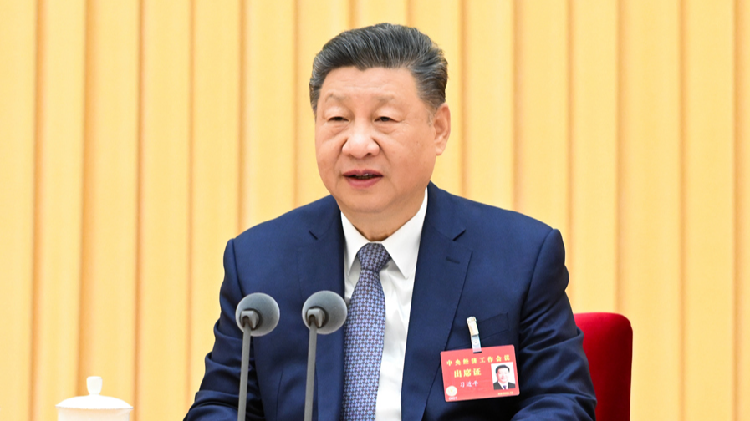
At the Dec. 10–11 Central Economic Work Conference in Beijing, Xi set out 2026 priorities — framed as “pursuing progress while ensuring stability” — across eight core tasks focused on boosting domestic demand, promoting innovation, deepening reform and opening-up, advancing low‑carbon development and improving livelihoods as the guiding agenda for the first year of the 15th Five‑Year Plan. Policymakers signaled concrete demand‑side measures (equipment upgrades, consumer trade‑ins, removal of unreasonable consumer restrictions) after consumption accounted for 53.5% of GDP growth in Q1–Q3 and retail sales exceeded 40 trillion yuan Jan–Oct (+4.3% YoY), while trade stayed resilient (imports+exports 41.21 trillion yuan Jan–Nov, +3.6%). The plan also prioritizes enterprise‑led innovation, AI governance, IP protection and new international innovation hubs alongside expanded services opening and free‑trade zone initiatives, delivering policy clarity that underpins opportunities in domestic consumption plays, high‑tech/AI clusters and sectors exposed to further opening.
At the Dec. 10–11 Central Economic Work Conference in Beijing, Xi Jinping framed 2026 as the opening year of the 15th Five‑Year Plan and set eight core tasks with the dual objective of “pursuing progress while ensuring stability” and “improving both quality and effectiveness.” Policymakers signaled targeted demand‑side interventions, notably the “two new” policies (large‑scale equipment upgrades and consumer goods trade‑ins) and the removal of unreasonable consumer restrictions to stimulate spending.
Data presented at the meeting underscore consumption’s central role: final consumption expenditure accounted for 53.5% of GDP growth in Q1–Q3 and retail sales from January to October topped 40 trillion yuan (+4.3% YoY), which the IMF cited when upgrading China’s 2025 GDP forecast. These metrics increase the likelihood of calibrated fiscal and regulatory support for consumer and services sectors in 2026.
The conference elevated innovation and opening‑up as complementary engines: China entered the top 10 of the 2025 Global Innovation Index, the Shenzhen–Hong Kong–Guangzhou cluster ranked first globally, and Bloomberg Economics projects high‑tech’s share of GDP rising from 14.3% in 2023 to nearly 19% by 2026. Trade showed resilience (Jan–Nov imports+exports 41.21 trillion yuan, +3.6% YoY) and CGTN survey respondents largely expect new consumption and opening policies to create international opportunities, but timing and execution of measures remain key risks to monitor.
AI-powered research, real-time alerts, and portfolio analytics for institutional investors.
Request DemoOverall Sentiment
moderately positive
Sentiment Score
0.45
