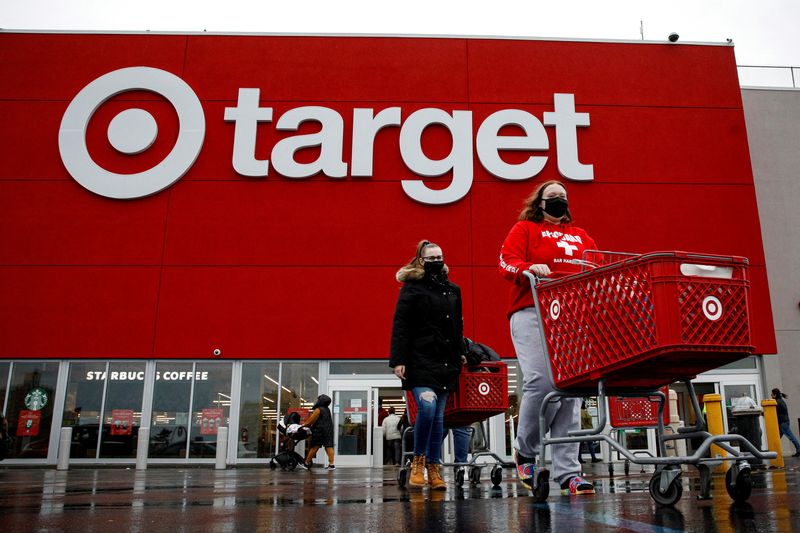
Target named Jeff England as chief supply chain officer, replacing Gretchen McCarthy as the company continues a broad turnaround under CEO Michael Fiddelke. The retailer is pursuing a roughly $6 billion efficiency and service plan, including better inventory, delivery times, and a new Houston receive center to support in-stock levels. The update is strategically relevant for Target ahead of Wednesday's quarterly results, but the article is largely a management and operations update rather than a direct financial surprise.
The key signal is not the hire itself but the sequencing: management is trying to de-risk execution ahead of a still-fragile demand backdrop. In retail turnarounds, supply-chain upgrades only create equity value if they reduce stock-outs without bloating inventory days; that makes the next two quarters a test of whether Target can convert process fixes into sustained margin recovery rather than just cleaner operations. The market should focus less on top-line commentary and more on whether inbound flow and fulfillment speed improve without a working-capital drag. Relative winners are likely the vendors and infrastructure providers that help accelerate upstream consolidation, store-level replenishment, and last-mile orchestration. That creates a subtle pressure point for Walmart: if Target tightens in-stock levels and same-day delivery economics, the battleground shifts from price-only competition to service reliability, where Walmart still has scale but may need to keep investing to defend share. QXO and GPC look strategically neutral here, but the broader lesson is that supply-chain talent is becoming a scarce asset, so retailers that lag in operating discipline may face compounding share losses even if consumer demand stabilizes. The geopolitical overlay matters because an oil-shock-style inflation impulse would hit discretionary and value retail hardest over the next 1-3 quarters. If freight, inbound inventory, or consumer basket inflation re-accelerate, Target’s turnaround gets delayed and the market will punish any sign that margin improvement is coming from markdown discipline rather than true operating leverage. Conversely, if management can show improved fill rates with flat or lower inventory, the stock can re-rate quickly because investors have been positioned for another false start. Consensus likely underestimates how binary this setup is: either the new operating cadence visibly improves availability and delivery metrics by the holiday build, or the story reverts to structural share loss and capital misallocation. The upside case is not multiple expansion from one good quarter; it is a multi-quarter proof point that the company can compound small execution gains into faster turns and better service, which would finally support a durable re-rating versus peers.
AI-powered research, real-time alerts, and portfolio analytics for institutional investors.
Request DemoOverall Sentiment
neutral
Sentiment Score
0.10
Ticker Sentiment
