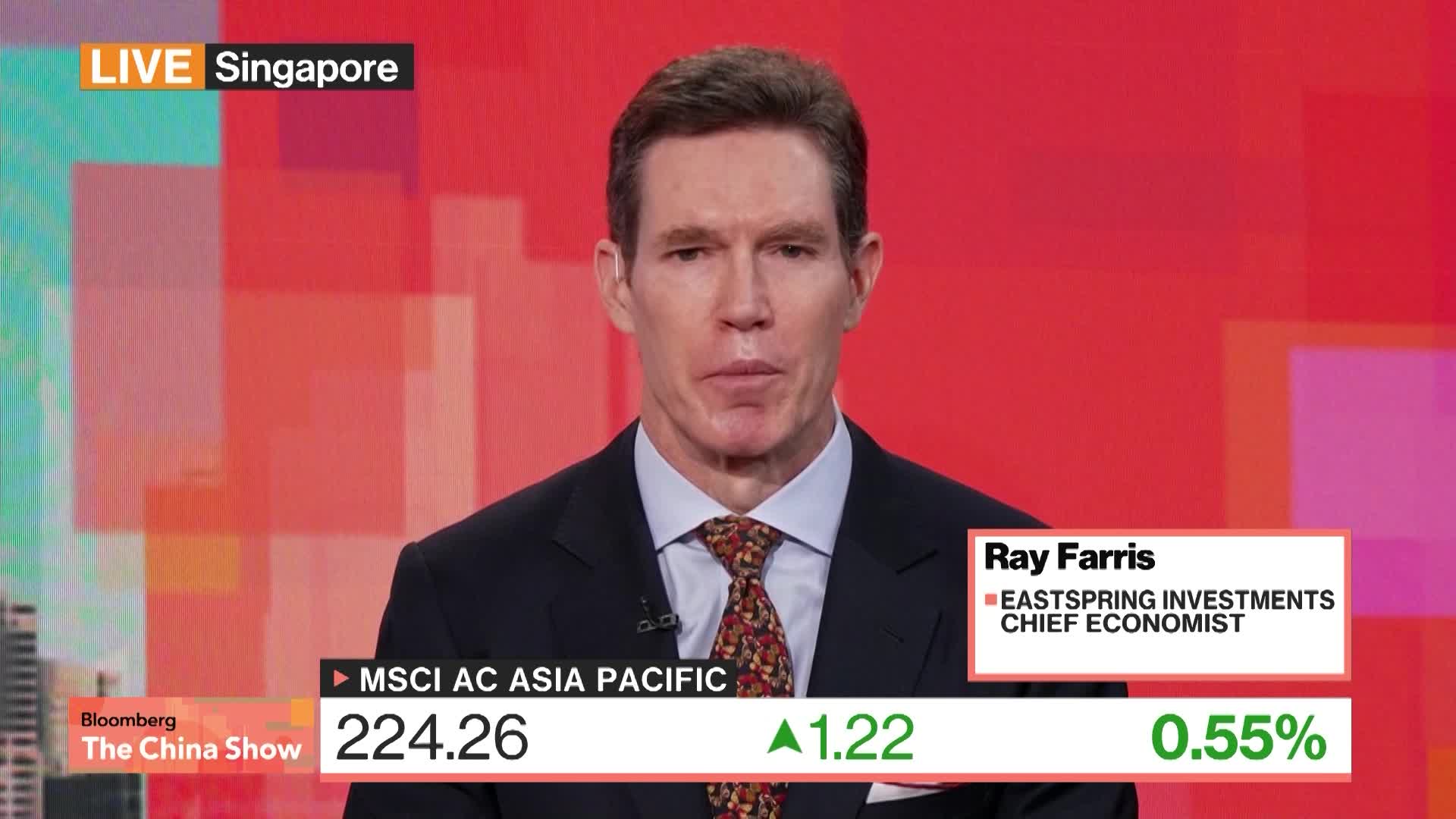
Senior Fed signaling and recent labor-market indicators (ADP, continuing claims) point to a weakening jobs backdrop, supporting expectations for a December 'insurance' rate cut and a subsequent pause before further easing into 2026; this is supportive for equities and other risk assets. Offsetting concerns about U.S. retail weakness, durable goods orders were strong and S&P 500 profit growth is broadening investment activity, driven by an infrastructure/investment cycle and ample corporate funding, while consumption remains bifurcated with strength concentrated among higher-income households.
Market structure: A Fed insurance cut in December + a likely easing path into 2026 mechanically favors long-duration assets and capex-exposed sectors. Winners: industrials (construction equipment, engineering firms), industrials/transport OEMs, semiconductor capital equipment and defense contractors that capture infrastructure spend; losers: lower-end retail, payroll services (ADP sensitivity), and regional banks if the curve compresses. Cross-asset: expect 10y yields to drift 20–40bp lower on a credible cut, USD modestly weaker, copper and industrial metals to outperform consumer staples/energy on capex reweighting.
Risk assessment: Tail risks include a sharper labor slump that tips consumption into recession (NFP <100k and unemployment >4.2% within 2 months) or upside inflation that forces the Fed to delay cuts. Time horizons: immediate (days) — market repricing of Fed probabilities; short (weeks–months) — durable goods and payroll prints drive sector rotation; long (quarters) — fiscal/infrastructure outlays translate to order books and margin expansion. Hidden dependencies: corporate capex relies on sustained profit growth and supply-chain capacity; consumer bifurcation can sustain headline consumption while large swathes weaken.
Trade implications: Implement a barbell — tilt 2–4% portfolio to industrials/semicap exposure (XLI, ASML, CAT) and 2–3% to duration (TLT/IEF) ahead of Dec FOMC with a 3–9 month horizon; hedge by shorting discretionary/retail exposure (XLY or XRT) 1–2%. Options: buy 3–6 month call spreads on CAT/ASML sized 0.5–1% of portfolio to cap premium, and a 3-month put spread on ADP (0.5%) as a labor-sensitivity hedge. Enter ahead of the next payroll prints; scale up if ADP/NFP prints under 100k or continuing claims rise >50k MoM.
Contrarian angles: Consensus prices a clean insurance cut; downside is underappreciated: if profit growth stalls, capex reverses and cyclical longs suffer — so don't lever beyond 2–4% per trade. The market may also be underweight the winners within capex (semicap equipment, automation) versus broad industrial ETFs — consider stock-specific overweight. Historical parallel: 2015–16 Fed pivot saw durable-goods beneficiaries outperform broad consumer names for 6–12 months; unintended consequence is tighter labor causing staffing firms and payroll processors to lag materially.
AI-powered research, real-time alerts, and portfolio analytics for institutional investors.
Request DemoOverall Sentiment
mildly positive
Sentiment Score
0.28
Ticker Sentiment
