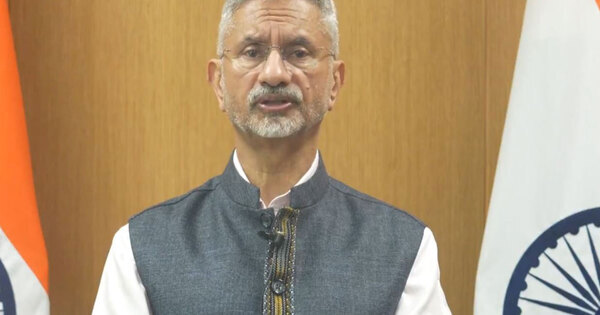
India's External Affairs Minister S. Jaishankar will attend the G7 Foreign Ministers' meeting in France (Abbaye des Vaux-de-Cernay) on Thursday–Friday as part of preparatory talks ahead of the G7 Leaders' summit in Evian (June 13–15). The agenda centers on Ukraine (reconstruction, nuclear safety, humanitarian demining, reconstruction funding), maritime security and global supply chains (including critical minerals), and governance reforms, with the EBRD and other institutions flagged to help mobilize investment. This is routine diplomatic engagement with limited near-term market impact, though concrete outcomes on reconstruction funding or maritime/security measures could materially affect critical-minerals supply chains and related sectors over the medium term.
This ministerial meeting is a short-term policy accelerator with outsized medium-term consequences: expect tangible deliverables from the G7 that widen funding channels (EBRD + co-financing) and push for hardened maritime logistics and critical-minerals supply chains over the next 6–24 months. That mechanics implies new capital flows into reconstruction contractors, export-credit-backed infrastructure projects, and ports/logistics operators that can offer ‘secure routing’ services — not just higher nominal defense budgets.
Second-order winners are firms that straddle infrastructure finance and operations: engineering/construction firms that can execute EBRD-style projects, insurers and P&I clubs that reprice route risk, and miners with upstream processing outside China who can be presented as “trusted suppliers.” Conversely, Asian transshipment hubs and long, single-node supply chains reliant on choke-point routes face rerouting risk, higher insurance/financing costs, and potential contract reallocation over 12–36 months.
Tail risks hinge on two catalysts with asymmetric effects: acute escalation in Ukraine or maritime conflict (days–weeks) would spike rates, insurance and defense spending (positive for the long defense/logistics trade), whereas a diplomatic détente combined with robust private capital mobilization could compress risk premia and leave cyclically exposed contractors with inventory/working-capital stress (months). Monitor June leaders’ summit and tranche schedules from multilateral lenders as discrete catalysts for deployment windows and equity re-ratings.
AI-powered research, real-time alerts, and portfolio analytics for institutional investors.
Request DemoOverall Sentiment
neutral
Sentiment Score
0.00
