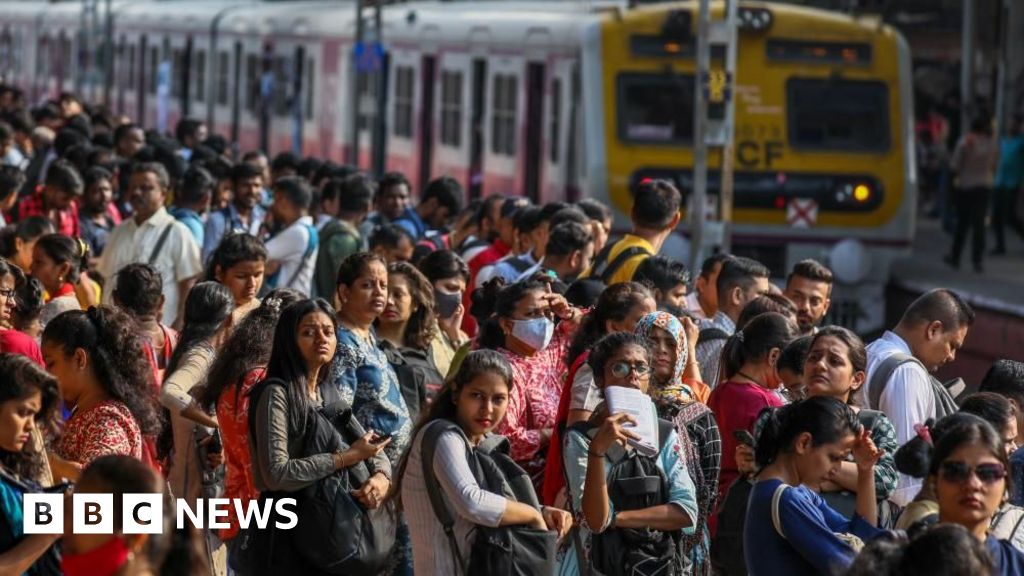
India has launched its 16th census covering roughly 1.4 billion people, using more than 3 million enumerators and a 33-question schedule; it is the first digital census and the first full count since 2011. The two-phase exercise includes self-enumeration (selected regions 1–15 April), a house-listing/housing survey (16 April–15 May) and full population enumeration in February 2027, with caste data included. Results will recast urban/rural classifications and beneficiary counts that underpin welfare programmes, public spending and labour/consumption baselines, materially informing fiscal targeting and policy design over the medium term.
The census will function as a large, high-resolution economic re-mapper: expect 12–24 month shifts in fiscal flows as areas are reclassified and beneficiary counts are updated. Reclassification from “rural” to “urban/peri‑urban” will mechanically shift where central and state transfers flow (health, education, rural employment guarantees) and re-route capex toward municipal infrastructure and urban utilities; this is a multi-year revenue tailwind for construction, water, and urban transport contractors concentrated in faster-growing states.
Digital-first enumeration creates a substantive procurement and cybersecurity opportunity window over 3–18 months. Large IT services and cloud providers will compete for integration, data-cleaning, identity verification, and hosting work; simultaneously, national-scale attack surface expansion raises demand for enterprise-grade security and identity-management solutions, with contract award timing clustered around the completion of house-listing and pilot regions.
Policy and political risk is non-linear: caste data and updated migration counts can trigger immediate electoral and redistribution decisions in state budgets, producing sudden winners and losers among beneficiaries and contractors within election cycles (3–18 months). Equally important is the measurement risk — deliberate over-reporting/under-reporting by households to avoid exclusion can inflate certain population buckets, biasing baseline calibrations used for multi-year welfare entitlement models and skewing credit and real estate demand forecasts.
A practical investment lens: short-term market reaction will under-price implementation complexity and data quality risk, and over-price near-term IT services wins. The cleanest alpha is thematic: (1) security/identity vendors exposed to national-scale rollouts, (2) urban infrastructure contractors in fast-reclassifying states, and (3) broad India beta ahead of clearer fiscal reallocation — each with distinct timing and event triggers tied to phase completions and state-level budget updates.
AI-powered research, real-time alerts, and portfolio analytics for institutional investors.
Request DemoOverall Sentiment
neutral
Sentiment Score
0.00
