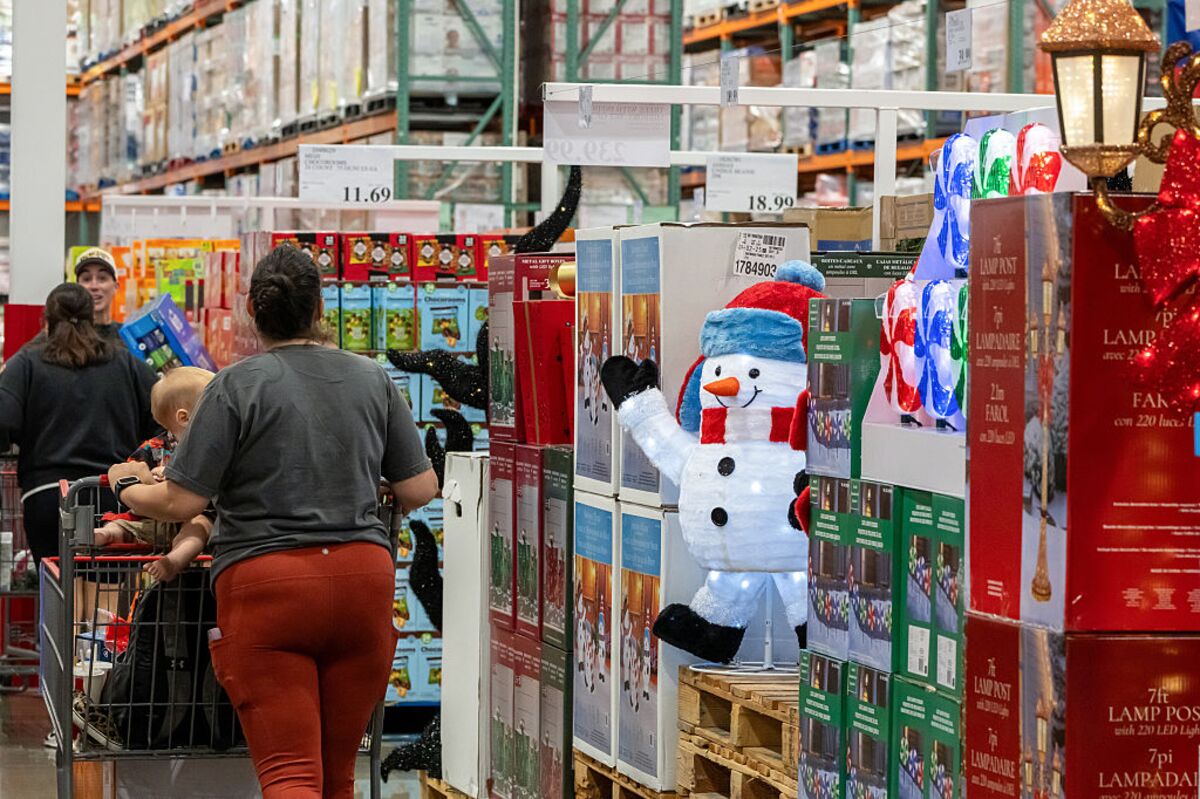
President Trump's tariffs are anticipated to be absorbed by producers or importers rather than U.S. consumers, as the higher levies are only now beginning to impact the market, with further increases expected in the fourth quarter during the holiday shopping season.
President Trump's tariffs are largely expected to be absorbed by producers or importers rather than directly impacting U.S. consumers, a development that is only now beginning to manifest at the checkout. Further tariff increases are anticipated in the final quarter of the year, coinciding with the crucial holiday shopping season. This suggests a delayed but significant operational challenge for businesses.
This dynamic implies potential resilience in consumer demand, as the direct cost burden is not being passed on, aligning with a 'mildly positive' sentiment regarding consumer spending. However, the absorption of these costs by businesses points to impending margin pressure or strategic adjustments for import-reliant companies. The overall market impact is assessed as moderate, with a score of 0.45.
The key themes of 'Tax & Tariffs,' 'Trade Policy & Supply Chain,' and 'Consumer Demand & Retail' underscore the broad implications. Companies with substantial import exposure or complex global supply chains will likely face increased operational expenses, necessitating careful financial management. The Q4 timing is especially critical for the retail sector, as it navigates tariff impacts during its peak sales period.
AI-powered research, real-time alerts, and portfolio analytics for institutional investors.
Request DemoOverall Sentiment
mildly positive
Sentiment Score
0.30
