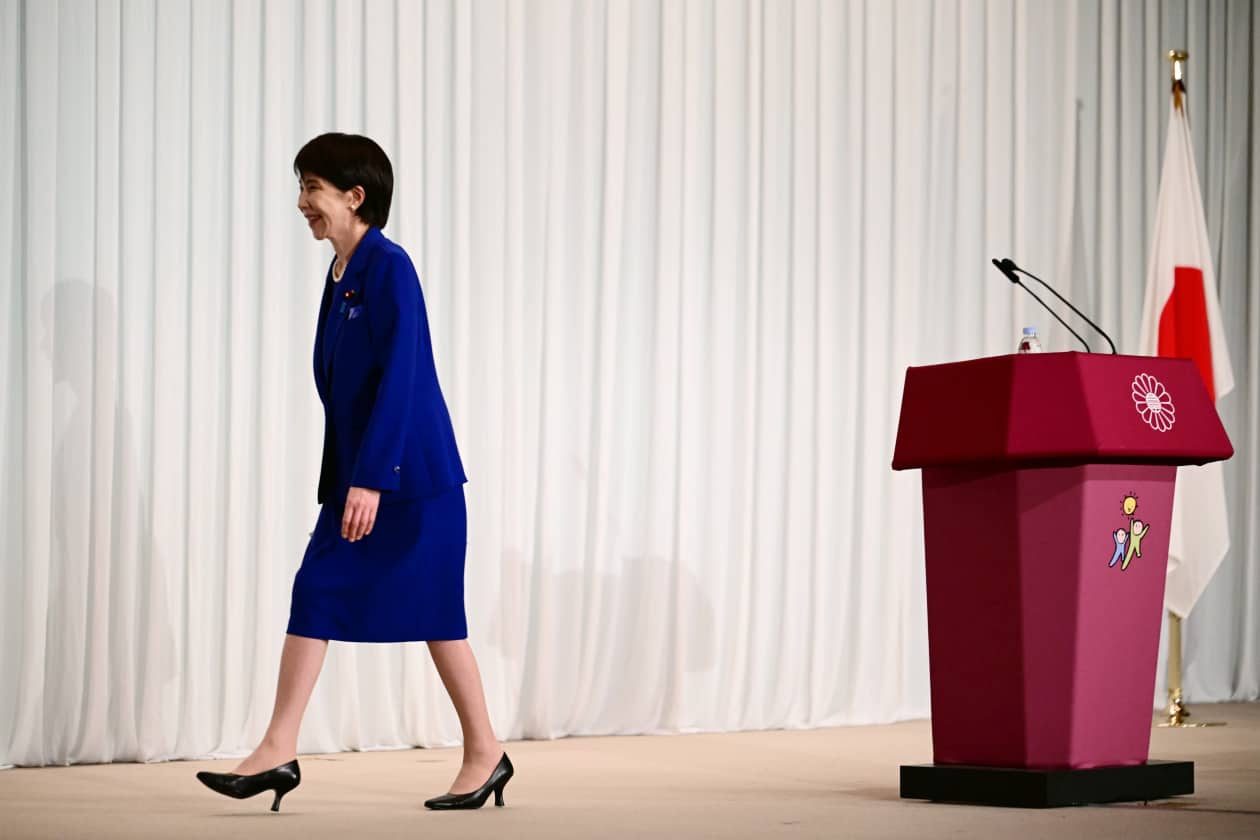
Sanae Takaichi's surprise party victory has heightened investor concerns regarding Japan's economic policy direction, with major brokers anticipating a weaker yen, higher inflation, and increased bond yields. Despite the Nikkei 225 surging to a record high post-victory, the yen weakened past 150 against the dollar and Japanese government bonds edged lower, prompting Goldman Sachs and Deutsche Bank to warn of risks from Takaichi's expected looser monetary and expansive fiscal policies, which could delay a Bank of Japan rate hike. JPMorgan capitalized on the equity rally to reduce its overweight on Japanese stocks to neutral amid this policy uncertainty.
Investors have grounds to fear Japan’s Iron Lady, caution Wall Street brokers Referenced Symbols The surprise party victory for Sanae Takaichi has brokers fearful about Japan’s currency and bonds. After news of her victory emerged, the yen weakened above 150 against the dollar and Japanese government bonds edged lower, although the Nikkei 225 equity index surged almost 5% to a record high.The iShares MSCI Japan ETF rose over 1% in premarket trade.Investment houses running the slide rule over Takaichi’s record as a politician, and the manifesto on which she campaigned to become leader of the Liberal Democratic Party’s ruling coalition, have reservations, however. Goldman Sachs is concerned about the Margaret Thatcher admirer’s “potential risks in the medium to long term,” Deutsche Bank’s forex strategists have downgraded a buy recommendation on the yen to neutral and JPMorgan has also used the stock market jump to reduce its overweight on Japanese stocks to neutral.Most are concerned that she will run looser monetary policy and more expansive fiscal policy and this will further stoke inflation, undermining both the Japanese yen and its bond markets. Deutsche Bank global co-head of currency research George Saravelos predicted uncertainty about Japan’s policy priorities and the timing of the Bank of Japan hiking cycle will rise as a result of Takaichi’s election. He cites her intention to incorporate more dovishly-inclined parties like the DPP into the coalition, her reluctance to abandon proposed cuts in consumption tax and her argument that “inflation in Japan is more cost-push than demand-pull” as evidence that she will generate a lower yen and higher inflation/ bond yields. The doubts about Takaichi’s inflation-fighting credentials resulted in a further steepening of the Japanese yield curve with a 4 basis point decline in 2-year notes to 0.90%, while 30-year bonds saw their yield pick up 4 bps to 3.29%.For Goldman, her historic endorsement of “Abenomics” suggests she may steer toward fiscal expansion over time and her nationalist tendencies may lead to defense spending rising above 2% of GDP in time. In its economic flash report, the Goldman team persist with its base-case scenario that the Bank of Japan will increase interest rates in January but the firm detects “potential for the rate hike to be pushed back.” Goldman is worried about the implications for fixed-income markets if a “proactive fiscal policy” emerges over time. Deutsche Bank’s note, plainly entitled, “Getting out of the yen”, acknowledges that while Takaichi has struck a less dovish tone of late, markets will start to fret about the BoJ “behind the curve” with a policy rate of just 0.5% while GDP growth is advancing at a 5% lick and the targeted inflation measure is currently 100 basis points above target. JPMorgan’s downgrade of Japan within its recommended global portfolio is more opportunistic. Strategist Mislav Matejka maintains that “Japan’s outlook continues to look fundamentally robust” but noting the strong run of the last six months, takes advantage of this to downgrade from overweight to neutral, recycling those profits into European stocks . Sanae Takaichi's unexpected victory has triggered a significant divergence in Japanese asset classes, with equities rallying sharply while currency and bond markets exhibit distress. The Nikkei 225 surged almost 5% to a record high, yet this optimism was contradicted by the yen weakening beyond 150 to the dollar and a decline in Japanese government bonds. This split reaction reflects deep investor concerns, articulated by major Wall Street firms, about Takaichi's anticipated policy direction. Both Goldman Sachs and Deutsche Bank have flagged risks associated with a shift towards looser monetary and more expansive fiscal policies, which could stoke inflation and undermine the yen and JGBs. Deutsche Bank specifically downgraded the yen to neutral, forecasting policy uncertainty and a central bank that may fall further "behind the curve" given a 0.5% policy rate against 5% GDP growth. The bond market is already pricing in these concerns, with the yield curve steepening as 2-year yields fell 4 basis points to 0.90% while 30-year yields rose 4 basis points to 3.29%. Goldman Sachs highlights the potential for a delayed Bank of Japan rate hike, previously expected in January, and long-term risks to fixed-income markets from a "proactive fiscal policy." In response to this environment, JPMorgan has opportunistically downgraded Japanese stocks from overweight to neutral, choosing to realize profits from the recent rally amid the new policy uncertainty, despite still viewing Japan's fundamental outlook as robust.
AI-powered research, real-time alerts, and portfolio analytics for institutional investors.
Request DemoOverall Sentiment
moderately negative
Sentiment Score
-0.50
Ticker Sentiment
