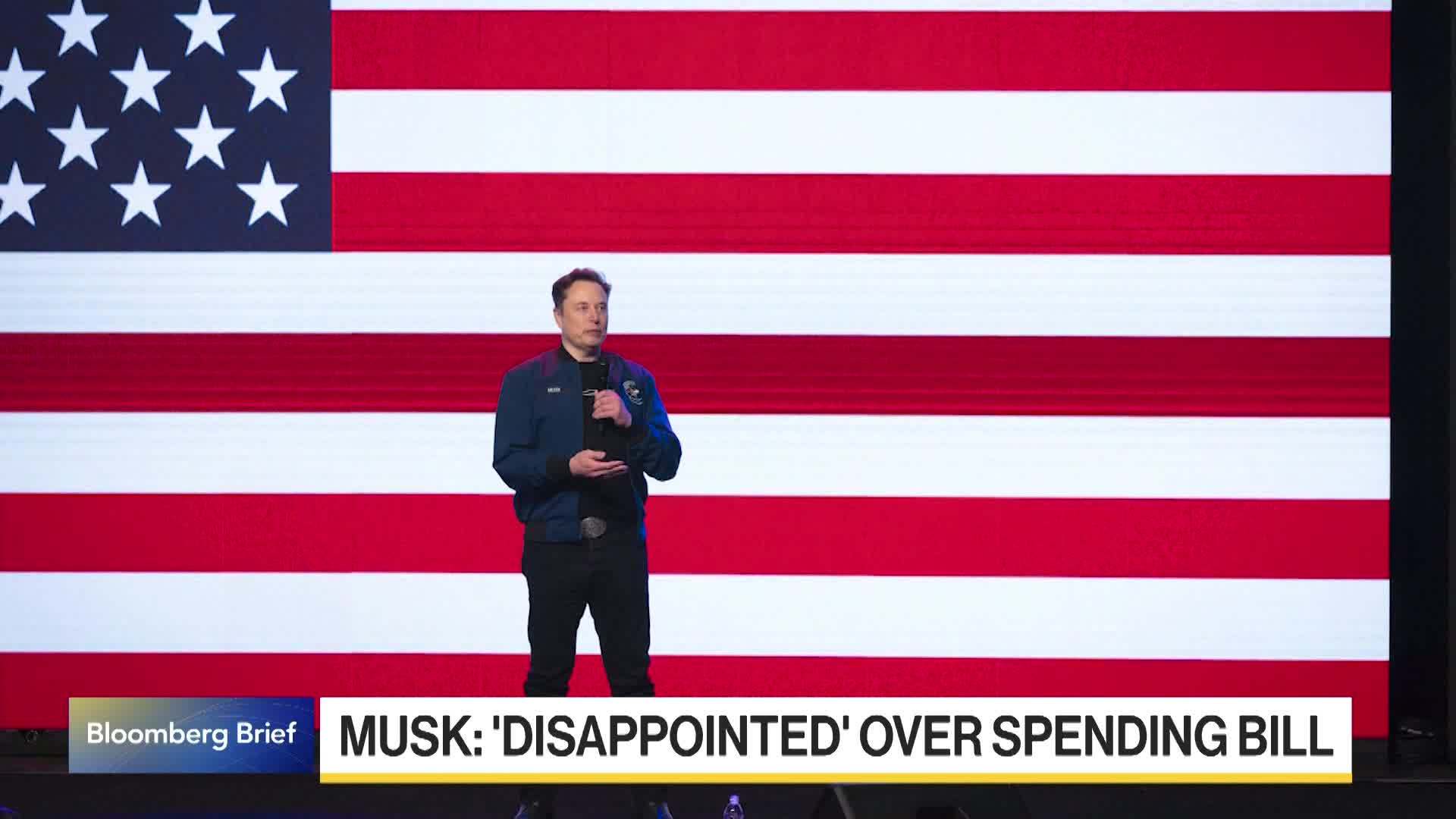
Elon Musk expressed disappointment that the Trump tax bill increased the U.S. deficit, as reported by Bloomberg. Musk's comments highlight concerns among some business leaders regarding the long-term fiscal impact of the 2017 tax cuts, potentially influencing investor sentiment and future policy debates.
Elon Musk has publicly expressed disappointment regarding the increase in the U.S. deficit attributed to the 2017 Trump tax bill, as reported by Bloomberg. This commentary from a prominent business leader highlights concerns regarding the long-term fiscal impact of the tax cuts enacted in 2017. The associated sentiment is moderately negative (-0.45) with a pessimistic tone, reflecting apprehension about the fiscal trajectory. While no specific company tickers are directly implicated, Musk's statement contributes to broader discussions on fiscal policy, taxation, and domestic politics, potentially influencing investor sentiment and future policy debates. The moderate market impact score of 0.45 suggests these concerns contribute to the macroeconomic discourse rather than causing immediate, sharp market movements.
AI-powered research, real-time alerts, and portfolio analytics for institutional investors.
Request DemoOverall Sentiment
moderately negative
Sentiment Score
-0.45
