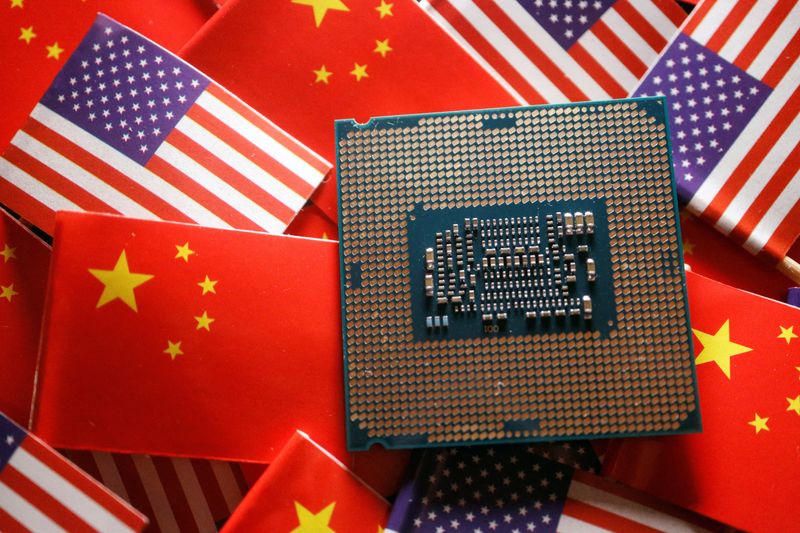
Raymond James anticipates a potential 'paradigm shift' in U.S.-China tech policy, suggesting an easing of restrictions on advanced chips like Nvidia's Blackwell for China, possibly in exchange for $1 trillion in U.S. investment, ahead of a rumored Trump-Xi meeting. This development, aligning with Trump's focus on boosting U.S. exports, could significantly alter the semiconductor landscape. Concurrently, the AMD-OpenAI deal signals a U.S. strategy to incentivize domestic AI infrastructure investment, potentially offering tariff relief and blurring the lines between export control and industrial policy to maintain U.S. AI leadership.
Raymond James anticipates a potential "paradigm shift" in U.S.-China tech policy, driven by an expected meeting between Donald Trump and Xi Jinping at the upcoming APEC summit. This could lead to an easing of export restrictions on high-end semiconductors, such as Nvidia's Blackwell chips, for China. Beijing has reportedly offered a significant $1 trillion in U.S.-bound investment in exchange for relief from current tariffs and technology curbs.
The brokerage suggests that a second Trump administration might view such a deal favorably, aligning with goals to boost U.S. exports and domestic investment. The increased likelihood of linking chip restrictions to broader trade concessions, coupled with the absence of key China hardliners, fosters optimism for progress, though congressional "China hawks" could still constrain the extent of any rollback.
Concurrently, the AMD-OpenAI partnership exemplifies a continued U.S. "full-stack" AI export strategy, aiming to establish U.S. hardware and software as global standards. This initiative offers incentives for domestic AI infrastructure investment, potentially providing an "off-ramp" from future semiconductor tariffs for compliant firms. This approach blurs the lines between export control and industrial strategy, reinforcing U.S. leadership in global AI development.
AI-powered research, real-time alerts, and portfolio analytics for institutional investors.
Overall Sentiment
moderately positive
Sentiment Score
0.50
Ticker Sentiment
