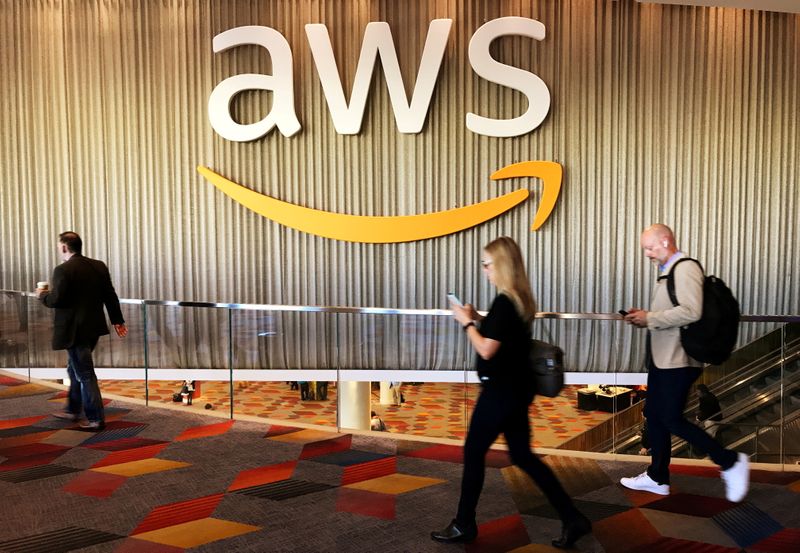
AWS plans to scale data-centre capacity in India to 2–3 gigawatts, signing letters of intent with 6–8 colocation firms (including Sify, Yotta, NTT, CtrlS, Capitaland) and seeking potential tax incentives. The expansion targets Mumbai and Hyderabad and builds on a prior $8.3 billion Mumbai investment that the company said would contribute $15.3 billion to India’s GDP by 2030. India’s public cloud market is projected to grow from $10.9 billion in 2024 to $30.4 billion by 2029, underpinning strong demand for cloud and AI services. This is a material capacity-acquisition push likely to benefit AWS and listed Indian colocation providers.
Hyperscaler-driven colocations create concentrated demand that cascades into specific upstream suppliers (server OEMs, power conversion, transformers, high-capacity fiber) rather than broad IT spend. Expect procurement cycles to show up as outsized order books for several quarters followed by a multiyear taper as capacity is commissioned — a 3–9 month ordering window and a 12–36 month revenue realization window for suppliers.
Second-order winners are vendors that can turn lead-time into pricing power (server ODMs, specialized power vendors, and interconnect platforms); second-order losers are small regional colos and generic office landlords who face elevated land/utility competition and shortened lease lifecycles. The incremental demand profile favors firms that supply modular, rack-level solutions and managed AI stacks — those can expand margins faster than plain-vanilla real estate plays.
Tail risks center on policy reversals and local infrastructure constraints: temporary tax incentives or grid bottlenecks can delay projects, converting near-term demand into stranded capex and 20–30% downside in localized pricing. A macro growth shock or sudden AI spend re-evaluation would disproportionately hurt the long lead-time suppliers 9–18 months out, while procurement-heavy names see order smoothing much earlier.
Consensus framing treats hyperscaler demand as uniformly positive; the pitch misses the two-phase cycle (surge → commissioning → pricing pressure). The smarter angle is to own firms that monetize the surge window and hedge exposure to post-build commoditization signals (rack pricing, colo utilization, GPU shipment cadence) — these are the early indicators to rotate positions within 3–12 months.
AI-powered research, real-time alerts, and portfolio analytics for institutional investors.
Request DemoOverall Sentiment
mildly positive
Sentiment Score
0.35
Ticker Sentiment
