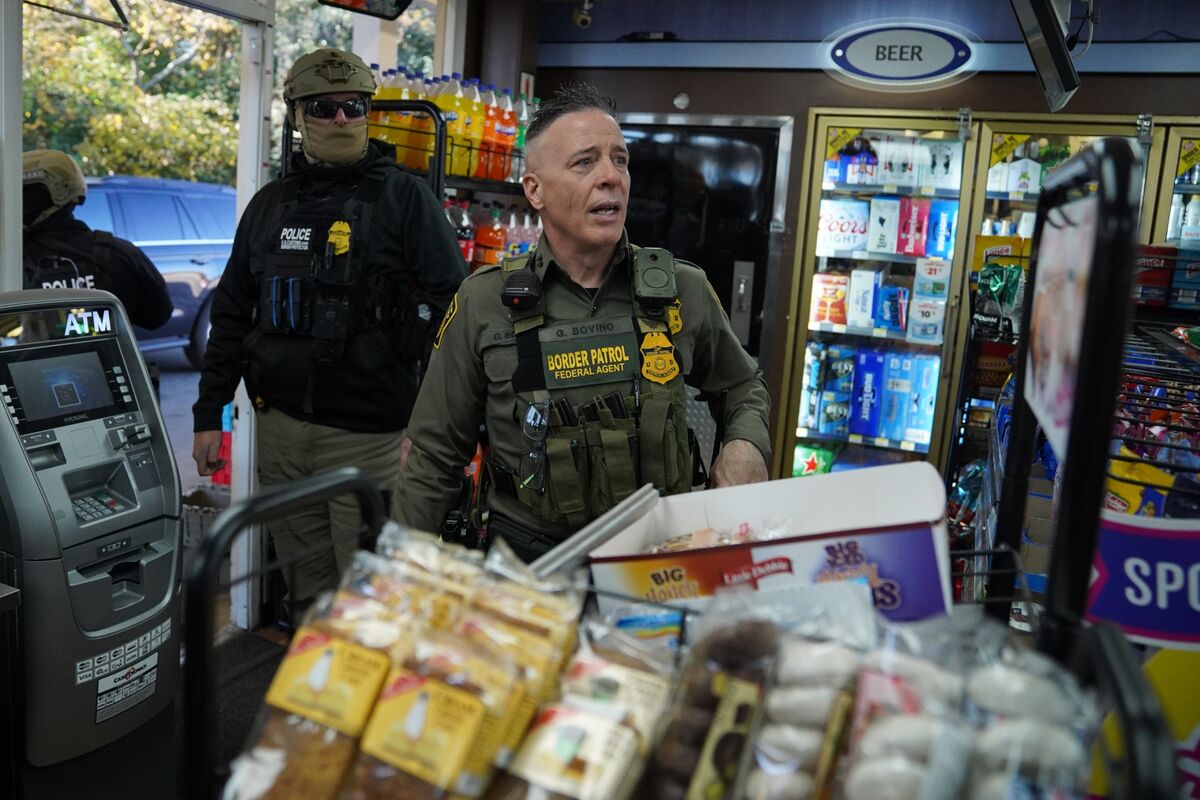
Charlotte has seen a broad, community-driven backlash to recent ICE immigration raids—students staged walkouts, volunteers patrolled school perimeters, churches ran training sessions on responses, and some businesses closed to protect customers and workers—while the region's largest employers have been conspicuously silent, a dynamic the article characterizes as them 'failing' the test of leadership. The contrast highlights immediate operational and reputational risks for firms with sizable immigrant workforces and suggests potential labor disruptions and heightened community pressure on corporate responses.
Federal immigration enforcement actions that began on Saturday in Charlotte have triggered a broad, community-led backlash: hundreds of students staged walkouts, volunteers patrolled school perimeters to deter federal agents, churches held training sessions on enforcement responses, multiple local businesses closed temporarily, and Compare Foods is offering free delivery to customers afraid to leave their homes. The article highlights a conspicuous absence of public response from the region's largest employers, characterizing that silence as a failure of corporate leadership amid the crisis.
The situation presents concentrated operational and reputational risk for companies with large immigrant workforces or significant retail footprints in the Charlotte area because closures, worker fear, and community activism can depress foot traffic and labor availability. Theme classification flags this as intersecting domestic politics, regulation, consumer demand, and governance; sentiment signals show a moderately negative public tone (sentiment_score -0.45) and a defensive market posture, while market_impact_score is modest at 0.25 and ICE-specific sentiment is neutral.
Given the localized but politically charged nature of the events, the near-term financial impact is likely concentrated and company-specific; escalation or national spillover would raise the bar to materially affect broader earnings or equities. Investors should therefore treat this as a watchlist issue focused on names with Charlotte exposure and on which large employers choose to publicly engage or not.
AI-powered research, real-time alerts, and portfolio analytics for institutional investors.
Overall Sentiment
moderately negative
Sentiment Score
-0.45
Ticker Sentiment
