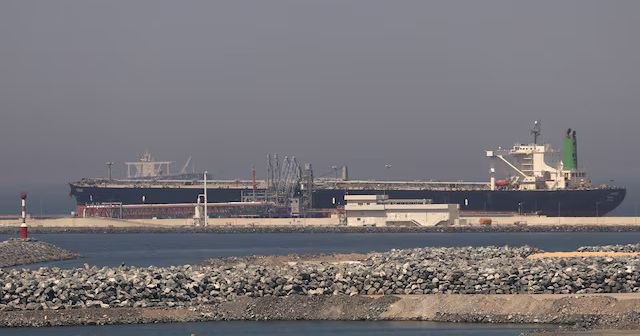
At least four UAE tankers carrying about 6 million barrels of Upper Zakum and Das crude reportedly transited the Strait of Hormuz with AIS transponders switched off amid conflict risks tied to Iran, the US and Israel. Some cargoes were transferred outside the strait or diverted to storage in Oman, indicating continued but more fragile regional oil flows. The shipments were only a fraction of normal UAE exports, but the report underscores heightened geopolitical risk to crude supply routes.
This is less about lost barrels and more about the premium on physical optionality. When cargoes are forced into covert routing, the market starts pricing a higher probability of localized dislocation, which widens differentials before headline Brent moves much; that tends to favor traders with access to storage, blending, or arbitrage capacity over simple outright producers. The immediate second-order winner is any asset base that can absorb redirected flows or offer alternative discharge points, while the loser set is downstream refiners dependent on just-in-time seaborne crude and shipping firms exposed to higher war-risk premia and re-routing costs.
The more interesting signal is behavioral: producers are showing willingness to keep exporting even under elevated military risk, which lowers the probability of an abrupt supply shock in the next few days but raises the tail risk of a sudden mistake or interdiction. That makes near-dated implied volatility in crude too cheap if the market is still assuming a linear de-escalation path; the risk is not gradual loss of barrels, it is a single event that forces all Gulf exporters to pause and reprice insurance, freight, and destination clauses within hours.
Contrarian take: the market may be over-focused on volume interruption and underpricing logistics inflation. Even if the barrels keep moving, stealth routing, ship-to-ship transfers, and storage detours can tighten prompt physical balances and strain floating inventory, which supports backwardation and regional product cracks more than headline flat price. If this persists for weeks, the biggest beneficiaries may be midstream and storage-linked assets, not just upstream E&Ps.
AI-powered research, real-time alerts, and portfolio analytics for institutional investors.
Request DemoOverall Sentiment
mildly negative
Sentiment Score
-0.15
