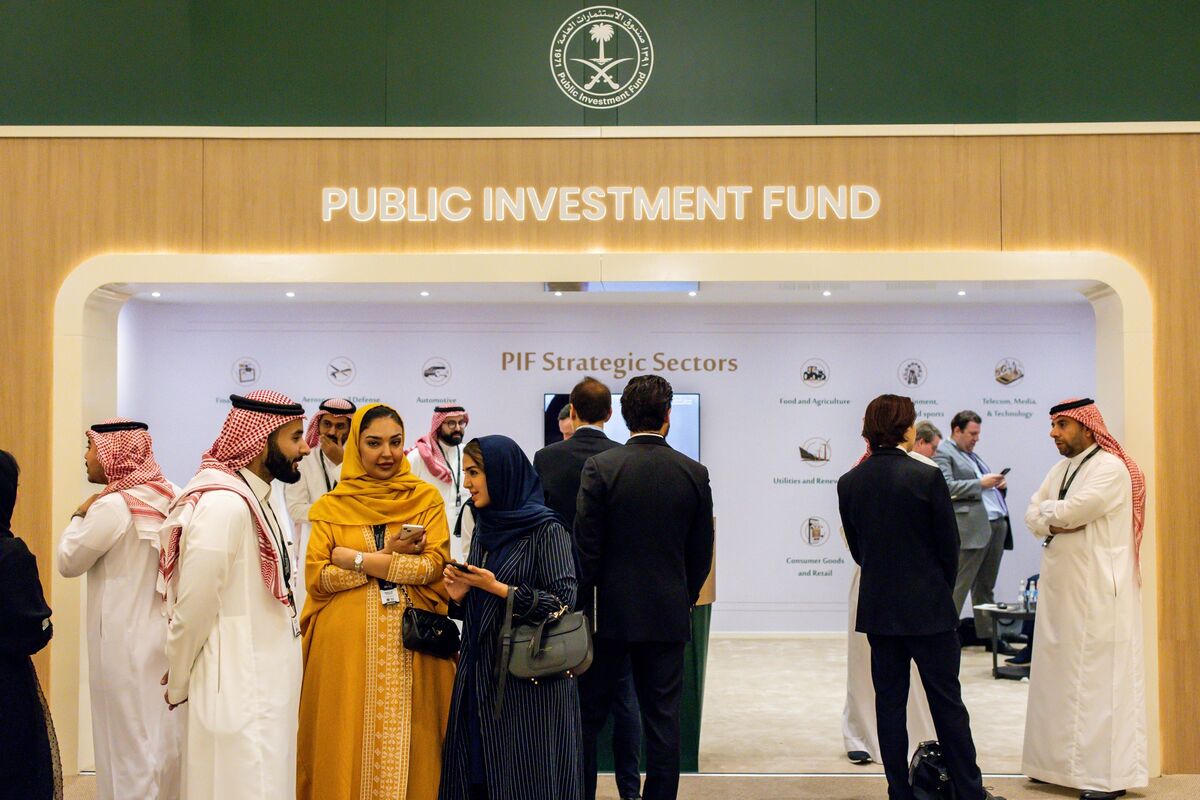
Saudi Arabia’s Public Investment Fund is marketing a multi-tranche US dollar bond for the first time since the Iran war disruption, including 3-year, 7-year and 30-year notes. Initial price thoughts are 130 to 170 basis points over US Treasuries, signaling a cautious reopening of Gulf public debt markets after recent geopolitical volatility.
This reopening of Gulf public funding is less about one issuer and more about a normalization signal for the entire regional funding complex. When a flagship sovereign buyer taps dollars again after a geopolitical shock, it tends to compress the perceived probability of follow-on supply from quasi-sovereigns, banks, and state-linked corporates over the next 4-8 weeks, which can cheapen front-end spreads only modestly while anchoring longer-dated credit demand.
The real second-order effect is curve shape: a 3s/7s/30s stack in a volatile geopolitical window typically attracts real-money duration buyers at the long end, but the short tranche will be the tightest relative to funding alternatives. That means the issue is likely to clear without stress, yet it also creates a reference point for other Gulf borrowers to come after it, potentially widening incremental concessions across USD EM credit if supply surprises build into month-end.
Risk is not the bond itself; it is the market’s interpretation of geopolitical resolution. If regional tension re-escalates, the new issue can underperform secondary by 20-40 bps in the first few sessions as liquidity providers lighten risk, but the more durable downside would show up only if fresh issuance gets delayed again. Conversely, if this prices well, it argues the market is already looking through the conflict and that spread volatility is more of a trading event than a structural repricing.
The contrarian angle is that a successful sale may actually be mildly negative for existing sovereign and quasi-sovereign paper: it confirms funding access, reducing scarcity value and leaving investors with a heavier calendar of GCC supply. In that sense, the trade is less about owning the new bond than about fading rich secondary levels in the broader Gulf credit basket if issuance momentum accelerates.
AI-powered research, real-time alerts, and portfolio analytics for institutional investors.
Overall Sentiment
neutral
Sentiment Score
0.10
