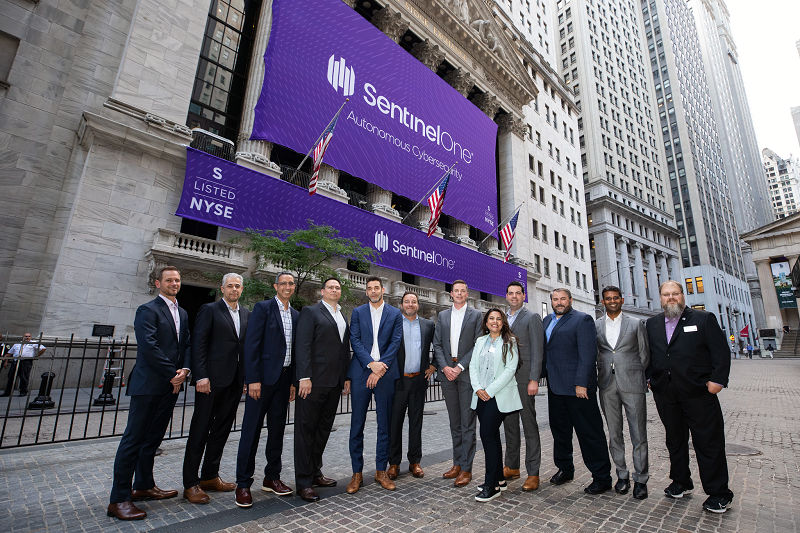
Cantor Fitzgerald maintained an Overweight on SentinelOne after the company launched multiple AI security products (Prompt AI Agent Security, Prompt AI Red Teaming, Purple AI Auto Investigation GA) and integrated Observo AI (claims up to 80% pre-ingestion noise reduction). Shares trade at $12.87 (near 52-week low $12.15) and fell 12.5% over the past week, while LTM revenue rose 21.9% to $1.0B; the company reportedly holds more cash than debt and analysts expect profitability this year. SentinelOne also appointed Barry Padgett as president & COO and expanded partnerships with Google Cloud and LevelBlue to bolster go-to-market and managed security services.
When an enterprise security vendor layers AI-native controls on top of existing endpoint and telemetry stacks, the immediate P&L lever is two-fold: higher ARPU from feature bundling and lower marginal ingestion costs as noisy telemetry is filtered before SIEM/post-ingest stages. If bundle economics shift even modestly (a 5–8% effective ARPU uplift and a 200–400bp reduction in cloud ingestion spend), EBITDA can inflect within 12–18 months because SaaS gross margins scale quickly once fixed cloud and R&D are absorbed.
Competitive dynamics favor firms that tightly integrate with hyperscalers and managed service partners because that lowers deployment friction for conservative, compliance-sensitive customers. That same dynamic raises second-order pressure on smaller pure-play SIEM vendors (and immature in-house stacks) who will face both price compression and accelerated churn as customers prefer fewer vendors with integrated L2/L3 orchestration.
Key risks are execution cadence and sales-cycle length: enterprise AI security is conceptually attractive but adoption clusters around pilot-to-production conversions that can take 3–9 quarters. Missed uptime/false-positive issues or a notable enterprise loss would reprice expectations quickly; conversely, a string of enterprise logo wins or measurable MTTI/MTTR improvements reported on an earnings call would be high-leverage catalysts.
The market appears to be front-running macro/software multiple compression while underweighting optionality from platformization. That creates an asymmetric trade window where disciplined, defined-risk exposure to the equity or long-dated calls captures upside from both multiple re-rating and accelerated revenue per customer, but the position needs active guardrails to limit binary downside from execution misses.
AI-powered research, real-time alerts, and portfolio analytics for institutional investors.
Request DemoOverall Sentiment
mildly positive
Sentiment Score
0.35
Ticker Sentiment
