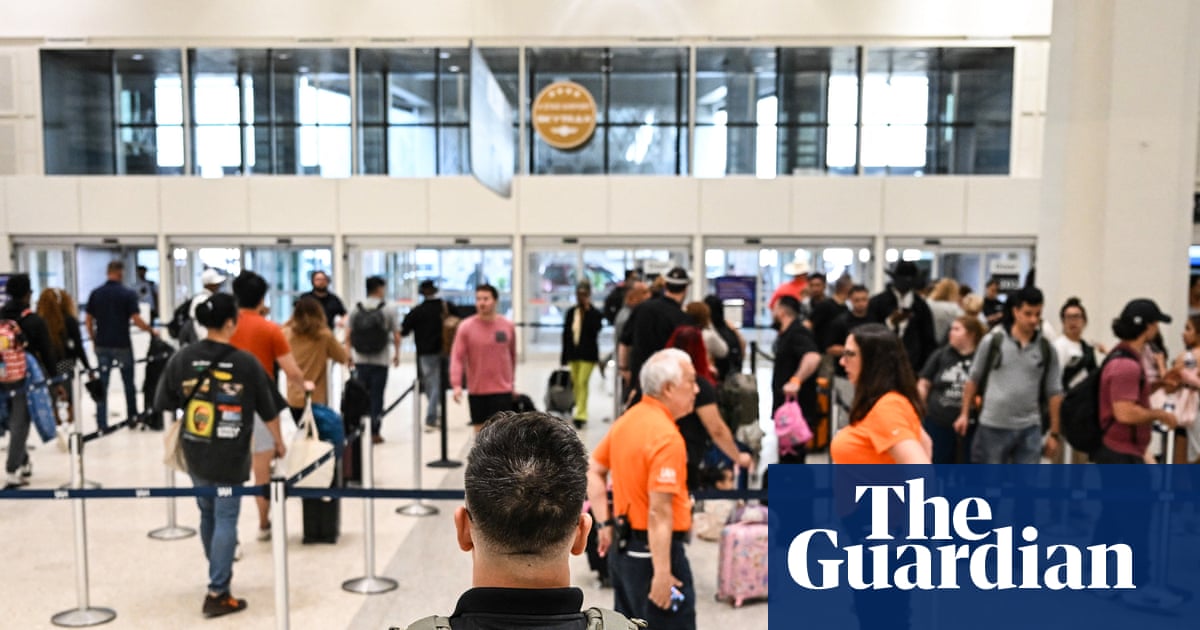
Senate approved a DHS funding package that would finance most DHS components but withhold funds from ICE and parts of Customs and Border Protection; the House must act before funded agencies can reopen. The funding standoff has left tens of thousands of TSA personnel unpaid for five weeks, with TSA absences last weekend at their highest level since the partial shutdown began, and Donald Trump said he would take executive action to pay 50,000 airport security workers. Democrats are holding up DHS funding to demand changes to immigration enforcement rules after recent agent-involved shootings, while Republicans push measures tied to voter-registration proof of citizenship.
Airport-level operational friction has become a near-term volatility amplifier for passenger airlines: modest increases in security-staff absenteeism quickly translate into non-linear cancellations and gate churn, which raises unit costs through overtime, repositioning flights and passenger reaccommodation. A conservative rule-of-thumb from past disruptions is that a 3–5% persistent staff shortfall can cut system seat capacity by 1–3% while increasing CASK by several hundred basis points on impacted sectors; that asymmetric hit favors nimble, point-to-point operators over large hub carriers.
With border-enforcement components in funding limbo, the logistics ecosystem faces two correlated stress channels — concentrated delays at ports/land borders that reroute urgency into air freight, and a regulatory tail-risk that could spur temporary use of private contractors or tech procurements once funding resumes. That shift benefits integrators with spare cargo capacity in the near term but creates chronic uncertainty for import-dependent retailers and regional airports that lack alternative revenue streams.
Key catalysts and time horizons are short and discrete: operational disruptions play out in days-to-weeks (affecting quarterly revenue cadence and options vol), legislative fixes or executive reallocations resolve within weeks-to-months, and durable policy/regulatory changes (procurements, rulemaking) crystallize over 6–18 months. Tail risks include protracted staffing attrition that forces structural network cuts, or rapid executive reallocation of funds that re-prices contractors and defense/security names overnight.
The most actionable market consequence is elevated idiosyncratic volatility in passenger carriers and selective convexity in cargo/defense names. That sets up defined-risk option structures and small-duration pair trades where operational fragility is priced-in but political resolution remains binary — ideal for tactical sizing and strict event triggers.
AI-powered research, real-time alerts, and portfolio analytics for institutional investors.
Request DemoOverall Sentiment
mildly negative
Sentiment Score
-0.30
