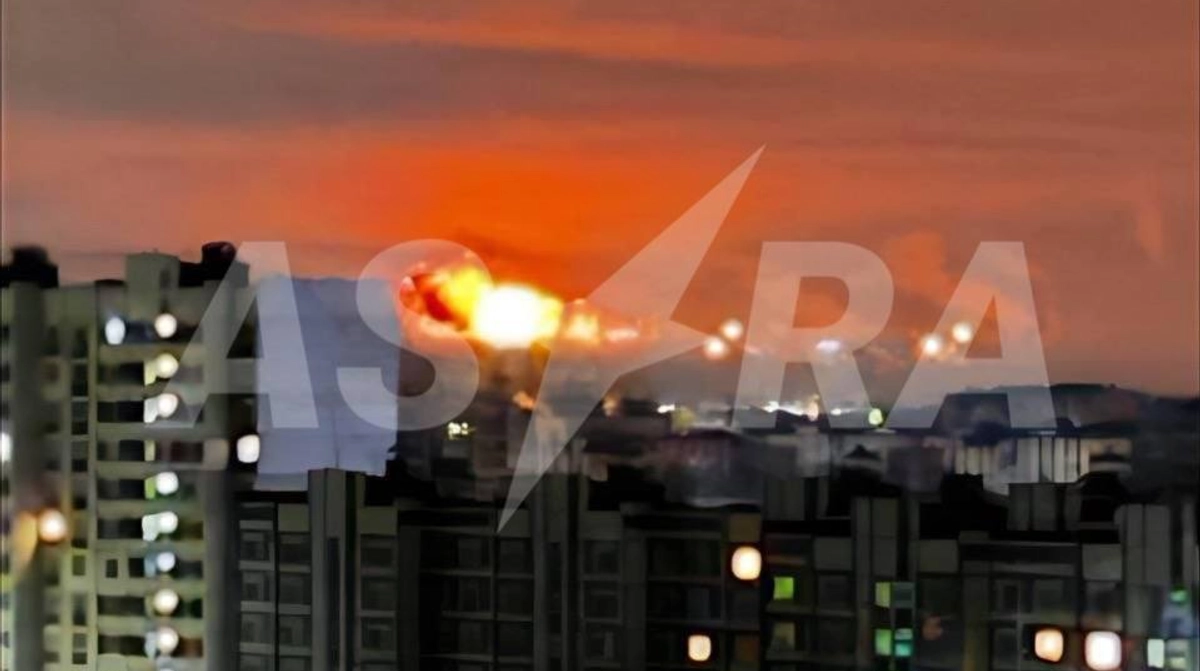
A drone strike hit an industrial facility in Yaroslavl on 19 May, causing a fire but no casualties, according to regional authorities. The incident temporarily closed a motorway toward Moscow and coincided with airport restrictions across several Russian cities. The targeted area appears to include key energy infrastructure, including the Slavneft-YANOS refinery, which has been attacked repeatedly this month.
The immediate market read is not about the physical damage itself, but about the increasing probability distribution of repeated, low-cost disruptions to Russian refining and logistics. Even when a strike only causes temporary downtime, the second-order effect is that operators, insurers, and regional planners must assume higher standby capacity and security costs, which gradually raises the marginal cost of throughput and compresses utilization at inland facilities. That matters more for refined-product availability than crude supply: Russia can keep exporting barrels, but the system loses flexibility in diesel, jet, and gasoline distribution.
The more important near-term channel is regional transportation friction. When airports and motorway access are intermittently constrained, it creates a small but persistent drag on domestic freight reliability, especially for time-sensitive industrial inputs. Over weeks, this tends to favor rail-heavy and port-adjacent logistics assets versus road-dependent domestic movement, while also lifting implied risk premia for Russian industrial supply chains even if headline output stays intact.
For energy markets, the event is mildly bullish refined products relative to crude because repeated strikes raise the odds of localized shutdowns, unplanned maintenance, or precautionary throttling. The market may still be underpricing the asymmetry: a single hit is manageable, but a cluster of attacks within days can force operators to protect adjacent units, turning a tactical nuisance into a meaningful product shortfall. That said, the base case remains disruption, not destruction; absent evidence of sustained outage, the move is more about volatility than a durable supply shock.
The contrarian view is that this is becoming a well-telegraphed risk, so the first-order pricing may already be embedded in Russian energy and transport assets. The bigger opportunity is in relative value: assets that benefit from higher refined-product margins or from shipping/rail substitution may outperform even if crude benchmarks barely move. The key reversal catalyst would be a pause in the strike cadence or clear evidence that defenses are improving, which would quickly deflate the volatility premium over a 2-6 week horizon.
AI-powered research, real-time alerts, and portfolio analytics for institutional investors.
Request DemoOverall Sentiment
mildly negative
Sentiment Score
-0.35
