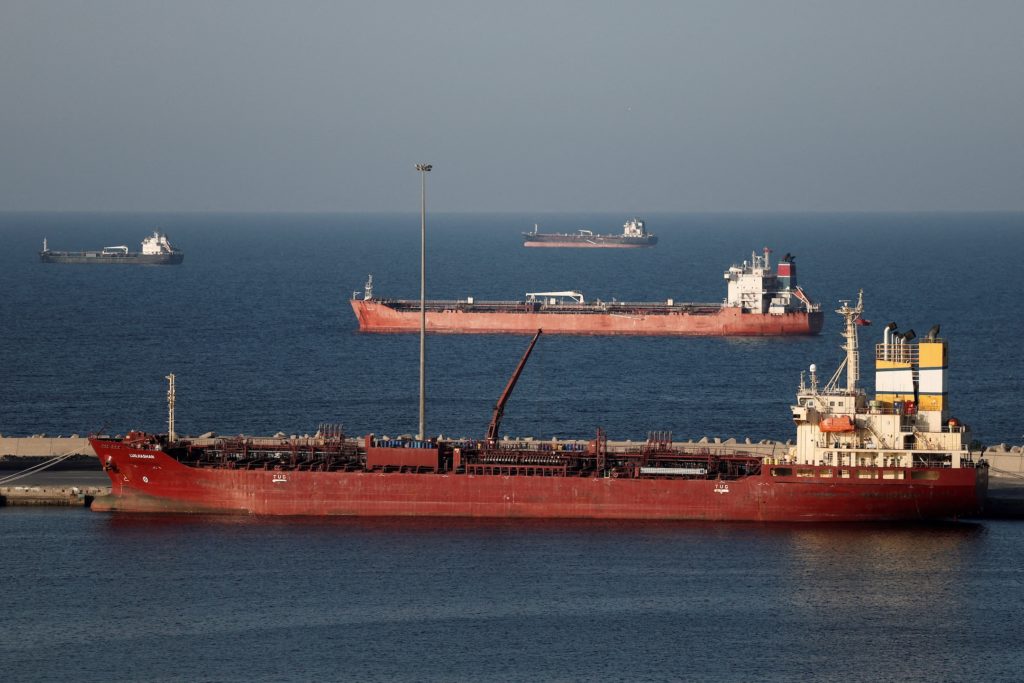
President Trump said the U.S. Navy would "immediately" begin a blockade of the Strait of Hormuz after U.S.-Iran ceasefire talks ended without agreement, threatening a key route that carried 20% of global oil supplies before the war. The move could disrupt global shipping and rattle oil, natural gas, and related energy markets, with the ceasefire set to expire on April 22 and no next steps agreed. The article also reports ongoing fighting in Lebanon and continued uncertainty around Iran's nuclear program.
This is a classic regime-shift headline for energy and transport: the market is not pricing a normal geopolitical premium, it is pricing the possibility of a hard stop in a chokepoint that underwrites regional seaborne flows. The first-order move is obvious in crude and LNG, but the more durable trade is into insurers, marine underwriters, tanker security services, and any asset-heavy carrier with exposure to rerouted ton-miles — those names benefit from longer voyages even if volumes ultimately clear.
The bigger second-order effect is on working capital and inventory behavior. If refiners, airlines, and chemical producers expect even a short interruption, they will pull forward feedstock purchases, which can create a self-reinforcing spike in prompt barrels, freight rates, and clean product cracks before any actual physical shortage appears. That makes the next 1-3 sessions more dangerous than the actual enforcement window; the market will trade headlines and shipping confirmations, not realized lost supply.
The contrarian angle is that a full blockade is operationally hard to sustain without forcing a broad coalition response, and the rhetoric may be deliberately maximalist to improve negotiating leverage ahead of the ceasefire expiry. If the U.S. seeks interdictions but stops short of a true closure regime, the risk premium can fade quickly while volatility remains elevated. The key tell is whether Gulf insurers, major shipowners, and coastal terminals start issuing force majeure language; absent that, the trade is likely to overshoot to the upside and then mean-revert over days.
Defense is a secondary beneficiary, but not uniformly: missile defense, naval munitions, and mine-clearing logistics should outperform large-platform primes on immediate budget urgency. Meanwhile, regional airlines, chemicals, and Europe-sensitive industrials remain vulnerable to a squeeze in bunker fuel and gas-derived feedstocks. The setup argues for owning volatility rather than outright beta until there is evidence of sustained enforcement or a diplomatic off-ramp.
AI-powered research, real-time alerts, and portfolio analytics for institutional investors.
Request DemoOverall Sentiment
strongly negative
Sentiment Score
-0.80
