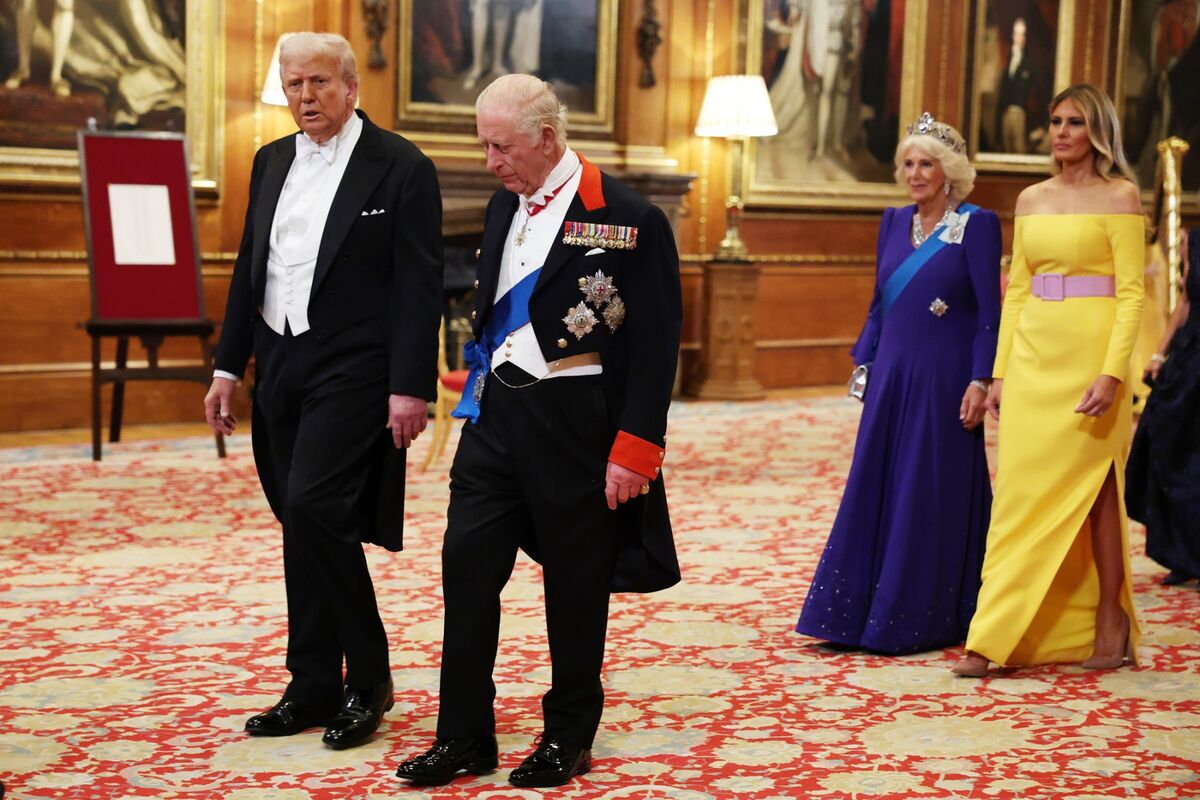
King Charles will make a state visit to the U.S. in late April — the first by a British monarch since 2007 — and will dine with Donald and Melania Trump at the White House. The article highlights tensions in the UK–US 'special relationship' after Trump publicly lashed out over Iran, even as he courts the King and aligns with figures like Nigel Farage; this raises political uncertainty but is unlikely to have immediate market impact.
The market should treat current Anglo‑American political posturing as a policy‑signal shock rather than a structural break: rhetoric around Iran raises near‑term security premiums that lift defense and cyber budgets within quarters, while ceremonial diplomacy mutes immediate market panic. Expect a 6–12 month window in which procurement decision timing (contract awards, export controls) can move 8–20% in supplier revenues as governments accelerate capability buys or shore up supply chains.
Second‑order winners are niche UK/EU defence and cybersecurity suppliers that sit outside large US prime‑contractor ecosystems; they can pick up contract share if Five Eyes integration frays, and small‑cap reratings of 15–30% are plausible over 6–18 months. Conversely, sterling‑sensitive consumer and travel names face the classic two‑way squeeze: weaker FX demand and potential tariff/regulatory uncertainty that can knock 2–5% off revenues in the following 3–9 months.
Tail risks cluster around a major Iran escalation or a durable US–UK policy divergence. In the former, oil and flight‑risk dynamics create simultaneous upside for energy and downside for UK consumer cyclicals within days; in the latter, expect British sovereign spreads to widen 20–50bps over 3–12 months and a longer‑term reassessment of cross‑jurisdiction supply chains. Reversals will be driven by either clear diplomatic de‑escalation (weeks) or binding bilateral agreements restoring procurement certainty (months).
AI-powered research, real-time alerts, and portfolio analytics for institutional investors.
Request DemoOverall Sentiment
mildly negative
Sentiment Score
-0.25
