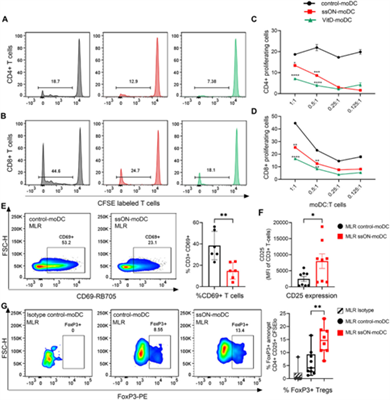
TIRmed Pharma reported peer-reviewed mechanistic data in the European Journal of Immunology showing its immunomodulatory oligonucleotide TIR-01 (ssON) skews human monocyte-to-dendritic cell differentiation toward a tolerogenic phenotype—increasing PD-L1, maintaining CD1a upregulation, reducing alloreactive T-cell stimulation and promoting CD4+FoxP3+CD25+ regulatory T cells—supported by phenotypic, transcriptomic and functional analyses. Conducted by teams at Stockholm University and Karolinska Institutet and led by Prof. Anna‑Lena Spetz, the preclinical findings bolster the scientific rationale for TIRmed’s topical candidate platform (TIR‑C) and support progression toward clinical studies, but represent preclinical validation rather than near-term commercial or revenue milestones.
Market structure: The paper is a scientifically solid but preclinical signal; immediate market winners are niche oligonucleotide-platform players (e.g., IONS) and CRO/CMO names that service oligo/topical programs, while large topical-cream incumbents face negligible short-term threat. Expect modest reallocation within biotech small-caps (XBI) rather than across broad pharma (XLV); pricing power for a topical TIR-C would be constrained vs systemic biologics, targeting mild–moderate atopic dermatitis and lower ASPs. Cross-asset: anticipate a small uptick in biotech implied volatility (XBI IV +5–15%) and minimal FX, bond, or commodity impact.
Risk assessment: Tail risks include clinical toxicity (immune suppression/infections), manufacturing scale-up for ssON oligos, regulatory rejection or IP litigation—each could wipe out >80% of private valuation; probability of clinical failure remains >50% prior to Phase 2. Near-term (0–90 days) risk is reputational/partnering; medium (6–18 months) hinges on IND/Phase 1 start; long-term (18–36+ months) depends on efficacy vs topical and systemic comparators. Hidden dependency: topical delivery and stability of oligonucleotides and PPAR-γ pathway off-targets could create late-stage safety signals.
Trade implications: Tactical exposure to innovation via 1–2% long in XBI (6–12 month) and 1–2% selective long in Ionis (IONS) as platform play is logical; add call spreads to limit premium burn if IV rises. Pair trade: long XBI vs short XLV (net long small-cap biotech) to capture re-rating if early clinical progress/partnerships occur; size 2:1 and horizon 3–12 months. Avoid direct mainsheet dermatology longs until an IND/Phase 1 readout or pharma licensing announcement.
Contrarian angles: The market may overestimate near-term commercial impact—historical parallels (tolerogenic immunotherapies) often fail in translation, so upside is binary and back-loaded. Conversely, the consensus may underprice partnership risk: a licensing deal or positive Phase 1 could re-rate small-cap oligo names by +30–70% within 3–6 months. Unintended consequence: even positive tolerogenic signals could limit label breadth (mild disease only), compressing peak sales well below biologic comparators.
AI-powered research, real-time alerts, and portfolio analytics for institutional investors.
Request DemoOverall Sentiment
mildly positive
Sentiment Score
0.35
