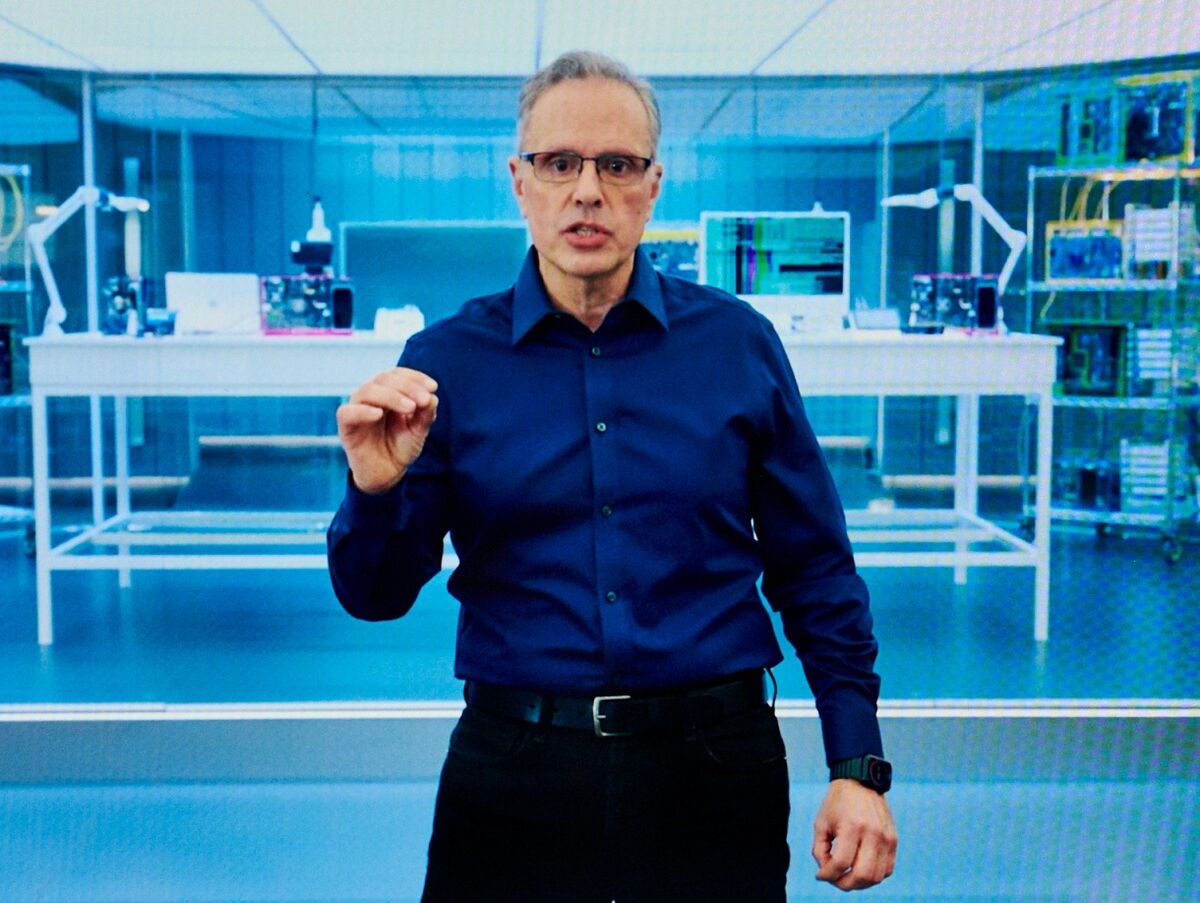
Apple’s head of silicon, Johny Srouji, told his division in a memo that he plans to remain at the company “anytime soon,” directly addressing rumors about his departure amid broader executive turnover. The reassurance signals continuity for Apple’s chip development and internal leadership stability, likely easing short-term investor concerns about disruption to its silicon roadmap while having limited immediate impact on fundamentals.
Market structure: Srouji’s public commitment materially reduces short-term executive-risk premium on AAPL and underpins continuity of Apple Silicon roadmaps. Direct winners: AAPL (immediate sentiment uplift), TSM (TSM), ASML (ASML) and equipment names (LRCX) that benefit from continued advanced-node demand; potential long-term losers include chipset vendors (e.g., QCOM) if Apple accelerates in‑house modem/5G work. Expect modest margin tailwind for Apple (100–300bps over 1–3 years if integration execution stays on track) and a 1–3% positive re‑rating vs peers in the next 3 months.
Risk assessment: Key tail risks — sudden departure of Srouji (assign ~10–15% probability) could trigger a 5–8% drawdown in AAPL within days; a separate 5–10% probability of major TSMC capacity or geotech disruption could defer products by 2–4 quarters. Immediate (days): sentiment and IV compress; short-term (weeks–months): earnings and WWDC product cadence will test execution; long-term (years): structural regulatory/antitrust or failure to hit node roadmaps drives material market-share swings. Hidden dependency: Apple’s silicon success depends on TSMC capacity/prioritization and recruiting downstream design talent.
Trade implications: Tactical: establish a 2–3% long AAPL position (buy shares or Dec 2025 LEAP calls) within 0–6 weeks to capture sentiment and roadmap optionality; concurrently buy a 3–6 month AAPL 8–12% OTM call spread (financed) to limit cost. Supply-chain plays: add 1–2% positions in TSM (TSM) and ASML (ASML) with 6–18 month horizon. Relative value: consider a small pair trade long AAPL / short QCOM (0.5–1% net exposure) to express verticalization risk to legacy modem suppliers.
Contrarian angles: Markets may underweight that retention is only binary insurance — it doesn’t guarantee chip performance or yield; historical parallel: Apple’s M1 rollout removed Intel’s notebook demand within 12–24 months, suggesting upside to TSM/ASML but downside to incumbents if execution continues. IV and sentiment rally could be overdone: expect AAPL implied vol to compress 10–25% into WWDC (opportunity to sell short-dated premium). Unintended consequence: heavier TSMC concentration raises geopolitical/operational single‑point risk — size positions accordingly.
AI-powered research, real-time alerts, and portfolio analytics for institutional investors.
Request DemoOverall Sentiment
mildly positive
Sentiment Score
0.25
Ticker Sentiment
