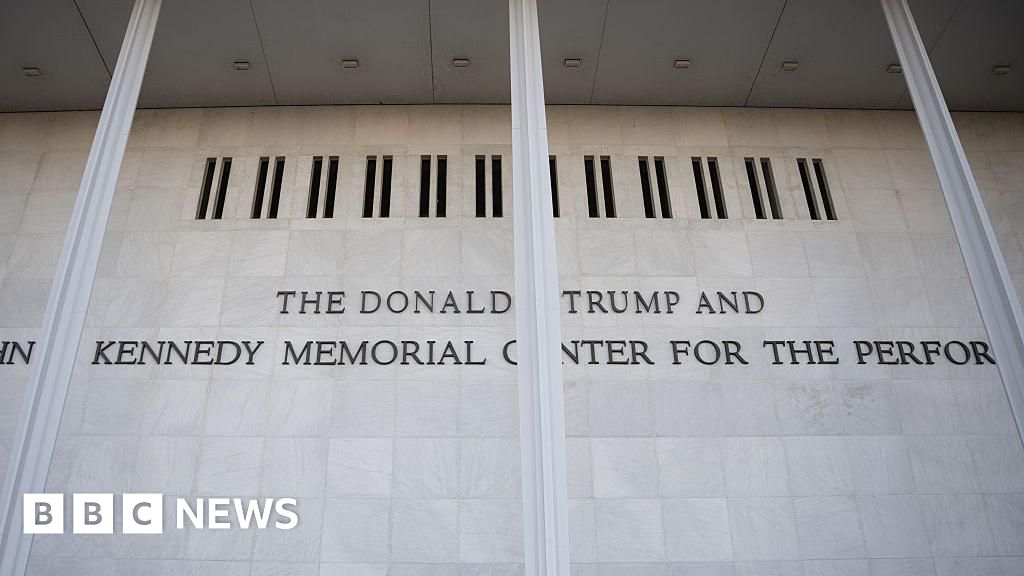
Multiple artists, including The Cookers, Doug Varone and Dancers, Kristy Lee and Chuck Redd, have cancelled scheduled Kennedy Center performances after the board voted to rename the John F. Kennedy Center the 'Donald J Trump and the John F Kennedy Memorial Center for the Performing Arts' and new exterior signage was installed. The controversy has produced reputational and operational risk for the institution — including a $1m damages demand by Kennedy Center president Richard Grenell and legal questions from lawmakers about whether Congress must authorize any name change — which could disrupt programming, donor relations and governance for the center.
Market Structure: This is a localized reputational shock that directly hurts performing-arts venues, municipally‐tied cultural institutions and ticketing intermediaries (higher short-term cancellations, sponsorship risk). Winners are a few media outlets receiving traffic and conservative-leaning platforms that monetize polarization; aggregate revenue impact on large diversified entertainment companies is likely <1–2% of annual revenue absent escalation. Supply/demand: short-term supply of headline talent falls (fewer shows), creating idiosyncratic revenue volatility for venues and promoters and potential temporary upward pricing power for unaffected events, but net demand risk persists if boycotts broaden.
Risk Assessment: Tail risks include class-action or mass-damages litigation (> $1m per high-profile cancellation), sponsor withdrawal clusters (>3 national sponsors equaling >$5–10m lost) and Congressional/legal reversals creating operating uncertainty; probability low-moderate but impact concentrated. Timing: immediate reputational shock (days), litigation and sponsor decisions (weeks–months), funding/donor shifts and governance changes (quarters–years). Hidden dependencies: corporate sponsorship policies, event-insurer contract language and municipal funding tied to federal naming statutes could amplify losses.
Trade Implications: Favor small, hedged event-risk positions—expressed via options and relative-value trades rather than large directional bets. Tactical ideas: use 1–2% notional exposure to buy downside protection on ticketing/venue equities and rotate 0.5–2% from live-event sensitive XLY names into streaming/anchor media (NFLX/DIS) for 3–12 months. Entry/exit: act within 1–4 weeks; unwind hedges if cancellations plateau (<5 major venue cancellations) or if companies provide explicit guidance stability.
Contrarian Angles: Consensus treats this as reputational noise; underappreciated is contagion to sponsor contract renewals and event-insurer pricing that could last 6–18 months, creating a temporary spread widening opportunity. Historical parallels (artist boycotts ~2010s) show sharp near-term price moves and reversion within 3–9 months, arguing for small, time-limited hedges rather than permanent shorts. Unintended outcome: legal/legislative clarification could reverse uncertainty and produce a relief rally in venue names and sponsors.
AI-powered research, real-time alerts, and portfolio analytics for institutional investors.
Request DemoOverall Sentiment
moderately negative
Sentiment Score
-0.35
Ticker Sentiment
