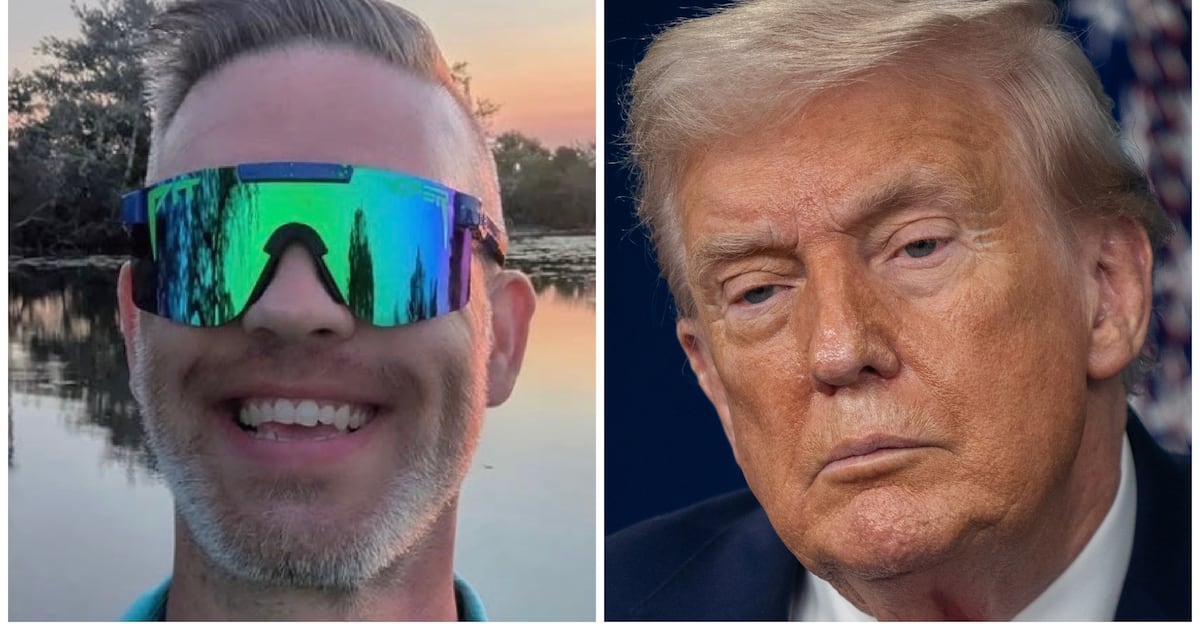
Ford has reinstated Thomas “TJ” Sabula, the worker suspended for heckling President Trump at a Dearborn F-150 plant, and the United Auto Workers report he has no negative mark on his file. The confrontation—captured on camera with Trump responding with an obscene gesture and saying “You’re fired”—prompted public comments from UAW leadership and embarrassment from Ford Executive Chairman Bill Ford; a fundraiser for Sabula had raised over $800,000 before campaigns were suspended. While politically charged and likely to draw partisan reactions, the incident presents limited direct financial impact on Ford beyond short-term reputational and stakeholder relations considerations.
Market structure: The incident materially changes perceptions, not fundamentals. Short-term winners are the UAW and pro-union media (amplified fundraising ~+$800k), while politically aligned consumers (MAGA) could marginally reduce Ford (F) unit demand by an estimated 0–2% in the near term; pricing power for OEMs may actually strengthen if negotiated labor costs are passed through, supporting ASPs by a few percentage points over 6–12 months.
Risk assessment: Tail risks center on labor escalation — a protracted UAW work stoppage could remove production capacity and compress EBITDA by an estimated $200M–$700M per production week (order-of-magnitude range), with knock-on supplier stress and +10–40bp spread widening for auto credits. Immediate (days) risk is sentiment-driven volatility; short-term (weeks–months) is union bargaining posture; long-term (quarters–years) is higher structural labor cost for ICE/EV mix and supply-chain recontracting.
Trade implications: Tactical trades should be small and hedged. Favor selective, hedged exposure to F (fundamentals intact) while buying protection against headline-driven downside; consider relative plays versus non-union names (TSLA) if political polarization deepens. Watch catalysts: UAW bargaining announcements, strike authorization votes, and Ford quarterly guidance — act within 0–90 days around these events.
Contrarian angles: Consensus underprices labor-negotiation optionality and overprices reputational damage as durable — Ford’s decision to reinstate reduces strike probability but increases bargaining leverage for unions, a net that likely leaves sales intact while lifting cost inflation risk by 1–3% annually. Historical OEM labor disputes show earnings shocks concentrated in quarters; mispricing exists in unsecured supplier credits and short-dated options on F where IV remains muted relative to headline risk.
AI-powered research, real-time alerts, and portfolio analytics for institutional investors.
Request DemoOverall Sentiment
neutral
Sentiment Score
-0.10
Ticker Sentiment
