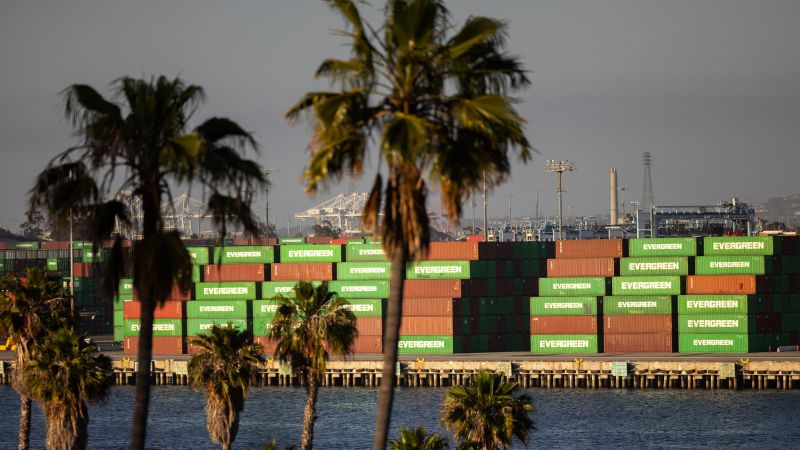
President Trump announced new 'reciprocal' tariffs will be imposed on nations that failed to negotiate trade deals, with notifications beginning Friday for 10-12 countries daily and rates, potentially ranging from 10-20% to 60-70%, effective August 1. This move, which contradicts earlier indications of deadline flexibility and follows previous tariffs that significantly impacted markets, signals a shift towards unilateral trade impositions, heightening global trade tensions and creating further market uncertainty.
The Trump administration is signaling a significant escalation in trade tensions, preparing to unilaterally impose new 'reciprocal' tariffs on a dozen or more countries, with rates potentially reaching as high as 60-70% and taking effect on August 1. This move marks a pivot away from a negotiation-centric approach, as evidenced by the limited progress on trade deals, with only two signed frameworks (UK, China) despite earlier claims of nearly 200 agreements. The impending action introduces substantial market uncertainty, amplified by conflicting timelines from within the administration; President Trump suggests a hard deadline, while Treasury Secretary Bessent has indicated a more flexible framework extending to Labor Day. The memory of previous tariffs up to 50% causing a bear market in stocks and a sharp sell-off in bonds and the US dollar underscores the high potential for market disruption. With key trading partners like the European Union and Japan explicitly mentioned as potential targets, the policy shift heightens the risk of a broader, more severe global trade conflict, creating a decidedly risk-off environment for global assets.
AI-powered research, real-time alerts, and portfolio analytics for institutional investors.
Request DemoOverall Sentiment
strongly negative
Sentiment Score
-0.60
