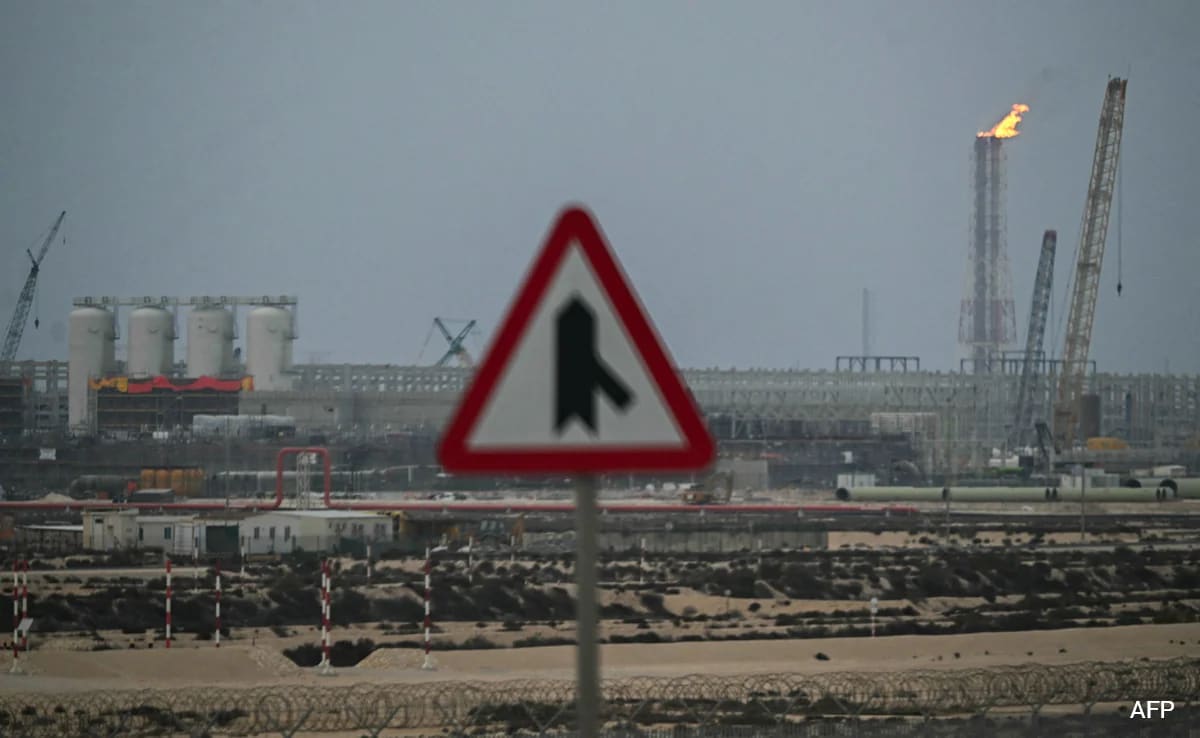
Qatar's Ras Laffan halt has cut roughly 30% of global helium supply, threatening critical cooling and etching steps in semiconductor manufacturing and cooling for MRI machines. The supply shock, compounded by transport bottlenecks through the Strait of Hormuz (specialised containers hold liquid helium for only ~35–48 days) and sanctions on other producers, could force chip fabs to slow or stop output and ripple through electronics, automotive and AI supply chains. Damaged Qatari production lines may take years to repair, elevating medium-term risk to tech and healthcare production.
The immediate market implication is not a commodity price move in isolation but a shock to a tightly-coupled logistics + manufacturing nexus. When a critical, low-volume input is both geographically concentrated and requires specialized cryogenic handling, small disruptions transmit as step-function increases in effective delivered cost and lead times for downstream producers that cannot easily substitute. Expect demand triage behavior from end-users: prioritize high-margin production runs and defer or cancel lower-margin volumes, amplifying dispersion in OEM revenue and orderbooks over the next 1–6 months.
Second-order beneficiaries will be businesses that supply redundancy or mitigation rather than the raw gas itself — makers of cryogenic tanks, re-liquefaction equipment, and on-site gas recovery/recycling systems; specialty shipping owners and insurers with hard-to-replicate equipment will see near-term pricing power. Conversely, smaller, just-in-time fabs and vertically thin suppliers with limited contracting power are most exposed to margin squeeze and forced downtime. The timeline is asymmetric: logistics fixes and rerouting can ease pressure in weeks–months, but industrial capex to expand liquefaction or build replacement transport and storage capacity takes multiple quarters to years, creating a multi-horizon opportunity set.
Market consensus is likely to misprice two features: (1) the durability of price inflation for specialized cryogenic logistics (sticky because of capital intensity and long lead times) and (2) the elasticity of demand at the wafer-level (fabs will cut low-margin product first, concentrating revenue to premium-node producers). That suggests trades capturing structural upside in mitigation-capex and equipment, paired with targeted downside protection on marginal-capacity-exposed semiconductor suppliers for the next 3–12 months.
AI-powered research, real-time alerts, and portfolio analytics for institutional investors.
Request DemoOverall Sentiment
moderately negative
Sentiment Score
-0.45
