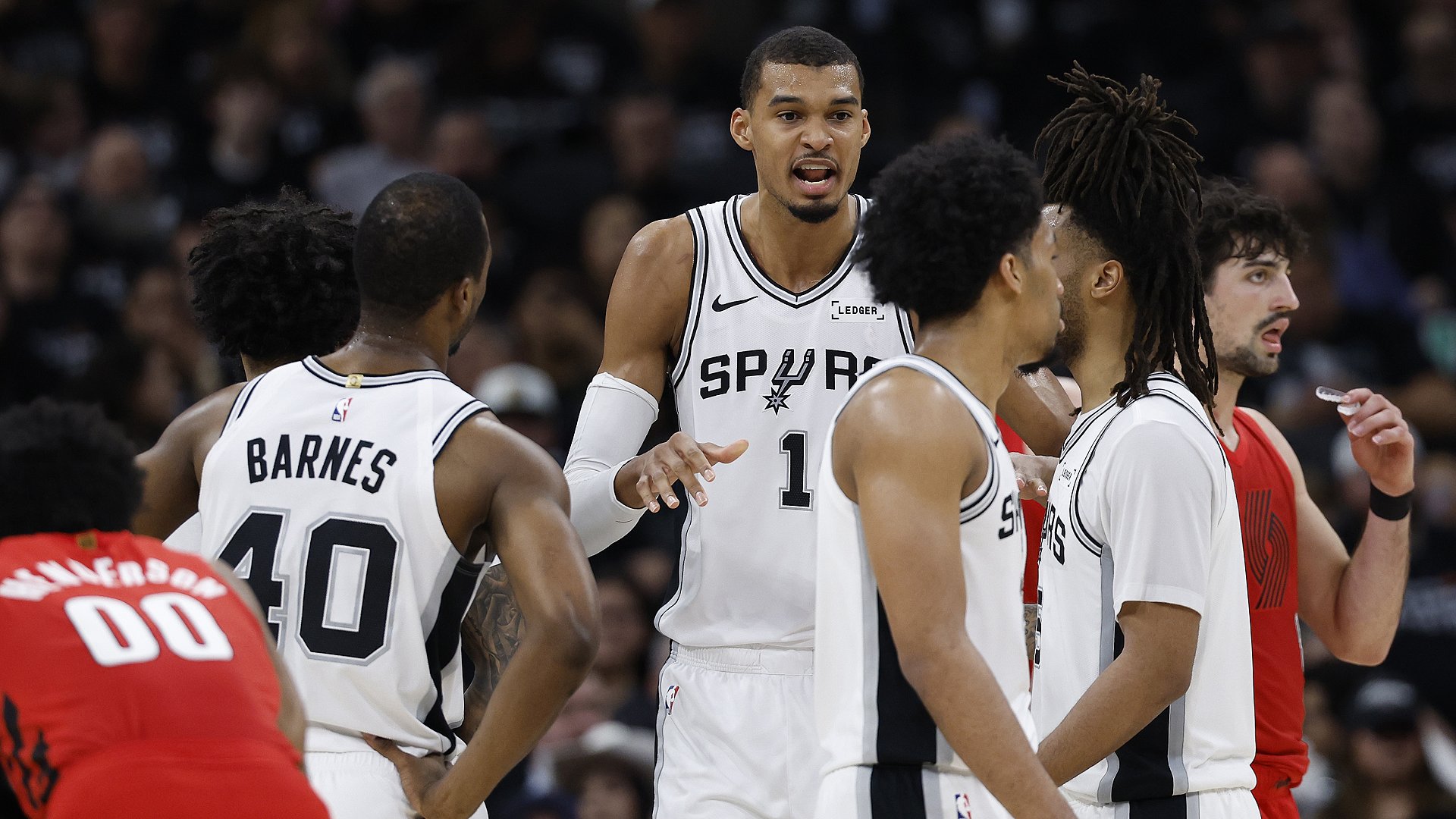
The article is an NBA playoff power-rankings update highlighting Oklahoma City’s first-round sweep of Phoenix and strong series wins by San Antonio, New York, Minnesota, the Lakers, Cleveland, Detroit, and Philadelphia. Oklahoma City posted a +17.8 net rating in the first round and swept Phoenix, while the Spurs, Knicks, and Wolves also advanced with strong efficiency marks. The piece is purely sports analysis and has no direct financial-market catalyst.
The market implication here is less about the individual series outcomes and more about the concentration of title probability into a very small subset of teams. That kind of bracket compression tends to front-load narrative-driven flows into the highest-profile franchises, but it also creates a more fragile setup: once the market has extrapolated "dominance," any injury, foul trouble, or bench erosion becomes a larger-than-normal catalyst for reversal. The key second-order effect is that the teams with the cleanest path are also the ones whose prices can become most crowded as passive and retail capital chases certainty. The Thunder remain the purest expression of this dynamic. Their margin profile is so extreme that the main risk is not opponent adjustment but substitution-level degradation if perimeter creation gets interrupted, because their offense is now being asked to carry more of the burden in half-court playoff possessions. That makes their next 1-2 games a volatility window: if they keep suppressing turnovers and controlling pace, the thesis compounds; if the ball security slips, their valuation as a near-lock contender can mean-revert quickly. The more interesting contrarian angle is the underappreciated benefit to the teams that survive in higher-variance, lower-efficiency environments. A physical, possession-driven series increases the value of benches, defensive schemes, and offensive rebounding, which favors clubs with matchup versatility rather than just top-end star power. In that sense, the current market may be overpaying for the cleanest-looking brackets and underpricing teams that can win ugly over six or seven games. For sentiment and positioning, this is a classic "best team gets most expensive" setup. The right trade is not necessarily to fade the best team outright, but to wait for a short-term injury or rotation headline and use that as the entry point for a tactical hedge against overextended consensus. Over the next week, the most tradable catalyst is whether the market starts baking in too much certainty around the West favorites while ignoring the compounding injury and fatigue risk.
AI-powered research, real-time alerts, and portfolio analytics for institutional investors.
Request DemoOverall Sentiment
neutral
Sentiment Score
0.10
