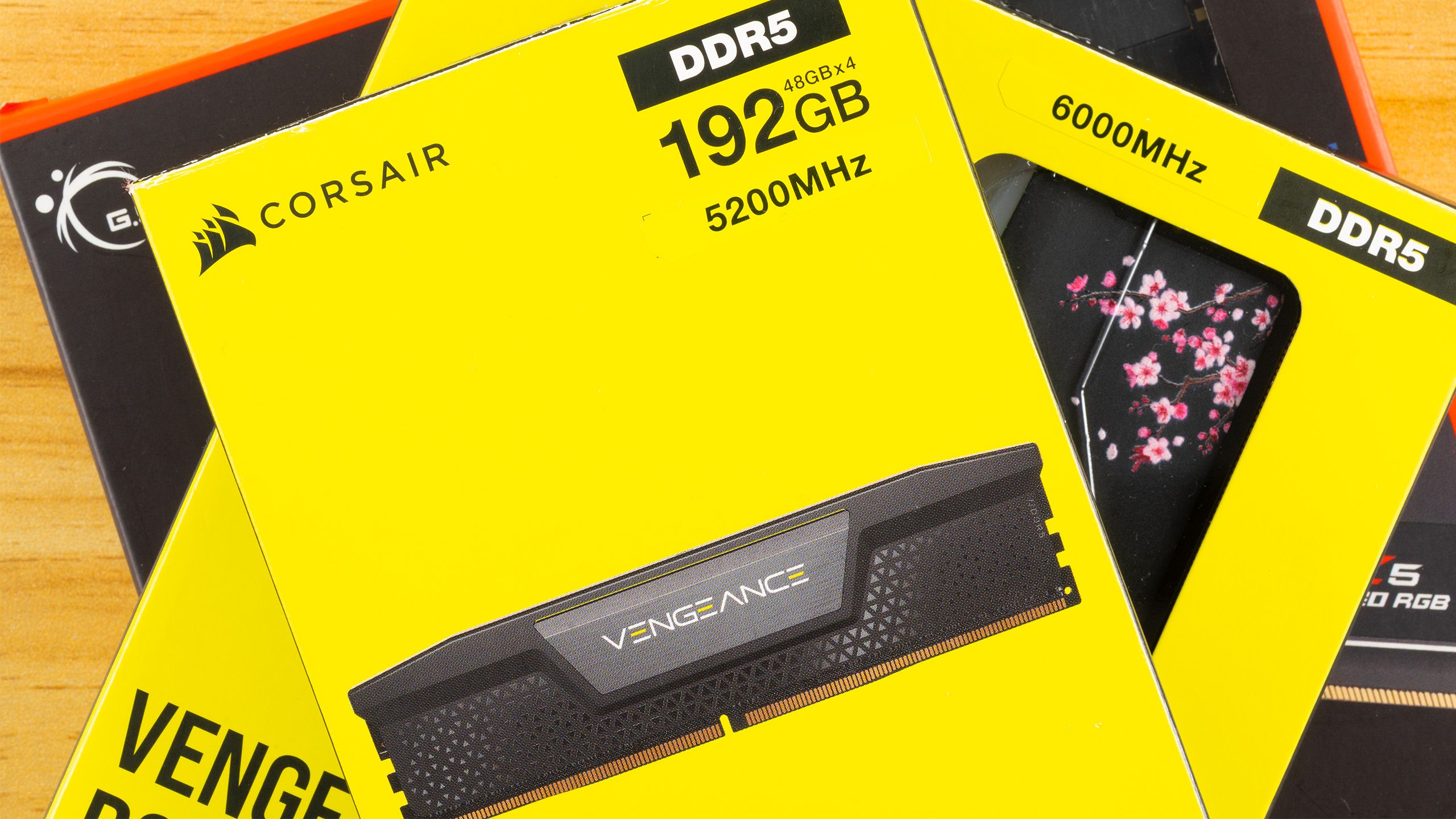
A global shift of wafer capacity into server DRAM to supply AI/data-center demand—driven by Samsung, SK Hynix and Micron (which is moving away from consumer RAM/Crucial)—has produced a consumer DDR5 shortage that has pushed retail prices roughly 3–3.5x above pre-shortage levels and enabled eBay scalpers to list kits at up to ~7x original MSRPs. Examples include the Trident Z5 Neo 32GB kit rising from $117.99 to $429.99 at retail and $836.54 on the secondary market, Vengeance 192GB from $649.99 to $2,201.99, and recent individual sales such as 256GB for $2,335 and 128GB laptop RAM for $900. The squeeze is translating into higher prices for prebuilt systems (CyberPowerPC, Maingear) and OEM pressure (Dell up, Lenovo reportedly insulated through 2026 inventory), creating margin and procurement risks for builders and enterprise buyers while leaving timing for any normalization unclear.
Global memory makers Samsung, SK Hynix and Micron have shifted wafer capacity toward server DRAM to service AI-driven data-center demand, with Micron reportedly deprioritizing consumer RAM and moving away from Crucial. That reallocation has produced a consumer DDR5 shortage that pushed retail prices roughly 3–3.5x above pre-shortage levels and enabled secondary-market scalping of up to ~7x MSRP; the Trident Z5 Neo 32GB kit moved from $117.99 pre-shortage to $429.99 at retail and $836.54 on eBay, while the Vengeance 192GB kit rose from $649.99 to $2,201.99 (retail) and ~$1,949.95 (scalper).
Recent transactional data underscore demand elasticity and speculative buying: eBay sales reported include 128GB DDR5 at $900, 256GB G.Skill at $2,335 (Dec 8) and 96GB at $1,347 (Dec 5). The price squeeze is cascading into prebuilt-system and OEM pricing — CyberPowerPC and Maingear have raised prebuilt prices, Dell shows pressure, and Lenovo is reported to have inventory through 2026 — creating clear margin and procurement risk for system builders and enterprise buyers.
Market signals are mixed and volatile (market impact score ~0.45); beneficiaries are likely firms tied to server DRAM pricing and data-center demand, while consumer-facing marketplaces and OEMs without inventory buffers face reputational, margin and potential regulatory risks. The timing of normalization is uncertain, so pricing dynamics should be monitored via retail/secondary-market listings and OEM inventory disclosures.
AI-powered research, real-time alerts, and portfolio analytics for institutional investors.
Request DemoOverall Sentiment
mixed
Sentiment Score
0.00
Ticker Sentiment
