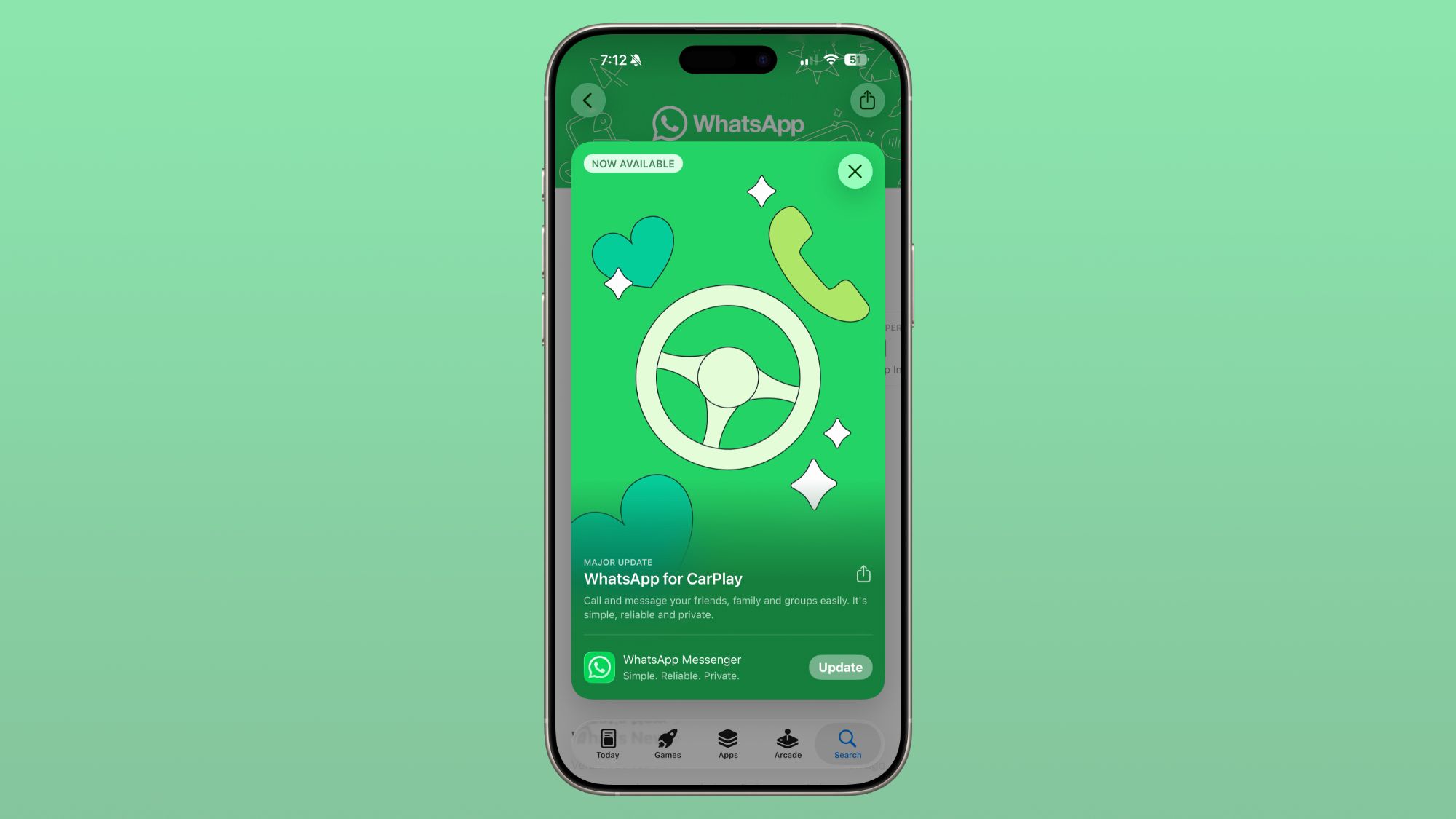
WhatsApp launched a full native CarPlay app (previously limited to Siri-based functions) adding recent chats, call history, favorites, and quick dictation/call buttons; testing began last week and availability requires the latest iPhone app update and a CarPlay-compatible vehicle. This is a UX/product update that should modestly increase in-car engagement for Meta’s messaging platform but has negligible near-term financial impact.
Treat this WhatsApp–CarPlay move as a micro productization event that favors the messaging owner (META) disproportionately more than the platform owner (AAPL). In-car UI integrations convert low-frequency passive screen time into high-frequency, low-friction interactions (calls, dictation) — a 5–10% uplift in daily contact events could translate to outsized increases in business message volume and payment flows over 6–12 months because these interactions have higher monetization potential than passive feed time.
Second-order winners include third-party app ecosystems that enable car-to-home flows (smart locks, home automation) where network effects compound: every OEM adding native CarPlay hooks reduces friction for adjacent services to become core daily tools. That creates new data capture touchpoints across telematics and home IoT that increase addressable market for conversational commerce and B2B messaging services, but it also raises exposure to cybersecurity and liability regimes that can reprice compliance costs quickly.
Key near-term catalysts are OEM announcements and measured adoption rates of CarPlay Ultra across mid/volume segments over the next 6–12 months; regulatory or insurer pushback on driver-distraction features is the principal downside that could reset timelines. For AAPL, upside is platform entrenchment rather than direct revenue — a slow structural tailwind — while META stands to capture immediate engagement gains that can be productized into revenue through business APIs and payments hookups within 6–18 months.
The consensus underestimates regulatory and privacy externalities and overestimates how quickly OEMs will cede in-car UX control; if automakers accelerate proprietary solutions, the window for platform capture narrows to 12–24 months and compresses expected returns.
AI-powered research, real-time alerts, and portfolio analytics for institutional investors.
Request DemoOverall Sentiment
neutral
Sentiment Score
0.00
Ticker Sentiment
