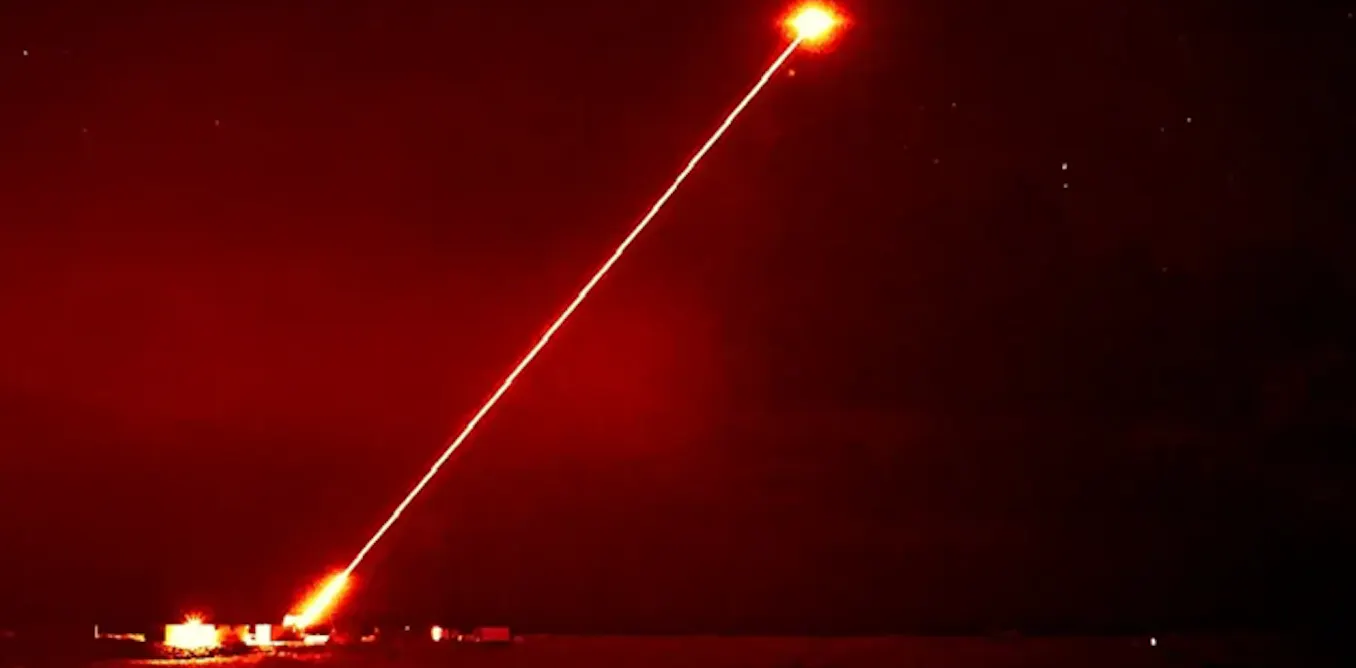
Uncrewed aerial vehicles have become dominant in the Russo‑Ukraine conflict, responsible for an estimated 60–70% of Ukrainian casualties and extending lethal reach roughly six to nine miles behind front lines. Countermeasures are emerging: simple nets are used locally, while the UK plans to field the DragonFire laser from 2027 (capable of destroying small drones at ~1 km, with a reported cost per shot of £10) and is trialing radio‑frequency pulse systems that can disable electronics non‑line‑of‑sight but cannot discriminate targets. The developments imply a rapid cycle of offense–defense innovation that could shift procurement and operational priorities for defense contractors and military planners.
Market structure: Anti-drone countermeasures (direct-energy lasers, RF pulse systems, EW suites) shift durable demand to large systems integrators and specialized component suppliers (RF front-ends, high-power lasers, cooling/power subsystems). Expect pricing power to concentrate with primes (platform integrators) and RF/optic component leaders; small drone OEMs face margin compression as buyers prefer integrated defensive bundles. Supply/demand: anticipate a stepped increase in procurement/R&D spending over 12–36 months (we model incremental ~$20–50bn NATO+Allies capex cumulatively) benefiting high-capex vendors while commoditizing cheap ISR/drone kit.
Risk assessment: Tail risks include rapid emergence of low-cost countermeasures that collapse drone hardware pricing (hits small-cap makers), export controls on DEW tech, or a high-profile civilian-electronics disruption from RF weapons triggering regulation. Time horizons: immediate (days) = headline-driven volatility; short-term (3–12 months) = RFPs/contract awards; long-term (2–5 years) = fleet-level DEW deployment (UK ~2027) and material revenue realization. Hidden dependencies: power/cooling logistics, integration with C2, semiconductor supply for RF/optics; regulatory/ROE limits can cap usable deployments.
Trade implications: Favor large defense primes and RF/EW specialists (integration + recurring service revenues) and component suppliers (Qorvo/ADI equivalents) over pure-play small UAV OEMs. Cross-asset: expect modest upward pressure on sovereign yields (10–30bp over 12–24 months if incremental spending >$30bn) and selective commodity demand (copper/rare-earths +5–12% tail). Options: use defined-risk call spreads around primes to capture binary test/procurement wins.
Contrarian angles: Consensus assumes DEWs will make drones obsolete; history (tanks→anti-tank) suggests coexistence and cycles of offense/defense—meaning both countermeasure suppliers and affordable drone makers can outperform at different stages. Reaction may be underdone in components (RF, high-power semiconductors) and overdone in small drone equity valuations; unintended consequences include civilian comms disruption prompting curbs on RF pulse use, slowing adoption and favoring non-discriminatory laser/EW balance.
AI-powered research, real-time alerts, and portfolio analytics for institutional investors.
Request DemoOverall Sentiment
mildly positive
Sentiment Score
0.10
