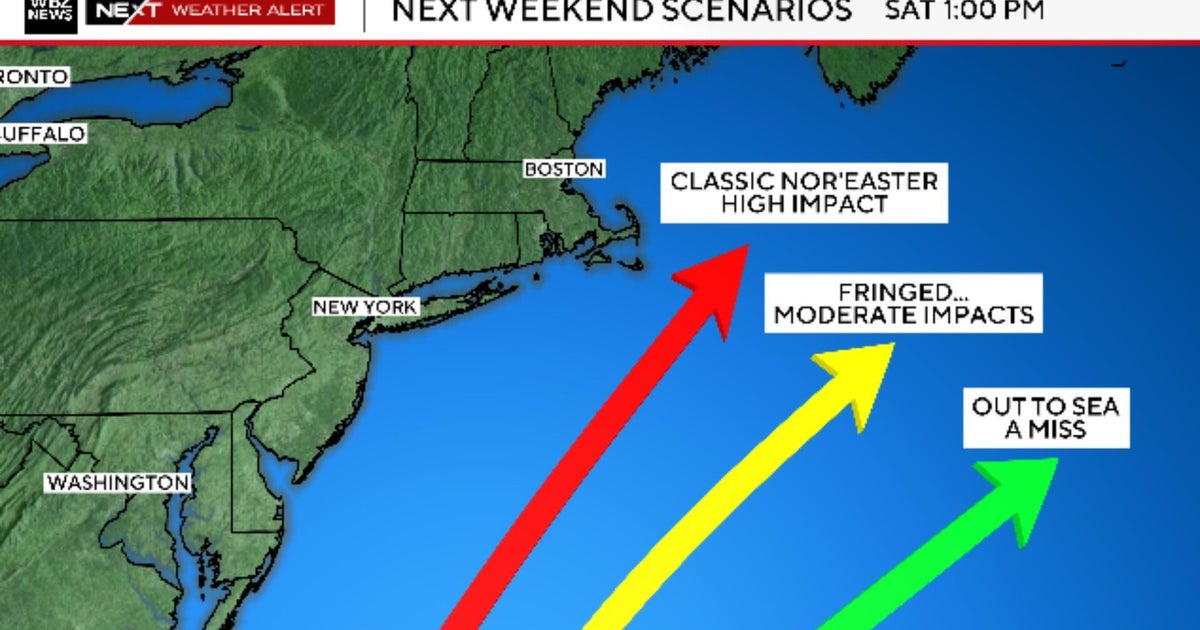
A potentially powerful winter storm is being monitored for late Friday into Saturday, with rapid cyclogenesis (possible bombogenesis) forming in the Gulf of Mexico and several plausible tracks that could deliver a classic nor'easter or miss New England. The forecast, 5–6 days out and not yet locked in, warns of heavy snow, destructive northeast winds (blizzard conditions) and elevated coastal flooding risk due to a full moon and high astronomical tides; market-relevant impacts would likely be localized disruptions to transportation, utilities and coastal property/insurance exposure if the worst-case track materializes.
Market structure: A coastal nor'easter that deepens near the 40N/70W benchmark is a short-duration demand shock concentrated in New England. Winners: utilities (Eversource ES, National Grid NGG) for elevated power/gas usage, home-improvement retailers (HD, LOW), road-salt/minerals (CMP), and short-dated energy (NG, HO) contracts; losers: regional airlines (JBLU), freight/shipping through Boston, and coastal property REITs with downtown/marina exposure. Impacts will be price and volume spikes lasting days-to-weeks rather than structural shifts.
Risk assessment: Tail risks include severe coastal flooding causing >$0.5–$1bn in localized insured losses, protracted outages raising municipal relief spending and muni issuance, and supply-chain bottlenecks for salt/roofing materials. Immediate (0–7 days): operational disruptions, volatility spikes; short-term (weeks): inventory drawdowns and repair demand; long-term: limited unless repeated storms change pricing for coastal insurance or trigger capex. Hidden dependencies: heating fuel stock levels, salt inventories, and airline crew positioning.
Trade implications: Implement small, tactical, event-driven positions sized 0.5–2% of portfolio with clear stop triggers tied to model convergence. Use short-dated option structures to capture volatility in NG and HO, buy retail exposure for supply-driven sales, and take short airline exposure to capture near-term revenue loss. Monitor model consensus; if 3+ deterministic models align inside benchmark, increase sizing by 50%.
Contrarian angles: Consensus underprices coastal flood risk because high astronomical tides + full moon amplify storm surge; this could create outsized near-term demand for structural repairs (roofing, HVAC) beyond snow-clearing. Reaction may be underdone in commodities (salt, diesel, heating oil) and overdone in headline airline selloffs—consider relative-value plays rather than outright directional exposure.
AI-powered research, real-time alerts, and portfolio analytics for institutional investors.
Request DemoOverall Sentiment
mildly negative
Sentiment Score
-0.25
