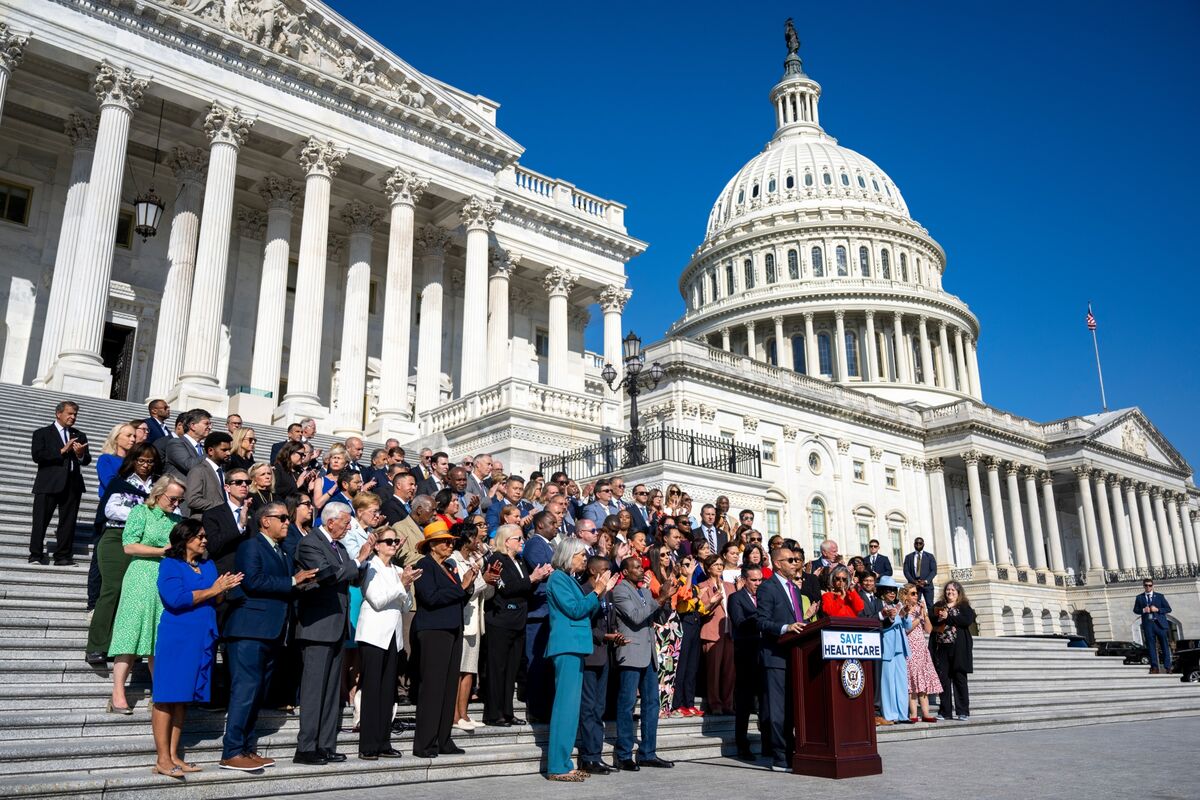
The U.S. government is on the brink of an October 1 shutdown after Senate Democrats and Republicans each blocked rival temporary funding bills, creating a legislative impasse. Democrats are demanding increased healthcare spending, while Republicans insist on a simple stopgap measure through November 21, raising concerns about potential economic disruption and market uncertainty.
The U.S. government is progressing towards a shutdown on October 1 due to a legislative impasse in the Senate, introducing significant near-term macroeconomic uncertainty. Both Senate Democrats and Republicans have blocked competing stopgap funding measures, signaling a deep partisan divide. The core conflict centers on Democrats' demand for increased healthcare spending, which Republicans are resisting in favor of a simple continuing resolution to fund the government through November 21. This political brinkmanship is viewed with strongly negative sentiment (score: -0.8) and is expected to have a notable market impact (score: 0.6). The proposed short-term nature of the Republican bill implies that even if a shutdown is averted, the underlying fiscal conflict is likely to resurface in less than two months, creating a recurring headwind for market stability and investor confidence.
AI-powered research, real-time alerts, and portfolio analytics for institutional investors.
Request DemoOverall Sentiment
strongly negative
Sentiment Score
-0.80
