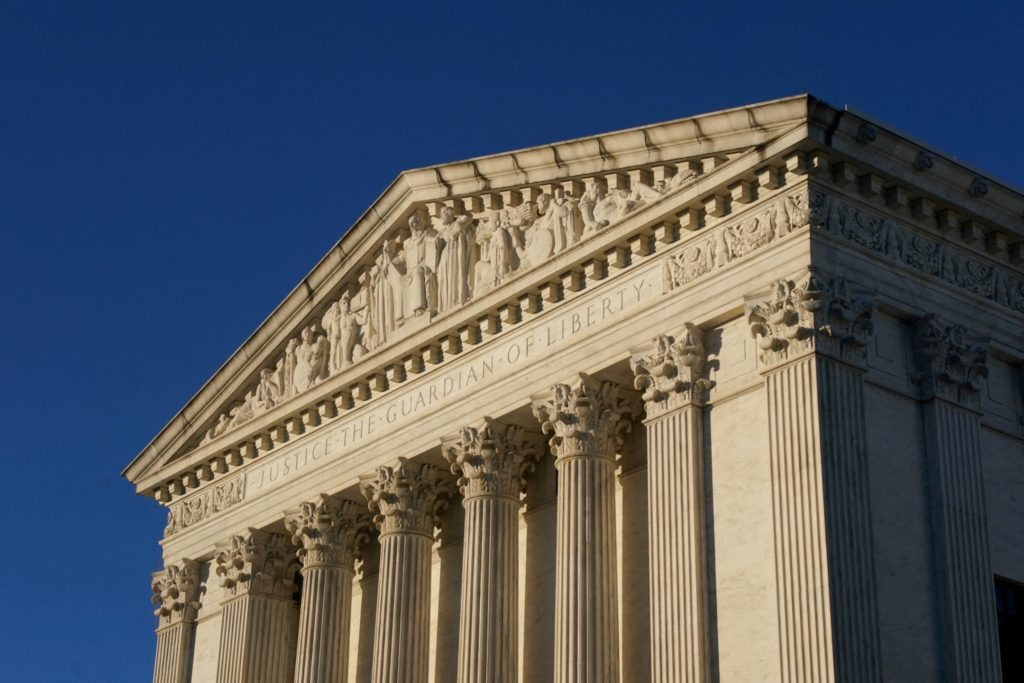
The Supreme Court heard a case testing the scope of the right to carry, centering on Hawaii’s law that bans firearms on private property open to the public unless the property owner expressly permits them. A decision altering carry rights could reshape the regulatory and legal framework for state-level gun restrictions and will be material to stakeholders exposed to firearm regulation and related legal risk.
Market structure: A pro-carry Supreme Court outcome would directly lift domestic firearm manufacturers (RGR, SWBI), ammo producers (OLN, VSTO) and accessory makers by increasing concealed-carry demand in permissive states; retailers that self-restrict (DKS) or big-box incumbents (WMT) that de-emphasize guns are relative losers. Competitive dynamics favor niche manufacturers and ammo suppliers who can raise prices 5–15% during short-term demand spikes; incumbents with broad distribution see smaller margins impact. Cross-asset: expect idiosyncratic equity volatility in small caps, a 20–40bp move in sector credit spreads for highly leveraged suppliers, marginal upward pressure on lead/zinc prices, negligible FX/broad bond-market moves.
Risk assessment: Tail risks include a nationwide restriction outcome or targeted federal regulation (low probability, high impact) that could cut company revenues 10–30% in affected states and trigger litigation; reputational/insurance risks could produce channel exits. Timing: immediate (days) — elevated option implied vol; short-term (weeks–months) — position shifts around SCOTUS decision (likely by end of June 2026); long-term (12–24 months) — state-level legislative patchwork and midterm election outcomes. Hidden dependencies: election cycles, major shooting events, and insurer/retailer policy changes are second-order demand drivers.
Trade implications: Favor defined‑risk bullish exposure to RGR and SWBI with 3–6 month call spreads sized 1–2% each (expect 20–40% upside if decision expands carry). Pair trade: long RGR (or SWBI) vs short DKS (size 1%/1%) to capture relative share shift in firearm sales channels. Use Jul 2026 call spreads (buy lower strike, sell higher strike) to cap premium; trim/close within two weeks after SCOTUS ruling or if implied vol doubles.
Contrarian angles: Consensus underestimates channel concentration risk — retailers exiting the category could amplify manufacturers’ margins and create durable pricing power. The market may overprice a permanent demand surge; if the ruling is restrictive, expect a 15–30% selloff that creates a buying opportunity. Historical parallels (post‑election 2012–2016 spikes) show 20–60% swings; avoid one-sided exposure and size positions to 1–3% portfolio risk to capture binary outcomes.
AI-powered research, real-time alerts, and portfolio analytics for institutional investors.
Request DemoOverall Sentiment
neutral
Sentiment Score
0.00
