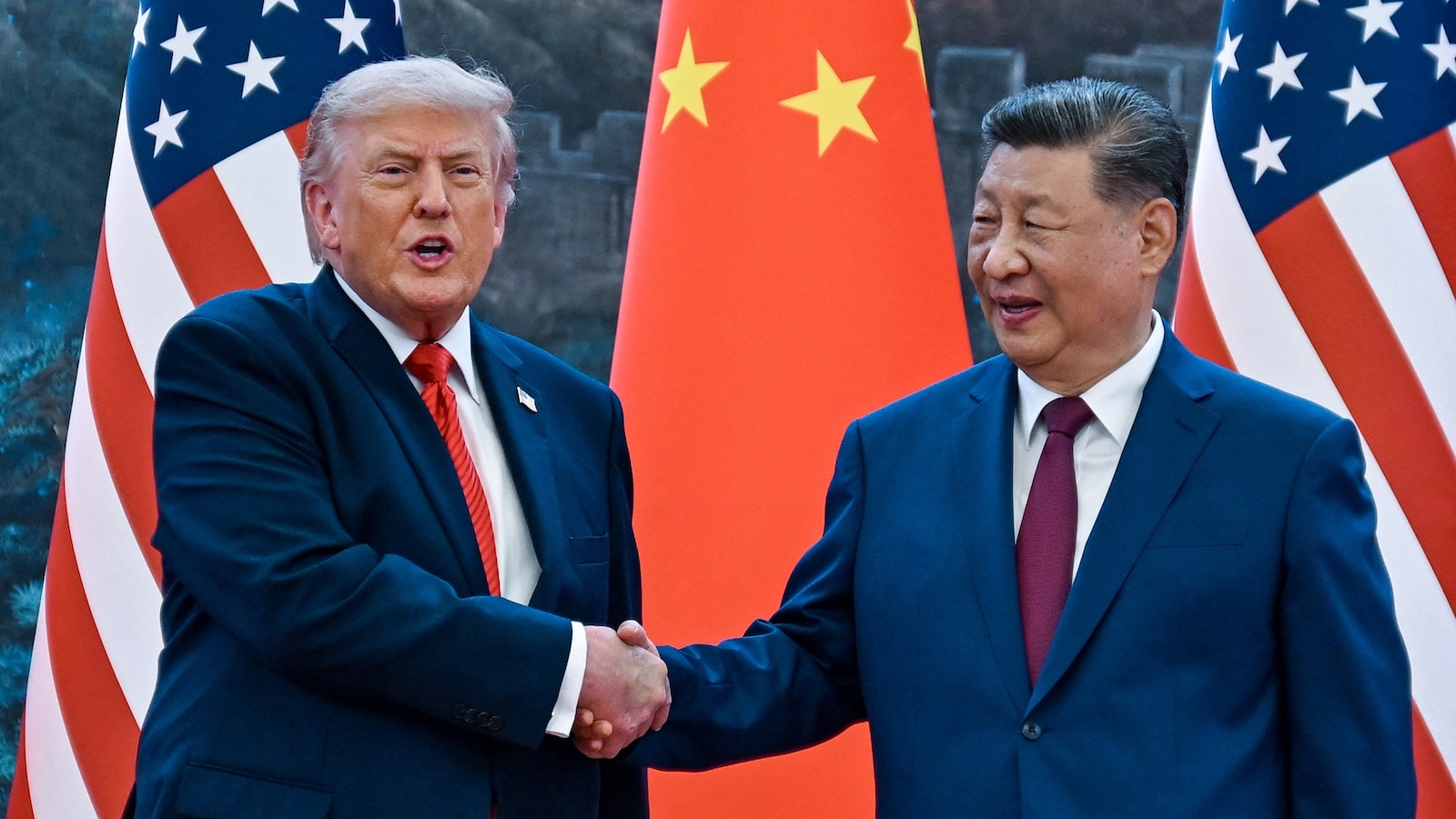
Trump-Xi summit Day 1 was broadly cordial, but the article highlights unresolved tensions over Taiwan, with Xi warning improper handling could lead to conflict. The White House said both sides discussed keeping the Strait of Hormuz open, opposing an Iranian nuclear weapon, expanding U.S. business access in China, agricultural purchases, fentanyl, and AI cooperation. Despite the diplomatic optics, Beijing is signaling leverage and the summit could affect U.S.-China trade, Taiwan arms sales, and broader geopolitical risk pricing.
The market implication is not the optics of détente; it is the bargaining order Trump is creating across issues. By bundling China access, Iran pressure, fentanyl, and AI governance into one diplomatic channel, Washington is implicitly increasing the value of every concession Beijing can extract elsewhere — especially on Taiwan. That raises the probability of a near-term tactical softening in rhetoric from both sides, but also increases tail risk that a symbolic trade/AI framework comes with asymmetric strategic compromise baked in. The highest-conviction second-order effect is on Taiwan-sensitive defense supply chains, not on headline China proxies. Any hint of reduced U.S. arms support or softer language on independence would likely hit Taiwan-centric semis, defense electronics, and regional shipping insurance before it affects broad U.S. equities. Conversely, if the summit produces only vague cooperation and no concrete de-escalation, the market may briefly misprice the risk premium lower for 1-2 weeks, creating a fade opportunity in names exposed to East Asia escalation risk. The Iran/Hormuz angle is more important for duration than for immediate direction: Beijing can credibly signal support without bearing the operational cost, so investors should treat any Chinese “help” as headline risk rather than durable supply relief. The actual tradeable consequence is that energy, tanker, and defense names may see intermittent spikes on geopolitical headlines, but sustained moves require evidence of enforcement or blockade disruption, not just communiqués. On AI, a bilateral protocol would be more relevant for model export controls and compute supply chains than for frontier lab fundamentals; it would likely slow marginally the gray-market diffusion of chips/models while benefiting compliant infrastructure players. Consensus is probably underestimating how much this summit is about domestic political theater on both sides. Trump gets a win narrative if China buys commodities or offers ceremonial cooperation; Xi gets to frame parity and U.S. dependence. That makes the most attractive setup a short-vol fade in the immediate aftermath, paired with hedges against a sharper tail event if Taiwan language or arms posture moves even slightly.
AI-powered research, real-time alerts, and portfolio analytics for institutional investors.
Request DemoOverall Sentiment
neutral
Sentiment Score
-0.10
