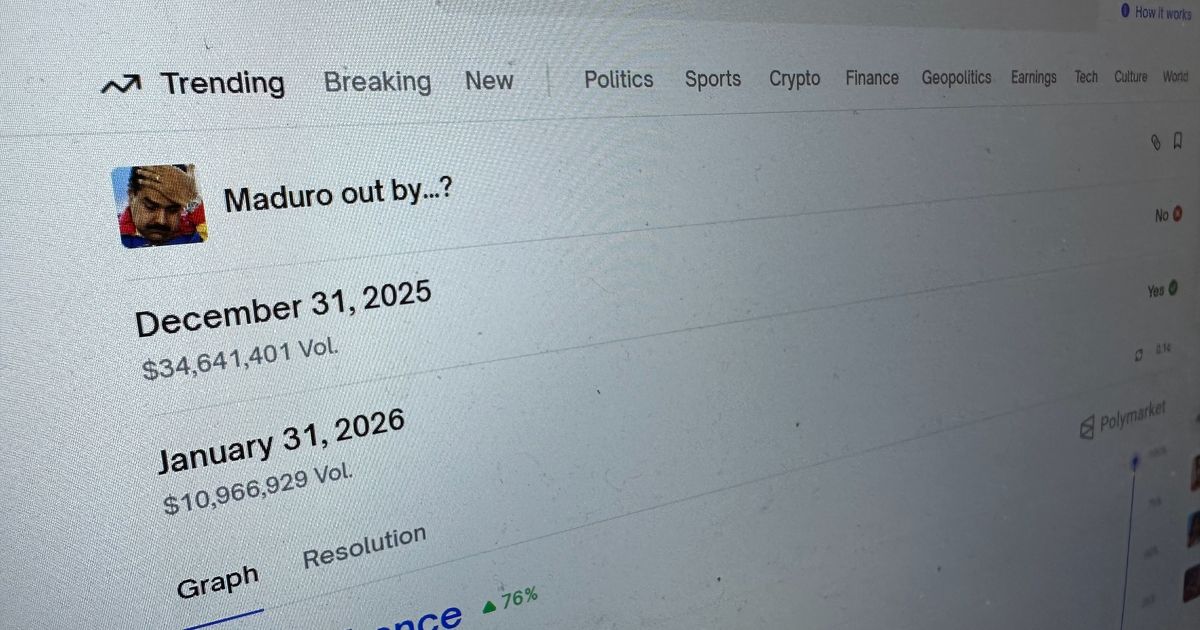
CFTC Chairman Michael Selig filed support for prediction‑market operators Kalshi and Polymarket, asserting federal CFTC jurisdiction and arguing these contracts resemble other futures rather than traditional sports books. The move comes as Nevada and other states have sued, with a federal judge issuing a temporary restraining order against Kalshi and Kalshi appealing to the 9th Circuit; Kalshi reported over $1 billion in Super Bowl volume and roughly 90% of its trading is sports-related (Polymarket ~50% sports). The administration’s intervention could limit states' ability to enforce gambling bans and materially reshape regulation of prediction markets and related fintech ventures, while legal outcomes remain uncertain.
Market structure: A federal CFTC backstop materially increases the addressable market for prediction-market operators and shifts economic power from state-licensed sportsbooks (DraftKings DKNG, Penn PENN, MGM MGM) to federally-regulated platforms and exchanges. Expect incremental volume capture of 5–15% of current sportsbook handle over 12–24 months if CFTC wins, pressuring sportsbook margins and customer-acquisition economics; derivatives venues (CME) benefit from higher contract flow and volatility products demand.
Risk assessment: Tail outcomes are binary and high-consequence: (A) 9th Circuit/Supreme Court affirms state authority → nationwide delisting/large fines for private markets and a 20–40% de-rating for firms levering prediction-products; (B) CFTC preemption → rapid expansion, regulatory arbitrage and cross-state competition. Short-term (days–weeks) expect equity volatility in gaming/fintech; medium-term (3–12 months) legal rulings drive directional moves; long-term (2+ years) structural re-pricing of gambling vs. derivatives franchises.
Trade implications: Tactical plays favor long derivatives infrastructure (CME, ICE) and selective short exposure to consumer-facing sportsbook operators with high marketing burn (DKNG, PENN). Use options to express asymmetry: buy 6–12 month call spreads on CME sized 1–2% portfolio and 3–6 month put spreads on DKNG/PENN totaling 1–2% notional, hedged by buying 25–35% notional calls to cap tail risk. Rebalance on court milestones.
Contrarian angles: Consensus underestimates operational limits — prediction markets may remain niche due to KYC/age limits and liquidity depth, capping damage to big sportsbooks to single-digit revenue hits. Historical parallel: exchange-driven dislocation post-derivative innovation often benefits clearing/venue owners more than retail-facing incumbents; unintended consequence could be higher S-1 activity and M&A of private prediction platforms, creating acquisition targets within 12–24 months.
AI-powered research, real-time alerts, and portfolio analytics for institutional investors.
Request DemoOverall Sentiment
mildly positive
Sentiment Score
0.25
