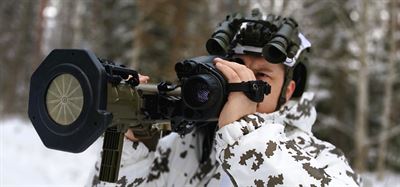
Senop has been awarded a procurement contract by the French Armament General Directorate (DGA) for its Senop AFCD TI advanced thermal fire-control sight, marking a strategic win in cooperation with Saab Ground Combat Unit; the contract value is undisclosed and deliveries are slated to commence in 2026. The AFCD TI — designed and produced in Finland and qualified for Carl‑Gustaf M3/M4 systems — offers integrated thermal/day/fusion channels, laser rangefinding and ballistic computation, and Senop will provide training, maintenance and lifecycle support. The award underscores product validation and international expansion for Senop (a Millog/Patria subsidiary) but contains limited near-term financial detail, so investor impact is likely modest absent contract size disclosure.
Market structure: The win is a clear positive for Senop (private) and Saab (SAAB-B.ST) ecosystem suppliers — it validates a premium, fully-digital thermal-imager segment and raises pricing power for high-end sight manufacturers by an estimated 10–30% premium vs legacy optics. Lower-tier, low-margin daytime-only sightmakers and commodity optics vendors face margin pressure as governments standardize on fusion/thermal systems; expect consolidation over 12–36 months. Tightness in IR-detector supply (cooled/uncooled microbolometers) will keep component pricing elevated 5–20% near-term and favor vertically integrated vendors and specialist suppliers.
Risk assessment: Tail risks include export-control disruption (ITAR/UK/EU restrictions) or component embargoes causing program delay (10–25% chance), French budget reprioritization (5–15% chance) or integration failures that delay revenue into 2027–2028. Immediate market impact is muted (days); key windows are short-term (3–12 months) as related OEMs announce follow-on orders, and long-term (2026–2029) when deliveries begin and lifecycle services recur. Hidden dependencies: detector supply chains (US/European foundries), Saab’s sales cadence, and Patria/Millog program governance — any of which can amplify or negate upside.
Trade implications: Tactical plays: overweight European defense primes and sensor-makers — establish 2–3% longs in SAAB-B.ST and RHM.DE (Rheinmetall) with 9–18 month horizons targeting +15–30% on continued procurement and export wins; add 1–2% long in TDY (Teledyne) or LHX (L3Harris) for IR-detector exposure. Use defined-cost option structures: buy 12-month call spreads on SAAB-B (e.g., +10%/+30% strikes) sized to 0.5–1% notional to capture re-rating while capping premium. Reduce/avoid small-cap commodity optics exposure by 50% in next 6 months.
Contrarian angles: Consensus underestimates supply-chain vulnerability — a detector shortage or new export control could create a short squeeze in specialized IR suppliers; buying 6–12 month tail-risk call options on TDY or niche European sensor small-caps could pay >3x if supply disruption occurs. Conversely, the market may overvalue all defense suppliers; avoid blanket longs — demand is very program-specific and revenue recognition for Senop-class contracts often lags 12–36 months, so time positions to confirmed follow-on orders or Q3/Q4 2026 delivery confirmations.
AI-powered research, real-time alerts, and portfolio analytics for institutional investors.
Request DemoOverall Sentiment
mildly positive
Sentiment Score
0.35
