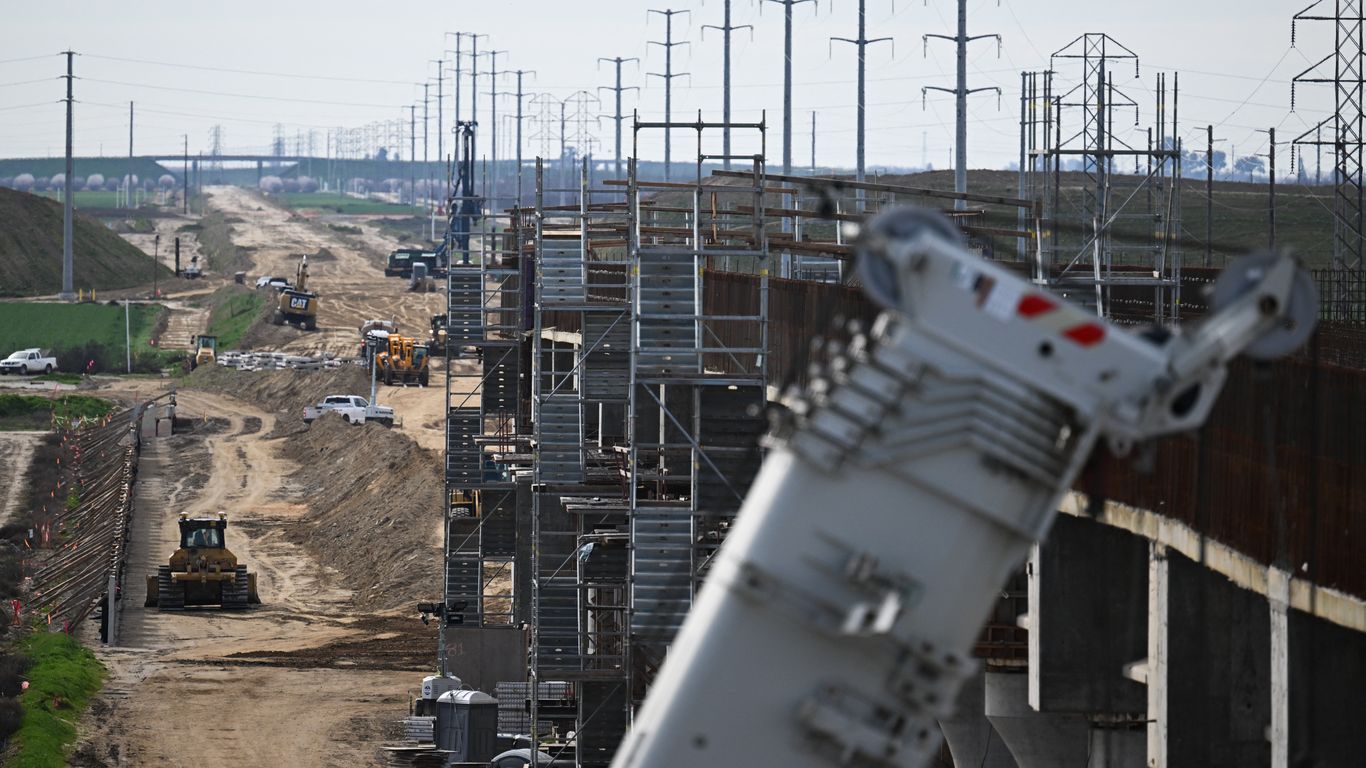
The California high-speed rail project faces significant uncertainty as the Federal Railroad Administration (FRA) threatens to withdraw $4 billion in federal funds, citing missed deadlines and a $7 billion funding gap for the Central Valley segment. The FRA's compliance review called the project a "story of broken promises," while the California High Speed Rail Authority (CHSRA) disputes these findings and plans a formal response; despite cost overruns that have ballooned the total budget to nearly $100 billion higher than initial estimates, a recent poll indicates that a majority of Californians still support the project.
California's high-speed rail project faces critical uncertainty following the Federal Railroad Administration's (FRA) move to potentially withdraw $4 billion in federal funds, underscored by a compliance review describing the initiative as a "story of broken promises." The FRA cites missed deadlines, costly change orders, and a significant $7 billion funding gap for the Central Valley segment alone, seeing "no viable path" to completion. This financial pressure is exacerbated by the project's total budget, which has ballooned to nearly $100 billion above the original $33 billion estimate from 2008. Delays are attributed to complex issues including eminent domain, permitting, and state policies requiring lengthy utility relocation approvals, which the CHSRA inspector general noted disincentivizes timely cooperation from utility owners. In response, the California High Speed Rail Authority (CHSRA) strongly disputes the FRA's findings and is preparing a formal rebuttal, while also exploring legislative changes to expedite processes and seeking private funding options. Despite these substantial operational and financial hurdles, the project maintains considerable public support, with a recent poll indicating 67% of California's registered voters in favor, and it has reportedly generated over 15,000 jobs in the Central Valley, highlighting a stark contrast between its troubled execution and its perceived local benefits.
AI-powered research, real-time alerts, and portfolio analytics for institutional investors.
Overall Sentiment
strongly negative
Sentiment Score
-0.60
